
The meteoric rise of artificial intelligence is quietly pushing the nation’s electric grid toward a breaking point, but the most critical failure is not one of engineering or generation capacity but rather a crisis of imagination within the utility business model itself. As data centers supporting AI technologies proliferate, their unprecedented demand for power on radically compressed timelines is exposing the deep-seated inadequacies of a regulatory and financial framework designed for a bygone era. Experts now assert that without a fundamental reinvention of how utilities engage with customers and structure their rates, the sector risks not only failing to meet this new demand but also alienating its traditional consumer base. The challenge is no longer about simply building more power plants; it is about developing a sophisticated, flexible, and market-aware approach that can accommodate the unique and urgent needs of the digital age while maintaining the grid’s core promise of universal, reliable service. The path forward requires a pivot from purely technical problem-solving to bold innovation in ratemaking, customer service, and performance incentives.
The Clash of Timelines and Traditions
The Hyperscaler Urgency
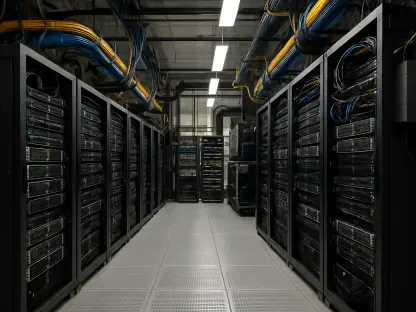
The operational tempo of AI hyperscalers presents a fundamental challenge to the deliberate, long-term planning cycles that have defined the utility industry for over a century. These technology giants are engaged in what some insiders have termed a “race to win the AI war,” and they require access to staggering amounts of electricity—often hundreds of megawatts for a single campus—within an astonishingly short 12 to 18-month window. This stands in stark contrast to the multi-year, often decade-long, process utilities undertake for planning, permitting, and constructing new generation and transmission infrastructure. The misalignment is not merely a matter of scheduling; it represents a deep cultural and operational disconnect. The utility sector’s historical mandate has been to ensure grid stability and equitable cost distribution across all customers through methodical, risk-averse expansion. The hyperscalers, however, operate in a fiercely competitive market where speed is paramount, and they possess the financial resources to demand and pay a premium for expedited service, a dynamic that the traditional utility playbook is simply not equipped to handle.
This emerging class of high-demand, high-value customers is forcing a difficult conversation about the very soul of the public utility compact, potentially leading to the creation of what has been described as “two grids.” One grid would continue to serve traditional residential and commercial customers, with its primary focus remaining on affordability and universal access, governed by established regulatory principles. In parallel, a second, more dynamic grid would cater exclusively to large industrial users like data centers, prioritizing speed, extreme reliability, and customized power solutions over cost. While this bifurcation could solve the immediate needs of the tech industry, it raises significant equity concerns. Such a system could create a landscape where the wealthiest corporate customers receive premium service, while the general public is left on a legacy system that may struggle for investment and innovation, deepening the divide between different classes of energy consumers and challenging the foundational ethic of the utility sector.
The Grid Reliability Dilemma
A significant complication in this new energy landscape arises from data centers that develop their own on-site, or “off-grid,” power generation capabilities but choose to remain interconnected with the main electrical grid. This hybrid approach allows them to operate independently while retaining the public grid as a crucial backup system and a platform for selling excess power. However, this arrangement creates two profound issues for grid operators and existing ratepayers. First, these data centers are tapping into an interconnection infrastructure—the poles, wires, and substations—that was built and is maintained using funds from the entire ratepayer base. In effect, they receive a high-value insurance policy against their own generation failures, leveraging a public asset without contributing to its upkeep in a manner that reflects the immense reliability value they derive from it. This subsidization of private, for-profit operations by the general public is becoming an increasingly contentious point of debate in regulatory circles.
Beyond the financial inequities, the proliferation of independent power islands operating in parallel with the main grid introduces a critical lack of transparency that threatens system-wide stability. Grid operators rely on complete and accurate visibility into power generation and consumption to balance supply and demand in real time, a delicate act essential for preventing blackouts. When large entities like data centers can switch their massive loads on and off their private generation sources without full coordination, it creates unpredictable fluctuations that the grid operator must scramble to accommodate. This operational opacity complicates system planning, hinders the efficient deployment of resources, and ultimately degrades the reliability of the grid for all connected customers. Maintaining a stable and secure energy system for millions requires a level of orchestration and information sharing that is fundamentally undermined when its largest consumers operate in a semi-detached, opaque manner.
Modernizing the Utility Business Model
Innovating Beyond Traditional Ratemaking
To effectively address the unique demands of AI data centers, utility experts are advocating for a radical departure from conventional rate structures, suggesting the adoption of sophisticated financial tools from other industries. Lynne Kiesling of the American Enterprise Institute proposes that a data center connecting to the grid for backup power is not merely buying electricity but is essentially “contracting for insurance” on its own operations. Following this logic, utilities could develop pricing models that mirror those used in the insurance and finance sectors. This could involve incorporating financial instruments like futures contracts, which would allow data centers to lock in prices for future energy needs, and call options, which would grant them the right to purchase a certain amount of power at a predetermined price, providing them with the high-value reliability they require. By pricing grid access as a premium reliability product rather than a simple commodity, utilities can more accurately capture the value they provide and create a new revenue stream that reflects the critical service being rendered to these high-stakes commercial clients.
A more conventional, yet still innovative, approach involves restructuring the basic components of the utility bill for these large-load customers. As proposed by Michael Webber of the University of Texas at Austin, implementing significantly higher fixed monthly charges could serve multiple purposes. Such a structure would ensure that these large customers contribute more substantially to the maintenance and expansion of the grid infrastructure they depend on, regardless of their moment-to-moment energy consumption. This would more fairly allocate the costs associated with maintaining the grid’s readiness to serve their massive potential loads. Furthermore, the substantial revenue generated from these higher fixed fees could be strategically used to subsidize lower rates for residential and small commercial consumers. This approach would not only create a more equitable cost-sharing model but also help utilities manage the political and social challenges that arise when the broader public perceives that large corporations are not paying their fair share for essential public services.
A Future Built on Performance and Trust
Ultimately, the most transformative change required for the utility sector is a fundamental shift toward performance-based incentives. The traditional regulatory model, which rewards utilities primarily for capital investment, inadvertently encourages building more infrastructure as the primary solution to any challenge, regardless of whether it is the most efficient or customer-centric option. By realigning a utility’s financial success with key performance metrics—such as customer satisfaction, connection speed for new loads, grid reliability, and the successful integration of innovative technologies—regulators can foster a culture of service and efficiency. This paradigm shift would incentivize utilities to think creatively about meeting customer needs, whether through novel rate designs, streamlined interconnection processes, or strategic partnerships, rather than defaulting to costly, time-consuming construction projects. It redefines the utility’s core mission from simply delivering electrons to providing comprehensive, high-quality energy services.
This strategic pivot toward a performance-focused business model was not just about accommodating new industrial customers; it was also a critical step in rebuilding trust with the general public. In an era of rising energy bills and growing frustration over the pace of modernization, consumers had become increasingly skeptical of the traditional utility framework. By tying financial outcomes directly to tangible improvements in service and performance, the industry could demonstrate a renewed commitment to its customers. A modernized, incentive-driven model promised a future where the utility was not just a monolithic provider of a commodity but a responsive and innovative partner in the community’s economic and technological advancement. This renewed focus on customer-centric outcomes provided the essential social license for utilities to undertake the profound changes necessary to power the next generation of industry.