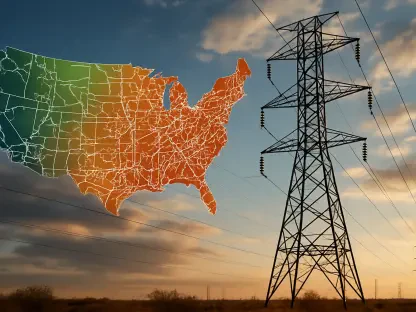

Artificial intelligence is rapidly becoming the defining technology of our era, yet its meteoric rise casts a long and ominous shadow over global environmental sustainability. While celebrated for its potential to solve humanity’s greatest challenges, AI is powered by an infrastructure with an insatiable appetite for energy and natural resources, contributing directly to the climate crisis it is being positioned to solve. This profound paradox places the technology at a critical crossroads, forcing a difficult examination of its true cost. Is artificial intelligence an indispensable ally in the fight for a greener future, or is it a formidable foe, accelerating environmental degradation under the guise of progress? The answer is far from simple, as AI’s role is a complex duality of immense promise and significant peril, a double-edged sword whose final impact on the planet remains dangerously uncertain.
The Unseen Cost of Digital Intelligence
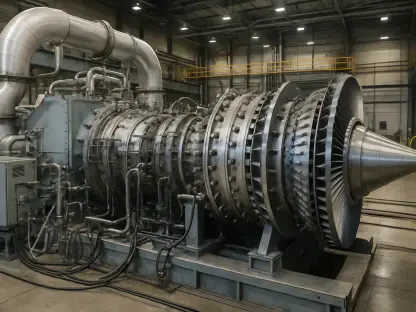
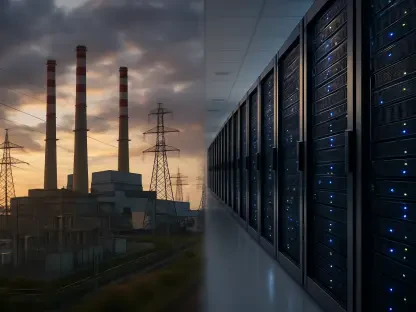
The environmental burden of artificial intelligence begins with its physical foundation: the vast and power-hungry compute resources required to bring it to life. Far from existing in an ethereal digital cloud, AI systems are dependent on massive arrays of tangible hardware, including central processing units (CPUs), graphics processing units (GPUs), and other specialized processors designed for parallel computation. These components are the engines of AI, performing the trillions of calculations needed to train and operate sophisticated Large Language Models (LLMs) and other complex algorithms. This hardware is housed within sprawling, highly secure facilities known as data centers. The most advanced of these, purpose-built for AI development, are often referred to as “AI Factories.” These are not merely large buildings with servers; they are industrial-scale operations with staggering energy requirements, often operating at the gigawatt level, demanding a continuous and reliable flow of immense power to function.
The direct consequence of this voracious energy consumption is a colossal carbon footprint that is growing at an alarming rate. The process of training a single, complex AI model can emit hundreds of tons of carbon dioxide, an amount comparable to the lifetime emissions of several conventional cars. This problem is exacerbated by the fact that while some technology companies are investing in renewables, many data centers worldwide continue to draw their power from grids heavily reliant on fossil fuels like coal and natural gas. Beyond its energy demands, AI infrastructure has a significant thirst for another critical resource: fresh water. Billions of gallons are used annually for cooling the densely packed racks of servers, placing a considerable strain on local water supplies that are often already stressed and are essential for agriculture, industry, and human consumption. This hidden resource cost adds another layer to AI’s growing environmental toll, challenging the notion of a clean, digital economy.
This environmental impact is not a static issue; it is escalating dramatically with the relentless pace of AI innovation. As researchers develop larger and more capable models, the energy required to train them increases exponentially. A model with billions of parameters demands orders of magnitude more power than one with millions. Furthermore, the energy expenditure does not cease once a model is trained. The deployment phase, where AI powers real-time applications such as search engines, content recommendation systems, and translation services, requires continuous, around-the-clock processing. The iterative nature of AI research, involving constant retraining and optimization to improve performance, further compounds the total energy consumed over a model’s lifecycle. This cycle of development and deployment creates a compounding demand for power that is quickly becoming unsustainable.
Global projections paint a startling picture of what lies ahead if current trends continue unabated. According to the International Energy Agency, the electricity consumption of data centers, AI, and cryptocurrencies is set to skyrocket, potentially equaling the entire energy intake of Japan by 2026. Another forecast suggests that by 2030, if all the world’s data centers were considered a single country, their energy demand would rank fourth globally, trailing only China, the United States, and India. This explosive growth is already creating immense pressure on national energy grids, forcing some industrialized nations to contemplate drastic measures. In a startling reversal of climate commitments, some are considering the construction of private nuclear power plants or even ramping up fossil fuel production specifically to meet the energy demands of the AI revolution, threatening to derail global progress on climate change.
Harnessing AI for a Sustainable Future
In stark contrast to its heavy environmental toll, artificial intelligence also presents a powerful suite of tools that could revolutionize the global quest for sustainability. The technology’s capabilities for data analysis, optimization, and prediction align directly with critical environmental objectives, including the United Nations Sustainable Development Goal 7, which aims to ensure universal access to affordable, reliable, and clean energy. When strategically deployed, AI can become a pivotal catalyst for innovation across the clean energy sector. It offers the potential to optimize outdated energy grids, accelerate the integration of renewable resources, and drive unprecedented gains in energy efficiency across every facet of the economy. This positions AI not just as a consumer of resources but as a critical enabler of a more sustainable and resilient energy future, offering a pathway to mitigate the very problems it helps create.
One of the most significant contributions AI can make is in overcoming the core challenge of renewable energy sources: their intermittency. The output of solar and wind farms is inherently variable, depending on weather conditions, which creates significant challenges for maintaining the stability of the electrical grid. AI-driven forecasting models can address this problem with remarkable accuracy. By analyzing vast datasets—including historical weather patterns, real-time satellite imagery, and sensor readings from turbines and panels—machine learning algorithms can predict energy generation hours, days, or even weeks in advance. This predictive power allows grid operators to better prepare for fluctuations, optimize the dispatch of energy from various sources, and ensure a stable and reliable supply of electricity. For solar energy, AI can forecast solar irradiance to maximize farm output, while for wind energy, it can predict changes in wind speed and direction, making renewables a more dependable part of the energy mix.
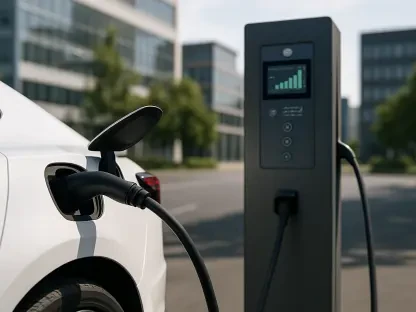
Beyond enhancing renewables, AI is poised to become a transformative force for driving energy efficiency on a global scale, a crucial step in reducing overall consumption and emissions. In the built environment, AI-powered management systems can intelligently control heating, ventilation, and air conditioning (HVAC) in commercial and residential buildings. These systems adjust to real-time occupancy patterns, external weather conditions, and user preferences, significantly reducing electricity waste and lowering utility bills. In industrial settings, AI can monitor the performance of heavy machinery and optimize complex production processes to enhance efficiency and minimize resource use. In the transportation sector, AI algorithms are already optimizing energy use in electric vehicles (EVs) by analyzing traffic patterns and driver behavior to calculate the most efficient routes and charging schedules, which in turn improves battery longevity and reduces the overall demand placed on the power grid.
A Double-Edged Sword for a Fragile Planet
The exploration of artificial intelligence’s environmental impact revealed a technology of profound and challenging contradictions. On one side, the immense energy and water requirements for training and deploying AI models presented a direct and growing threat to global climate commitments, positioning it as a significant driver of resource depletion and carbon emissions. The physical infrastructure underpinning the AI revolution was shown to be a voracious consumer, with projections indicating a future demand for power that could undermine years of progress in clean energy. On the other side, however, the same technology offered a powerful and versatile toolkit for building a more sustainable world. Its capacity to optimize renewable energy integration, drive unprecedented gains in energy efficiency, and manage complex systems offered a compelling vision where AI acted as a key to solving the climate crisis. The narrative deliberately avoided a definitive verdict, leaving the final judgment on AI’s role as a friend or foe to be determined by the choices made in its development and deployment. The analysis served as a balanced exposition of the high stakes involved, highlighting both the hidden environmental costs of the AI revolution and its immense promise.