
As California pushes towards a fully decarbonized grid by 2045, the challenge of storing massive amounts of renewable energy for long durations has become paramount. Stepping into this critical gap is Hydrostor, a Canadian company deploying a first-of-its-kind technology in the high desert of Kern County. I’m sitting down with Christopher Hailstone, a leading expert in grid-scale storage and utility project development, to discuss the company’s groundbreaking 500-megawatt Willow Rock project. We’ll explore the innovative mechanics of Advanced Compressed Air Energy Storage, the intricate journey of bringing such a massive project to life, how it competes on cost with traditional power plants, and what it signals for the future of the U.S. energy grid.
The 500 MW Willow Rock project is a massive, first-of-its-kind A-CAES system. Can you walk me through the key steps of how it stores and releases energy, highlighting how you solved the engineering challenge of capturing and reusing heat to boost efficiency?
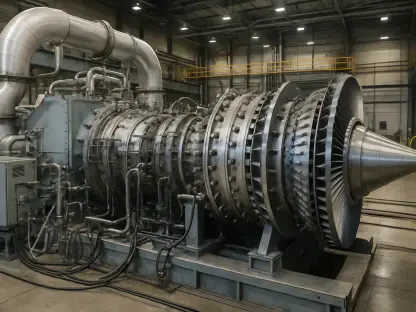
Of course. At its core, the process is elegantly simple, leveraging basic principles of physics at a massive scale. When the sun is shining or the wind is blowing, we use electricity from the grid to run a large compressor. This compressor forces air into purpose-built rock caverns deep underground. The real magic, and our key innovation, happens right at the beginning of that process. Compressing air generates a tremendous amount of heat, which in older CAES designs was simply vented as waste. We capture that heat and store it in a separate thermal storage tank. To keep the compressed air locked in the caverns, we use an aboveground water reservoir that creates a constant, steady pressure. When the grid needs power, we simply release that water head, allowing the compressed air to rush back to the surface. As it comes up, we recombine it with the stored heat, which dramatically expands the air before it drives a turbine. This heat-recapture step is what makes it “Advanced” A-CAES; it boosts our round-trip efficiency significantly and completely eliminates the need to burn natural gas to heat the air on its way out, which was a major drawback of legacy systems.
You’ve secured the key CEC permit after a long process. Could you share an anecdote about the most significant hurdle you cleared to get this approval and outline the major federal actions remaining before your planned mid-2026 groundbreaking in Kern County?
Getting a “first-of-its-kind” project of this magnitude through a rigorous process like the California Energy Commission’s is always a monumental task. The biggest hurdle wasn’t a single objection but rather the educational process. We had to demonstrate, with absolute certainty, the safety, reliability, and environmental integrity of a technology that regulators hadn’t seen at this scale before. I remember marathon sessions where our engineers detailed the geology of the purpose-built caverns and the closed-loop nature of our water and thermal systems. The turning point came when we could clearly show how our Ontario reference facility, though smaller, had validated the core principles for years. Seeing that tangible proof of concept provided the confidence needed. Now, with the CEC permit in hand, we’re focused on a few remaining federal actions. These are typical for any large infrastructure project and are already underway. They’re the kind of final agreements and clearances you complete in the months leading up to construction, and we are absolutely confident in our ability to secure them well in advance of our mid-2026 target to break ground.
Your CEO cited an installed cost around $3,000/kW, making A-CAES competitive with new gas plants. Can you break down the primary cost drivers for a project of this scale and detail the specific innovations that create your “clear path” to a 20% cost reduction?
That’s the figure that really makes utilities and grid operators take notice. When you see new combined-cycle gas plants being quoted at over $2,000/kW, our system, which offers similar grid services without any emissions, becomes incredibly competitive, especially for an asset with a 50-year life. The primary cost drivers are the major physical components: the civil engineering work for the purpose-built caverns, the turbomachinery for the four power trains, and the thermal storage system. Constructing the 19-mile transmission line to interconnect at the Whirlwind Substation is also a significant piece. The “clear path” to a 20% cost reduction comes from the classic learning curve of a new technology. With each project, we refine our cavern construction techniques, standardize the design of the power trains, and achieve greater economies of scale in our supply chain. Willow Rock is the first 500 MW facility, but as we build out our 6 GW pipeline, the replication and optimization will naturally drive down those initial costs.
Going from a 1.75 MW facility in Ontario to the 500 MW Willow Rock project is a huge leap. What were the most critical operational lessons learned from your reference facility that you are applying in California, and what new logistical challenges do you anticipate?
That leap in scale is immense, but it’s a very deliberate one. The 1.75 MW Ontario facility has been our workhorse since 2019. It wasn’t built to power a city, but to prove, unequivocally, that the A-CAES process works exactly as designed. It validated our models for thermal storage efficiency, cavern integrity under pressure cycling, and the overall system reliability. That operational data is the bedrock of the entire Willow Rock design. The new challenges in California are less about the core technology and more about the logistics of scale. We’re going from a small industrial site to an 89-acre construction project in Kern County. We have to manage the construction of a new 230-kV transmission line, coordinate the delivery and assembly of four massive power turbine trains, and execute the excavation of caverns on a scale hundreds of times larger than in Ontario. It’s a shift from a technology demonstration to a major utility infrastructure build, and that requires a completely different level of project management and coordination.
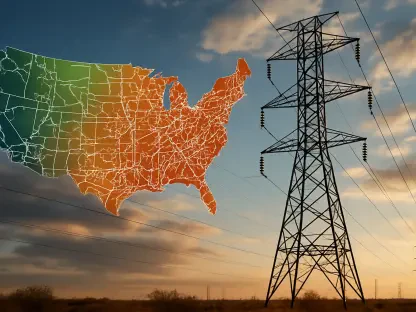
With California needing 37 GW of long-duration storage, how does the Willow Rock project serve as a blueprint for your other planned U.S. projects? What specific performance metrics—beyond just megawatts—will you use to demonstrate its success to utilities and grid operators?
Willow Rock is everything for us in the U.S. market; it’s the commercial-scale blueprint that will unlock our entire pipeline, from the other potential projects in California to those in Nevada, Arizona, and New York. When it comes online, it will be a tangible, 500 MW, 8-hour duration asset that proves this technology is ready for prime time. For utilities, the headline numbers are just the start. The metrics we’ll use to demonstrate success go much deeper. We’ll be focused on round-trip efficiency—proving our heat-capture system delivers real-world gains. We’ll track availability and ramp rates, showing that we can be as reliable and flexible as a traditional power plant. Most importantly, we’ll demonstrate the levelized cost of storage over its 50-year operational life. When you can show a utility a cost-competitive asset that will be a stabilizing force on their grid for half a century, that becomes an incredibly powerful argument.
What is your forecast for the role of non-lithium-ion, long-duration storage technologies like A-CAES in the U.S. grid over the next decade?
I believe their role will shift from being a niche alternative to an absolute necessity. The next decade will be defined by the grid reaching levels of renewable penetration where simply shifting a few hours of solar production from midday to evening isn’t enough. We are going to face multi-day periods of low wind or sun, and that’s where lithium-ion batteries, which are fantastic for short-duration services, start to struggle economically. California’s legal mandate for 37 GW of long-duration storage isn’t just a policy goal; it’s a reflection of engineering reality. Technologies like A-CAES are built for this future. With a 50-year design life and the ability to add storage duration for a low marginal cost, we provide the kind of bulk, long-haul energy storage that will be required to truly replace the gas fleet. I forecast that within ten years, you will see multiple gigawatts of non-lithium technologies like ours under construction and operating as the backbone of a reliable, clean grid.