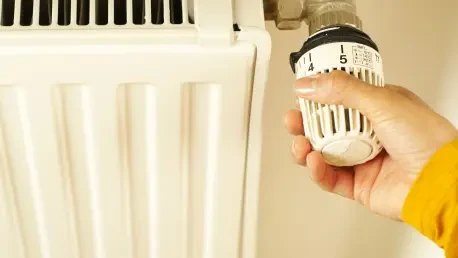

If Pascal can prove the long-term structural integrity of its porous material, the startup could provide the most significant HVAC upgrade in two centuries. Since the mid-1800s, the world has cooled and heated interior spaces using the same fundamental mechanics: the compression and expansion of chemical refrigerants. This vapor-compression cycle, while revolutionary at its inception, has reached a plateau of efficiency that hinders global decarbonization goals. Modern climate technology now demands a radical departure from these mechanical traditions, especially as energy costs continue to fluctuate and regulatory pressures mount. Pascal represents a bold pivot toward solid-state chemistry, replacing the complex machinery of traditional compressors with a proprietary material that acts like a thermal sponge. By targeting a 20% increase in operational efficiency, this innovation does more than just update a legacy system; it establishes a new benchmark for how society manages heat. This shift comes at a critical juncture when the demand for electrification is surging across urban landscapes.
Material Science: The Solid-State Advantage
The fundamental physics behind Pascal’s approach centers on a departure from the volatile gases that have defined the industry for generations. Most conventional heat pumps rely on hydrofluorocarbons (HFCs), which absorb heat as they evaporate and release it as they condense back into a liquid state. In contrast, Pascal utilizes a solid, porous material designed to absorb and release thermal energy through a molecular process that requires far less mechanical work. This “thermal battery” concept allows the system to store energy and release it on demand without the heavy friction and energy losses associated with driving a high-pressure compressor. By focusing on the intrinsic properties of the material rather than the physical phase change of a gas, the system eliminates several points of mechanical failure. The result is a much quieter, more compact unit that can be integrated into diverse architectural settings where traditional bulky compressors were previously a hindrance.
Thermal Dynamics: Streamlining the Energy Cycle
Streamlining the thermodynamic cycle in this manner allows for a level of precision that traditional hardware struggle to emulate. In the standard industry cycle, a significant portion of energy is wasted simply overcoming the inertia of mechanical parts and moving gases through restrictive valves. Pascal’s solid-state alternative bypasses these bottlenecks by utilizing a simpler charging and discharging mechanism. This streamlining is what enables the projected 20% jump in performance, a figure that is virtually unheard of in a sector accustomed to gains of only one or two percent per decade. Beyond the raw numbers, this technology provides a more consistent thermal output, avoiding the jerky cycles of starting and stopping that often plague older heat pump models. This stability is crucial for maintaining indoor comfort while simultaneously reducing the peak load on local electrical grids. As the technology matures, it promises to simplify the entire supply chain by removing the need for high-pressure components.
Climate Action: Eliminating Greenhouse Gas Leaks
The environmental stakes of this technological transition are incredibly high, as buildings currently account for approximately 40% of global energy consumption. Within these structures, heating and cooling processes are responsible for nearly half of that total, creating a massive carbon footprint that is difficult to mitigate with existing tools. Furthermore, the HFC refrigerants used in traditional systems are notorious for their high global warming potential, often being thousands of times more potent than carbon dioxide when leaked during maintenance or disposal. Although the Kigali Amendment has set a clear path for phasing down these chemicals, the industry has struggled to find suitable replacements that are both safe and efficient. Pascal’s solid-state design addresses this paradox by removing chemical refrigerants from the equation entirely. By utilizing a solid material that does not leak or evaporate into the atmosphere, the system provides a clean alternative.
Market Potential: Economic Adoption and Scalability
From an economic perspective, the incentive for adopting Pascal’s technology is driven by the significant reduction in lifetime operating expenses. While the initial cost of installing a novel system can be a barrier, a 20% increase in efficiency translates into thousands of dollars in savings over the lifespan of a typical building. For property managers and commercial developers, these savings provide a compelling return on investment that often outweighs the risks of being an early adopter. Furthermore, as governments implement stricter carbon taxes and building codes, the financial penalty for sticking with inefficient fossil-fuel systems will only grow. This economic reality makes the transition to high-efficiency electric heating a logical choice rather than just a moral one. By providing a system that is both environmentally benign and cheaper to operate, Pascal is positioning itself to capture a significant share of the market as infrastructure is replaced across North America.
Sustainability: Implementing Long-Term Structural Solutions
Property owners and urban planners prioritized the integration of solid-state thermal systems to meet the aggressive carbon reduction targets of the late decade. This transition required a shift in how building managers approached long-term maintenance budgets, moving funds from mechanical repairs to material-based monitoring. Future considerations focused on the end-of-life recycling of proprietary porous materials to ensure that the hardware did not create a new waste stream. By adopting these high-efficiency units, communities managed to stabilize their energy grids even during extreme seasonal fluctuations. Stakeholders were encouraged to invest in training for contractors to ensure the unique hardware was installed with the same level of expertise as traditional systems. Ultimately, the adoption of Pascal’s innovation demonstrated that moving beyond vapor compression was not just a technical possibility, but a vital economic strategy for modern infrastructure that successfully reduced dependence on fossil fuels.