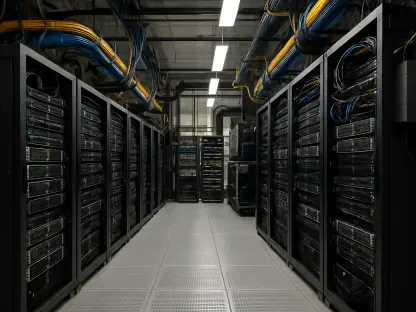
In a quiet state like West Virginia, where rolling hills and small communities define the landscape, an unexpected economic burden is emerging from a source far beyond its borders, driven by the rapid expansion of data centers. Particularly in northern Virginia’s bustling “Data Center Alley,” this growth is driving up electricity costs for West Virginians, despite the state hosting no major facilities of its own. These hubs of digital infrastructure, fueled by the explosive growth of artificial intelligence and internet services, are consuming vast amounts of power, straining the regional grid, and passing on significant costs to consumers in interconnected states. This situation reveals a stark reality: technological advancements in one area can have profound financial ripple effects on neighboring regions. As energy demands soar, the shared nature of the power grid means that ratepayers hundreds of miles away are footing the bill for an industry they may not directly engage with or benefit from.
The Strain on the Regional Power Grid
The power grid managed by PJM Interconnection, which spans 13 states including West Virginia, is under immense pressure due to the escalating energy needs of data centers. These facilities require enormous amounts of electricity to operate servers and cooling systems, often outpacing the grid’s current capacity to generate power. The cost to secure a sufficient electricity supply has skyrocketed in recent times, ballooning from a much lower figure to an astonishing $14.7 billion annually. These expenses are not isolated to the areas hosting data centers but are distributed across all ratepayers in the PJM region. For West Virginians, this means paying for energy demands driven by facilities in northern Virginia, a situation that feels both unfair and disconnected from their daily lives. The consensus among energy experts is clear: without intervention, this imbalance will continue to burden consumers who are geographically and economically distant from the source of the demand.
Beyond the immediate cost of securing power, the broader implications of grid strain are becoming evident. The mismatch between soaring electricity demand and stagnant supply growth is a persistent challenge that affects not only power costs but also fuel prices across the region. As data centers proliferate, the grid struggles to keep pace, leading to higher operational expenses that trickle down to every household and business connected to PJM. In West Virginia, where many residents already grapple with economic challenges, these added costs exacerbate financial pressures. The situation underscores a critical need for strategic planning to address supply shortages and prevent further escalation of electricity bills. Without targeted reforms, the burden of supporting a tech-driven economy will continue to fall disproportionately on those least equipped to bear it, highlighting the urgent need for a reevaluation of how energy costs are managed across state lines.
Infrastructure Costs and Community Pushback
To meet the energy demands of data centers, significant infrastructure upgrades are underway, but they come at a steep price for West Virginians. Two proposed transmission lines, designed to bolster power delivery to northern Virginia, are set to cut through parts of West Virginia, sparking considerable opposition from local communities. According to estimates from the Institute for Energy Economics and Financial Analysis (IEEFA), these projects could cost West Virginia ratepayers over $440 million over the next 40 years. Residents and advocacy groups argue that it’s unjust for them to shoulder such expenses for infrastructure that primarily benefits out-of-state industries. The debate has fueled calls for a revised approach to cost allocation within the PJM grid, with experts suggesting that entities driving the demand—namely, data center operators—should bear a larger share of the financial load rather than spreading it across all consumers.
Community resistance to these transmission lines is not just about cost but also about the disruption they bring to local landscapes and livelihoods. Many West Virginians view the projects as an imposition, cutting through their land without offering tangible benefits in return. This sentiment is compounded by the state’s historical context of low electricity rates, which have been eroded over time due to reliance on coal and a declining population. The added burden of infrastructure costs feels like a double blow to a region already facing economic headwinds. Energy analysts, such as Cathy Kunkel from IEEFA, emphasize that fairer cost distribution is essential to protect vulnerable ratepayers. As discussions around these projects continue, the tension between technological progress and regional equity remains a central issue, with West Virginia caught in the crossfire of a larger energy policy debate.
Historical Context and Uneven Impacts
West Virginia’s energy landscape has long been shaped by its coal-dependent economy, which historically kept power rates among the lowest in the nation. However, shifts toward cheaper alternative energy sources and a shrinking population have already begun to erode this advantage, making the state more vulnerable to external cost pressures. The rise in electricity prices driven by data centers in neighboring states adds another layer of strain, hitting households and businesses that are ill-prepared for such increases. This convergence of internal and external factors paints a troubling picture for the state’s economic stability, as residents find themselves paying more for a resource that was once a point of affordability. The interconnected nature of the regional grid means that West Virginia cannot escape the fallout from decisions made far beyond its borders, amplifying the sense of powerlessness among its citizens.
Interestingly, not all West Virginians are feeling the pinch in the same way. Approximately 460,000 residents served by Appalachian Power and Wheeling Power are somewhat shielded from these cost hikes. Their parent company maintains sufficient generation capacity to mitigate the impact of regional grid pressures, offering a buffer that other parts of the state do not enjoy. This disparity highlights the uneven distribution of economic burdens within West Virginia itself, where access to stable power resources can determine financial outcomes for entire communities. While some escape the worst of the price surges, others bear the full weight of a system that seems to prioritize industrial demands over individual needs. This uneven impact raises questions about equity and the role of utility providers in safeguarding consumers from the ripple effects of a rapidly evolving energy landscape.
Balancing Technology and Economic Fairness
Looking back, the challenges faced by West Virginia in dealing with rising power costs were deeply tied to the unchecked growth of data centers in nearby regions. The staggering jump in costs to secure electricity, coupled with hundreds of millions in projected infrastructure expenses, placed a heavy financial strain on ratepayers across the PJM grid. Communities in West Virginia, despite having no direct stake in the data center boom, were compelled to absorb the economic consequences of a tech-driven world, revealing stark inequities in how energy costs were distributed.
Moving forward, addressing this imbalance demands innovative solutions and policy reforms that prioritize fairness. Stakeholders must explore mechanisms to ensure that data center operators shoulder a proportionate share of grid and infrastructure costs. Additionally, strategic investments in local power generation could help insulate states like West Virginia from external pressures. As technology continues to advance, finding a balance between progress and economic equity will be crucial to prevent further burdens on vulnerable populations and to foster a more sustainable energy future for all.