
Christopher Hailstone stands as a leading voice in the evolution of American utility infrastructure, bringing decades of expertise in energy management and grid security to the table. As the federal government moves to support massive energy transitions, his insights into the financial and technical mechanics of power delivery are more relevant than ever. This discussion explores the implications of a historic $26.5 billion Department of Energy loan package aimed at transforming the energy landscape of the Southeast. We delve into the complexities of upgrading 16.7 GW of resources, the logistical hurdles of massive transmission expansions, and the financial strategies required to keep consumer costs stable while meeting an unprecedented surge in electricity demand.
With a $26.5 billion loan package supporting an $81 billion multi-state spending plan, how does such a massive capital infusion alter the timeline for large-scale grid transformations? What specific metrics should be tracked to ensure these investments successfully deliver the projected $7 billion in customer savings?
The infusion of $26.5 billion—the largest loan in the history of the Department of Energy—acts as a high-octane catalyst that allows us to compress decades of infrastructure work into a five-year window. By integrating this capital into the broader $81 billion spending plan, we can bypass the slow, incremental debt cycles that often stall large-scale energy projects. To ensure the $7 billion in projected customer savings actually reaches the 9 million people we serve, we must rigorously track the reduction in annual interest expenses, which is estimated at over $300 million. We also monitor service reliability metrics and the speed of asset deployment to verify that the lowered cost of capital is being passed directly to the ratepayer. This level of funding provides the financial certainty needed to commit to massive 16.7 GW resource upgrades without the usual market volatility risks.
Balancing 5.3 GW of new gas generation with 6.3 GW of nuclear upgrades involves significant technical and regulatory hurdles. How do you manage the simultaneous integration of these diverse base-load sources, and what steps are necessary to ensure that license renewals for older nuclear facilities remain cost-effective?
Managing the simultaneous rollout of 5.3 GW of new gas generation alongside 6.3 GW of nuclear upgrades requires a sophisticated, multi-track regulatory strategy that prioritizes grid stability. Nuclear license renewals are particularly critical because they provide a zero-carbon foundation, but they must be managed with extreme precision to avoid the cost overruns typically seen in aging facility overhauls. We utilize standardized engineering protocols and long-lead procurement to keep these upgrades cost-effective and on schedule. The gas generation provides the necessary flexibility to ramp up quickly, while the nuclear base-load provides the steady, 24/7 power required by our growing industrial and residential sectors. By modernizing these two pillars at once, we create a diversified portfolio that can withstand shifting environmental regulations and fuel price fluctuations.
Developing over 1,300 miles of transmission and distribution projects often faces significant logistical delays and local opposition. What specific strategies can be used to expedite these projects to meet the surging demand of 9 million customers, and how do you prioritize these upgrades against hydropower and storage projects?
Completing over 1,300 miles of transmission and distribution work requires an aggressive approach to project management and community partnership to avoid the bottlenecks of local opposition. We prioritize these miles based on where demand growth is most acute, ensuring that the new electricity generated can actually reach the 9 million customers who need it. Logistics are streamlined by integrating the 1 GW of hydropower modernization and new battery energy storage systems into the transmission timeline, preventing “stranded” generation that has no path to the grid. This sequencing ensures that as soon as a turbine or storage facility goes live, the wires are already in place to carry that load. Our goal is to create a seamless energy corridor that bridges the gap between traditional generation and modern storage solutions.
Reducing annual interest expenses by over $300 million is intended to help stabilize electricity costs during periods when base rates are frozen. How do these operational savings influence long-term financial planning, and what internal processes ensure that these funds are directly applied to enhancing grid resilience and reliability?
The reduction of over $300 million in annual interest expenses provides a critical financial cushion that allows us to maintain infrastructure momentum while Georgia and Alabama rates remain frozen through 2028 and 2027, respectively. These savings are not just numbers on a balance sheet; they are redirected into “grid hardening” initiatives that improve physical and cyber resilience. We have established internal audit processes to ensure every dollar saved from debt servicing is reinvested into the reliability of the 16.7 GW resource pool. This financial maneuver allows us to absorb the costs of transformative growth without putting an immediate burden on the customer. It effectively turns a potential financial liability—high-interest debt—into a strategic asset for long-term grid security.
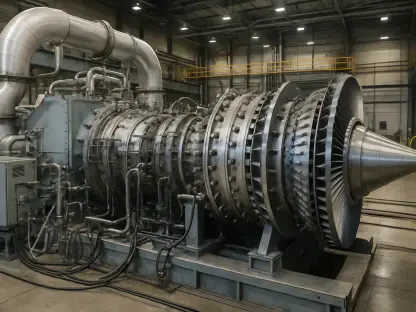
New gas turbines at sites like the Yates Power Plant are scheduled to be online by 2027, followed by more generation in 2030. What are the primary technical risks in meeting these aggressive construction deadlines, and how does the current pace of regional growth impact the sequencing of these projects?
The primary technical risks for the 1.3 GW expansion at the Yates Power Plant involve the tight coordination of supply chains for specialized turbine components and the availability of high-skilled labor. Meeting the 2027 deadline is non-negotiable because regional growth in the Southeast is surging at a rate that threatens to outpace current capacity. If we fail to bring these units online on time, we risk reliability gaps as we move toward the 2030 generation targets for our other three plants. The pace of this growth forces us to sequence projects in a way that minimizes downtime, often working on multiple plant sites simultaneously to stay ahead of the curve. It is a high-stakes race where the prize is a stable, modern energy economy for millions of residents.
What is your forecast for the future of grid infrastructure in the Southeast?
I forecast that the Southeast will become the blueprint for a hybrid energy model where traditional base-load power and advanced storage technologies work in perfect synchronization. With the $26.5 billion federal investment acting as a foundation, we will see a rapid shift toward a grid that is not only larger but significantly smarter and more responsive to real-time demand. Over the next decade, the successful integration of 5.3 GW of gas and 6.3 GW of nuclear upgrades will provide the most stable power prices in the country, attracting even more industrial growth to the region. We are entering an era where the grid is no longer a passive delivery system, but a dynamic, multi-directional network capable of supporting 9 million customers with unprecedented reliability. This massive capital infusion is just the beginning of a total structural rebirth for Southern energy.