
The ability of municipal utilities to maintain uninterrupted service during extreme weather events has shifted from a luxury to a fundamental requirement for economic stability in the modern era. EPB of Chattanooga, a longtime leader in utility innovation, has recently implemented a transformative initiative that marks a significant pivot toward a decentralized and responsive energy architecture. By activating a sophisticated network of battery-based microgrids, the utility is directly addressing the escalating pressures of climate-related disruptions and volatile operational expenditures. This strategic move involves the integration of 29 MW/58 MWh of energy storage across five critical sites, serving as the first phase of a broader plan to expand storage capacity to 150 MW. Through a combination of federal support, specialized research, and precision engineering, this project establishes a new benchmark for how local power distributors can safeguard their communities.
Strengthening the Modern Grid: EPB’s Pivot to Battery Microgrids
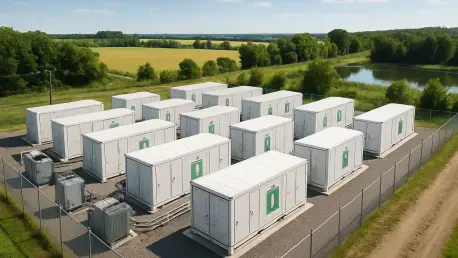
The deployment of these five initial microgrid sites represents more than just a capacity increase; it is a fundamental redesign of how local energy is managed and distributed. EPB is currently utilizing this 29 MW/58 MWh storage network to buffer the distribution system against the unpredictability of the regional energy market. This initiative is particularly notable for its scale, as the utility aims to integrate between 100 MW and 150 MW of total storage capacity within the next few years. By decentralizing storage, the utility creates a flexible buffer that can respond to localized demand spikes without relying solely on the broader regional transmission network. This transition is supported by a robust framework of federal investment and local technical expertise, ensuring that the infrastructure is as fiscally sound as it is technologically advanced.
From Smart Grid Pioneer to Energy Storage Leader
The success of this current storage initiative is rooted in a decade of progress involving a fiber-optic-powered smart grid that revolutionized outage management in the Tennessee Valley. However, while automation improved response times, the increasing frequency of extreme weather and rising peak demand necessitated a shift from reactive repairs to proactive load management. Historically, utilities in the region functioned under rigid wholesale power agreements that offered little room for local intervention during periods of high stress. The evolution toward battery storage allows EPB to move beyond the limitations of traditional distribution by creating a “defense-in-depth” strategy. This background is vital for understanding how the utility is now using storage to navigate the financial and physical constraints imposed by a rapidly changing energy landscape.
Optimizing Operations and Cutting Costs
Peak Shaving and the Economics of Wholesale Power
A primary driver behind this storage strategy is the mitigation of massive demand charges incurred during peak usage periods. As a distributor for the Tennessee Valley Authority, EPB manages a financial structure where wholesale costs are heavily influenced by the highest hour of demand each month. These charges frequently account for one-third of the total power purchase budget, creating a significant burden on local ratepayers. By discharging battery systems during peak windows—such as the intense cold snaps experienced in recent winters—the utility effectively “shaves” the top off its demand profile. Because energy storage does not count against specific self-generation limits in existing contracts, it provides a unique mechanism to lower costs while maintaining a seamless supply of electricity.
Advanced Controls and the Partnership with Oak Ridge National Laboratory
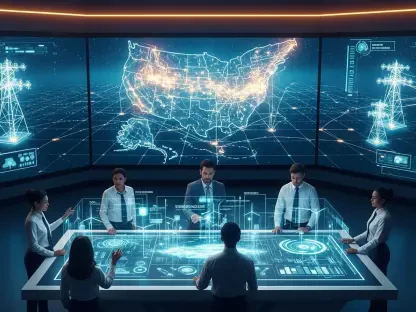
The technological sophistication of the project is significantly enhanced by a collaborative effort with Oak Ridge National Laboratory. Central to this partnership is the implementation of an advanced microgrid control platform designed to provide unprecedented visibility and command over the local grid. This software enables the creation of “nested” microgrids, which possess the unique ability to dynamically expand or contract their boundaries based on real-time supply and demand data. This level of flexibility ensures that power can be prioritized for essential services and critical infrastructure during a localized crisis. By integrating this research-driven control logic, the utility is transforming its distribution network into an intelligent, autonomous system capable of self-healing and optimization.
Tailoring Solutions to Urban and Rural Geographies
Recognizing that different areas of the service territory face unique challenges, the deployment utilizes customized battery configurations for urban and rural settings. In high-density urban centers, the utility employs two-hour battery systems optimized for rapid discharge during peak shaving events to maximize financial savings. In contrast, rural areas at the end of long, radial distribution lines are equipped with four-hour discharge capacities. These rural systems act as a vital safety net for customers who are more susceptible to outages caused by fallen trees or storm damage. This nuanced engineering approach ensures that the benefits of the investment are distributed equitably, providing reliability for remote residents and economic efficiency for the broader system.
The Evolution of Grid Hardening and Decentralization
The trajectory of grid resilience is moving toward a model that combines digital intelligence with physical reinforcement. Supported by a $32.3 million grant from the U.S. Department of Energy, this initiative is paired with extensive grid hardening efforts, including the replacement of aging utility poles and the transition to underground power lines. Looking forward, the trend toward decentralization is expected to accelerate as more utilities seek to insulate themselves from the risks inherent in a centralized energy model. The industry is shifting toward a future where “islands” of power can maintain local operations even if the regional transmission system suffers a catastrophic failure. This move toward localized autonomy is becoming a prerequisite for any utility aiming to provide high-reliability service in an era of increasing volatility.
Strategic Takeaways for the Utility Sector
The EPB microgrid project provides essential lessons for the broader energy industry regarding the implementation of large-scale storage projects. One of the most significant takeaways is the necessity of leveraging federal matching grants to bridge the gap between initial capital costs and long-term operational savings. Furthermore, the project highlights that technology must be adapted to local geography; a one-size-fits-all approach is often less effective than specialized rural and urban configurations. For municipal utilities, this deployment proves that energy storage is a critical tool for economic survival, allowing them to hedge against price spikes and maintain continuity. Utilities that invest in these systems now will be better positioned to handle the stresses of future electrification and shifting demand patterns.
Securing the Future of Local Power Distribution
The integration of these battery systems demonstrated that local power distributors could successfully decouple their reliability from the vulnerabilities of the larger bulk power system. Stakeholders recognized that the path forward required a permanent shift toward multi-resource microgrids that blended storage with existing fiber-optic intelligence. This initiative solidified the role of the utility as a proactive manager of energy rather than a passive distributor, ensuring that the community remained resilient against both economic and environmental shocks. The strategy effectively utilized targeted energy discharge to protect residents from the rising costs of wholesale power. Ultimately, the successful deployment of these assets provided a clear roadmap for other municipalities to modernize their infrastructure through strategic partnerships and advanced technology.