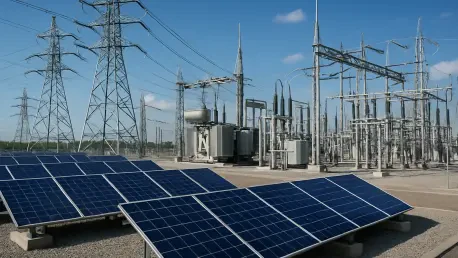

The American power grid is currently grappling with a load-growth supercycle that threatens to turn electricity into the next major cost-of-living crisis for millions of households. As AI-driven data centers, industrial reshoring, and aggressive electrification efforts converge, the traditional utility model of simply building more “poles and wires” has hit a financial and physical breaking point. This strategy review examines a pivotal shift toward a “Build Smarter” philosophy, which prioritizes maximizing the efficiency of our existing infrastructure over the reflexive construction of multi-billion dollar natural gas plants. By treating grid utilization as a primary performance metric, this framework offers a rare path toward maintaining reliability without forcing ratepayers to subsidize a massive, underused overbuild.
Modernizing the Grid: Principles of Enhanced System Utilization
The traditional logic governing utility expansion has long been “peak-driven,” meaning systems are designed to handle the single most demanding hour of the year, plus a safety margin. While this ensures the lights stay on during the hottest summer days, it results in a national infrastructure that sits roughly 50% idle on average. Modern grid strategy seeks to flip this script by focusing on “utilization-focused” management. Instead of building for a rare peak, the goal is to smooth out that peak and fill in the valleys of demand, making the existing system work harder and more consistently.
A modernized grid is defined by its digital management layers and the seamless integration of distributed energy resources. Rather than a one-way flow of power from a central plant to a passive consumer, the system becomes a dynamic network. This shift is critical because it addresses the growing tension between rapid industrial expansion and the financial limits of the average ratepayer. By leveraging software and real-time data, operators can identify exactly where capacity is available, allowing for new connections without the decade-long wait times associated with traditional transmission projects.
Core Pillars of the Affordability Roadmap
Virtual Power Plants (VPPs) and Distributed Resources
Virtual Power Plants represent a sophisticated evolution in how we perceive consumer electronics, transforming smart thermostats, electric vehicle chargers, and home batteries into a collective reliability asset. By aggregating these fragmented devices into a single, controllable resource, utilities can call upon thousands of homes to subtly shift their energy use during times of high stress. This isn’t just a gimmick; it is a scalable capacity source that can be deployed faster than any physical power plant. When a VPP reduces demand at the distribution level, it eliminates the need for expensive “peaker” plants that only run a few hours a year but cost a fortune to maintain.
The performance of these virtual systems is unique because they solve local congestion issues that central plants cannot reach. In areas where the local substation is at its limit, a VPP can relieve pressure precisely where it is needed most. This granular control allows for a more surgical approach to grid management, preventing the broad-brush infrastructure upgrades that typically drive up monthly utility bills. Moreover, VPPs provide a rare opportunity for consumers to be compensated for their flexibility, effectively turning a liability—energy consumption—into a financial asset for the household.
Grid-Enhancing Technologies (GETs) and Advanced Infrastructure
Beyond consumer-side management, the physical wires themselves are undergoing a technological upgrade through Grid-Enhancing Technologies. Tools like dynamic line ratings utilize real-time weather sensors to determine exactly how much electricity a wire can safely carry at any given moment. Traditional ratings are static and conservative, often underestimating capacity by 20% or more. By using real-time data, operators can push more power through existing corridors, bypassing the regulatory and environmental hurdles that frequently stall new transmission lines for years.
Furthermore, advanced conductors and power flow controls allow for a more intelligent distribution of electricity across the network. High-performance conductors can carry significantly more current with less sag and lower energy loss than standard aluminum wires. Meanwhile, flow controllers act like traffic signals for the grid, rerouting power from congested lines to underutilized ones. These technologies are not merely incremental improvements; they represent a fundamental change in how we utilize current hardware, providing a high-throughput alternative to the slow and expensive process of “digging and burying” new infrastructure.
Innovations in Regulatory Frameworks and Load Management
Recent developments in load flexibility have shifted the conversation from how we supply power to how we manage the largest consumers. Industrial giants, particularly data centers, are no longer viewed as static, “fully firm” loads that require guaranteed, permanent infrastructure. Instead, new regulatory frameworks encourage these customers to adopt interruptible service models. By agreeing to scale back operations during peak demand in exchange for lower rates or faster interconnection, these large loads help stabilize the grid rather than straining it.
This shift is accompanied by a move toward data-driven regulation, where utility companies are finally being held accountable to specific utilization metrics. Historically, utilities earned profits based on how much capital they spent on new projects, creating a “gold-plating” incentive. The emerging trend is to tie utility performance to how well they use what they already have. If a substation is only at 40% utilization, regulators are becoming increasingly hesitant to approve a second one next door. This change in industry behavior is essential to prevent residential customers from unfairly subsidizing the specialized infrastructure required by heavy industry.
Real-World Applications and the Virginia Template
Virginia has emerged as a primary case study for these strategies, largely due to the explosive growth of the data center industry in the northern part of the state. To keep up with demand without bankrupting local residents, the Virginia General Assembly integrated utilization metrics directly into their legislative framework. This allows state regulators to evaluate utility spending through the lens of performance rather than just reliability. It serves as a blueprint for how a state can foster massive economic development while maintaining a firm grip on the “math of the grid” to protect consumers.
In practice, the Virginia model has demonstrated that technologies like GETs and large-load flexibility can facilitate rapid industrial interconnection. By utilizing advanced sensors and interruptible contracts, the state has been able to bring high-tech facilities online faster than traditional methods would allow. This case study proves that the “Build Smarter” philosophy is not just theoretical; it is a functional requirement for states that want to be leaders in the AI economy without sacrificing the financial stability of their citizens.
Structural Challenges and Market Obstacles
Despite the clear benefits, integrating thousands of fragmented distributed resources into a cohesive virtual plant remains a significant technical hurdle. Managing the bidirectional flow of electricity and ensuring that a million different thermostats respond in unison requires a level of software sophistication that many legacy utilities currently lack. There is also the persistent issue of interoperability, as different manufacturers use proprietary protocols that don’t always communicate effectively with utility control centers.
The most significant obstacle, however, is the traditional utility profit model. For over a century, the industry has operated on a “gas-first” reflex because large-scale capital expenditures—like new gas turbines—guarantee a steady return for shareholders. Software-based optimization, while cheaper for the consumer, does not offer the same profit incentives for the utility. Overcoming this requires a total reform of rate designs to eliminate the “hidden” subsidies that make expensive projects look more attractive than they actually are.
Future Outlook: Affordability as a Performance Metric
The transition toward a fully optimized, high-utilization power grid will likely redefine how society views energy. In the coming years, AI-driven load forecasting will become the standard, allowing operators to predict demand surges with pinpoint accuracy days in advance. This predictive capability will be the backbone of a grid that is proactive rather than reactive, decoupling economic and industrial expansion from the linear, and increasingly unsustainable, increase of electricity bills.
As these modernization strategies mature, the “social license” for continued industrial growth will depend heavily on the perceived fairness of the system. If families feel they are being priced out of their homes to power server farms, the political backlash could stall the entire technological boom. However, by making affordability a primary performance metric of the grid itself, leaders can ensure that the benefits of the AI and industrial revolution are shared broadly across the population, rather than being concentrated at the top of the utility sector.
Conclusion: Evaluating the Shift to Smart Grid Management
The transition toward a modernization-first strategy proved to be a fundamental necessity for maintaining the integrity of the American energy sector. By moving away from the outdated, capital-intensive playbook that favored massive infrastructure overbuilds, policymakers and utility operators successfully demonstrated that existing assets held untapped potential. The integration of virtual power plants and grid-enhancing technologies showed that intelligence could indeed substitute for raw iron and steel. This shift allowed for the rapid expansion of industrial capacity without triggering the predicted energy cost-of-living crisis that had once seemed inevitable.
Ultimately, the focus on grid utilization transformed the utility industry from a provider of a static commodity into a manager of a dynamic, high-performance network. State leaders who adopted this “Build Smarter” approach moved beyond the limitations of traditional regulation, setting a new standard for how economic growth should be powered. The long-term impact was a more resilient, flexible, and equitable system that prioritized the financial well-being of the consumer. This evolution did not just stabilize power bills; it secured the social and economic foundation required for continued national innovation.