
A quiet but powerful legislative current is sweeping across the United States, carrying with it the potential to fundamentally alter how individuals interact with their energy supply. This growing movement, championed in nearly two dozen states, centers on a deceptively simple ideallowing residents to generate their own solar power by plugging a small system directly into a standard electrical outlet. This initiative aims to democratize renewable energy, making it accessible not just to homeowners with ample roof space and deep pockets, but to renters and apartment dwellers as well.
What if Slashing Your Electric Bill Was as Simple as Plugging in a New Appliance
The core concept behind the legislative push is to simplify solar energy adoption to the level of a common household purchase. Proponents envision a future where reducing reliance on the grid is no more complicated than setting up a new television. These systems, often called “plug-and-play” or “balcony solar,” are designed for user installation, bypassing the need for professional electricians and complex permitting processes that have long been barriers to entry for many.
This approach stands in stark contrast to traditional rooftop solar installations, which represent a significant financial and logistical commitment. While a conventional system costs an average of $20,000, a plug-in solar kit typically retails for around $2,000. The goal is to provide a practical, immediate way for consumers to offset a portion of their energy consumption and lower their utility bills without a major upfront investment.
The Momentum Behind Plug-and-Play Solar
The rising interest in plug-in solar is a direct response to escalating electricity costs and a growing public desire for energy independence. As utility rates climb, consumers are actively seeking alternatives to reduce their monthly expenses. Simultaneously, there is a broader cultural shift toward decentralized power generation, where individuals have more control over their energy sources.
This grassroots demand is amplified by the fact that larger, commercial-scale renewable energy projects often face significant federal hurdles and local opposition, slowing the nation’s transition to clean energy. In contrast, small-scale, consumer-level solutions like plug-in solar offer a way to advance renewable goals from the bottom up, empowering individuals to contribute directly to a more sustainable energy landscape.
Democratizing Sunshine Through New Legislation
The legislative efforts underway in states from California to New York are designed to remove the primary obstacle to plug-in solar adoption: utility pre-approval. The proposed bills aim to grant residents the right to connect small systems, typically limited to 1200 watts, to a standard wall socket without navigating a bureaucratic maze. This legal framework is modeled after a pioneering law passed unanimously in Utah, which established the first statewide blueprint for this consumer-friendly approach.
By cutting the red tape, these laws would effectively unlock solar power for a previously excluded demographic, including millions of renters and those living in multi-unit dwellings. The distinction from traditional solar is crucial; whereas rooftop systems feed excess power back to the grid and require complex interconnection agreements, these smaller plug-in units are designed to offset a home’s immediate energy consumption, powering devices like laptops, lights, or even a refrigerator directly.
Perspectives on the Plug-In Power Revolution
From a consumer standpoint, plug-in solar is viewed as a practical and timely solution to the financial pressures of modern living. The ability to generate a portion of one’s own electricity offers a tangible way to combat rising utility costs. This sentiment is echoed in the political sphere, where these bills find broad, bipartisan appeal. For lawmakers, supporting such legislation is an attractive proposition, as it delivers a direct and visible benefit to constituents without any fiscal impact on the state budget.
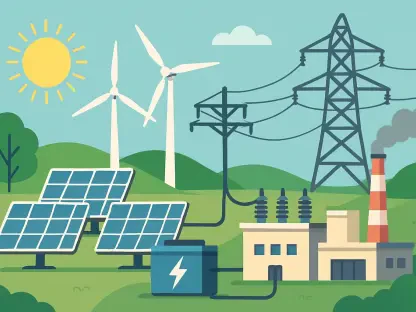
Looking at the bigger picture, this trend signifies a meaningful shift toward a more decentralized and resilient energy grid. By enabling thousands of small, independent power sources, the movement diversifies the energy supply and reduces reliance on centralized power plants. This model of distributed generation is seen by many energy experts as a key component of a more sustainable and equitable energy future.
A Guide to Joining the Solar Movement
For those interested in adopting this technology, the first step involves assessing a home’s suitability. A key requirement is access to a sunny space, such as a balcony, patio, or south-facing wall, along with a nearby grounded outdoor electrical outlet. It is also important to understand the capabilities of these systems. A 1200-watt setup, for instance, can offset the power consumption of several small appliances, making a noticeable dent in a household’s daily energy draw.
As this technology becomes more widespread, navigating the evolving regulatory landscape will be essential. While the new legislation aims to simplify the process, local rules may still apply. Furthermore, proponents anticipate that the legislative wave will accelerate the development of national safety standards, ensuring that these systems are not only effective but also universally safe for consumer use. This would further legitimize the technology and encourage even broader adoption across the country.