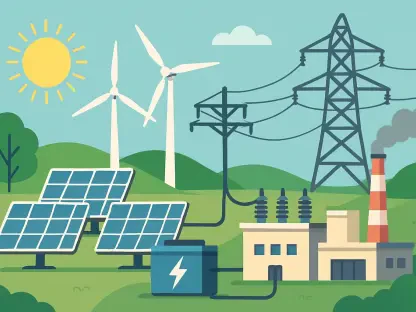

The global power infrastructure is currently grappling with a “renewable paradox” where the unprecedented surge in wind and solar generation is frequently outmatched by the rigid timing of human consumption patterns. While short-duration lithium-ion batteries have successfully mitigated momentary fluctuations, they remain fundamentally ill-equipped for the multi-day gaps in energy production that characterize a decarbonized world. This creates a critical opening for Long-Duration Energy Storage (LDES), a suite of technologies designed to provide continuous power for eight hours to several days. Rather than just a backup system, LDES serves as the foundational architecture for grid modernization, moving beyond the limitations of chemical batteries that struggle with cost-efficiency and performance degradation over long discharge cycles.
Evolution and Role of Long-Duration Energy Storage
The emergence of LDES is closely tied to the maturation of intermittent renewables. As wind and solar penetrate deeper into the energy mix, the “duck curve”—a discrepancy between peak demand and solar production—becomes more pronounced. Early storage solutions focused on frequency regulation, a task requiring high power for short bursts. However, the current landscape demands “energy-shifting,” which involves holding vast quantities of electricity for use when weather conditions are unfavorable for days on end. This transition marks a shift from a reactive grid toward a strategic one, where energy is treated as a storable commodity rather than a perishable resource.
Beyond mere storage, these technologies provide essential “synthetic inertia” to the grid. Traditional fossil-fuel plants provide stability through the physical spinning of heavy turbines, a feature that solar panels lack. By integrating mechanical and thermal storage systems, engineers can replicate this stabilizing effect, ensuring that the transition to a carbon-free grid does not come at the expense of reliability. As nations move toward 100% renewable targets, the role of LDES evolves from an optional upgrade to a mandatory prerequisite for maintaining modern societal functions.
Core LDES Technologies and Performance Metrics
Compressed Air Energy Storage (CAES)
Compressed Air Energy Storage utilizes the geological potential of the earth, pumping air into salt caverns or depleted mines during periods of low demand. When the grid requires a boost, this pressurized air is released, heated, and expanded to drive a turbine. Its significance lies in its massive scale; a single facility can provide hundreds of megawatts of power. Unlike lithium batteries, which are limited by chemical wear, CAES facilities are built to last for half a century, making them a more viable long-term infrastructure investment despite their geographical dependence on specific rock formations.
Thermal Energy Storage (TES)
Thermal Energy Storage explores the technical aspects of heat retention, using materials like molten salt, concrete, or crushed rock to hold energy. These systems often achieve an eight-hour average discharge performance by heating the storage medium to extreme temperatures during surplus production. When the sun sets, that heat is converted back into electricity through steam turbines. This method is particularly effective because it can repurpose the existing turbine infrastructure of retiring coal or gas plants, significantly reducing the capital required for a clean energy transition.
Vanadium Redox Flow Batteries (VRFB)
In the chemical storage segment, Vanadium Redox Flow Batteries offer a unique alternative to traditional solid-state batteries. These systems utilize liquid electrolytes stored in external tanks, where the capacity is determined solely by the volume of the liquid. This decoupling of power and energy allows for high scalability; if more duration is needed, one simply adds more electrolyte. Because vanadium does not degrade during cycling, these batteries can operate for decades without the capacity loss seen in smartphones or electric vehicles, providing a stable backbone for industrial-scale storage.
Market Dynamics and Emerging Sector Trends
The LDES market is currently experiencing a period of intense growth, characterized by a 49% rise in global deployments. However, this expansion is notably uneven, with a heavy concentration of installations in the Chinese market. China currently accounts for the vast majority of cumulative LDES capacity, driven by aggressive national mandates that require renewable developers to include long-duration storage in their projects. This policy-driven approach has allowed non-lithium technologies to achieve economies of scale that are currently difficult to replicate in more fragmented, market-led economies.
Moreover, there is a visible shift toward “multi-day” storage technologies designed for 100-hour discharge cycles. This trend is fueled by the realization that seasonal variations—such as a week of low wind in winter—cannot be addressed by four-hour batteries. Consequently, government-led mandates are beginning to prioritize technologies that can bridge these extended gaps. The emergence of specialized contracts for long-term reliability is creating a new asset class in the energy sector, attracting institutional investors who are looking for long-lived, low-risk infrastructure projects.
Real-World Applications and Notable Implementations
The practical application of LDES is most visible in the stabilization of grid infrastructure for energy-intensive data centers. Companies like Google and Microsoft are moving toward 24/7 carbon-free energy goals, which require storage that can last through entire nights or cloudy weeks. By replacing fossil-fuel peaking plants with LDES, these firms can ensure their operations remain green even when the weather is uncooperative. This shift is turning LDES from an experimental technology into a critical component of the digital economy’s supply chain.
Unique use cases are also emerging from specialized firms like Form Energy, which is deploying “iron-air” battery projects. These systems use the principle of reversible rusting to store energy, providing up to 100 hours of discharge at a fraction of the cost of lithium. Similarly, Hydrostor is developing long-life compressed air facilities in California to replace aging gas plants. These projects demonstrate that LDES is no longer a theoretical concept but a functional tool that is already being integrated into some of the most complex power grids in the world.
Barriers to Widespread Adoption and Technical Hurdles
Despite its potential, LDES faces a “strategic squeeze” from the incumbent lithium-ion battery market. As lithium-ion costs continue to drop due to massive investments in the electric vehicle sector, LDES technologies must prove their value proposition through longevity and safety rather than just upfront price. Furthermore, many current electricity markets lack pricing mechanisms that reward long-term discharge. If a battery is only paid for the power it delivers in the first four hours, there is little financial incentive for a utility to invest in a system that can last for a week.
Economic obstacles also remain a significant hurdle, as high interest rates increase the cost of capital for these large-scale projects. The decline in venture capital funding for hardware-heavy sectors has forced many startups to seek government grants or “blue-chip” partnerships to survive. To overcome these barriers, ongoing development efforts are focusing on reducing material costs and simplifying the permitting process for underground storage. Without a clear path to commercial profitability that accounts for long-term grid reliability, many LDES technologies may struggle to move beyond the pilot phase.
Future Strategic Outlook and Grid Transformation
The transition from the current 2.5-hour global storage average toward the 20-hour requirement necessary for net-zero goals represents a fundamental transformation of the grid. This evolution will likely see the dominance of non-lithium chemistries in the stationary storage market, as they are better suited for the heavy, slow cycling required for seasonal storage. State-level carbon-free mandates, such as those in California and Minnesota, are acting as a catalyst for this maturation, forcing a move away from short-term fixes toward long-term structural solutions.
Potential breakthroughs in earth-abundant materials—like iron, zinc, and sodium—could eventually decouple energy storage from the volatile supply chains of rare earth metals. As the technology matures, the long-term impact will be a grid that is not only cleaner but more resilient to extreme weather events and geopolitical disruptions. The move toward LDES suggests a future where the intermittency of the wind and sun is no longer a liability but a manageable variable in a fully electrified global economy.
Summary of Findings and Industry Assessment
The review of long-duration storage capabilities indicated that the technology reached a critical stage of industrial maturation. While lithium-ion batteries maintained a firm grip on short-term applications, the structural requirements of a carbon-free grid necessitated the adoption of CAES, thermal systems, and flow batteries. The analysis revealed that China’s aggressive policy framework created a massive lead in deployment, which other regions struggled to match without similar government-led mandates. The development of multi-day storage projects proved that the technical hurdles of long-term discharge were solvable, provided that the economic incentives were aligned.
The assessment concluded that the survival of many LDES firms depended heavily on continued state support and the creation of new market structures that valued duration over immediate power. It was clear that the “strategic squeeze” from cheaper chemical alternatives remained the primary threat to widespread adoption. However, as the global average storage duration trended upward, the necessity of these technologies became undeniable. The industry successfully demonstrated that LDES was the missing piece of the net-zero puzzle, laying the groundwork for a transition that prioritized long-term grid reliability over short-term cost savings.