
I’m thrilled to sit down with Christopher Hailstone, a seasoned expert in energy management and renewable energy, who brings a wealth of knowledge on electricity delivery and grid reliability. With a deep understanding of the utility sector, Christopher offers unparalleled insights into the evolving landscape of power generation and infrastructure. Today, we’re diving into a major development in northern Indiana, where NIPSCO and its affiliate GenCo are embarking on a massive $7 billion project to supply 3 GW of power to Amazon data centers. Our conversation will explore the implications of this deal for the local energy grid, the balance between economic benefits and environmental concerns, the innovative strategies for protecting ratepayers, and the broader trends driving data center power demand in the region.
Can you walk us through the impact of NIPSCO’s plan to supply 3 GW to Amazon data centers with a $7 billion project, including two 1.3-GW gas plants and a 400-MW battery system, on the local energy landscape in northern Indiana? How does this compare to other large-scale projects you’ve seen?
I’m glad to unpack this, as it’s a transformative project for the region. The scale of this $7 billion investment is staggering—building two 1.3-GW gas-fired power plants and a 400-MW battery storage system is a clear signal that northern Indiana is becoming a hub for hyperscaler energy needs. Compared to NIPSCO’s projected non-data center load of 2.3 GW by 2028, this 3 GW addition for Amazon alone nearly doubles the demand footprint, which will stress-test the grid’s capacity and reliability in ways we haven’t seen locally before. I recall a similar project in the Southwest a few years back, where a 2-GW data center load was integrated over a decade—it required major transmission upgrades and led to temporary service hiccups for surrounding communities. Over the next ten years here, I expect the grid to face similar growing pains, but it could also spur innovation in energy storage and load management. For the community, there’s a mix of opportunity—jobs and economic growth from construction—and concern, as folks worry about rate impacts and environmental footprints. It’s a tightrope walk, but if managed well, it could redefine energy stability in the area.
How is NIPSCO planning to deliver about $1 billion in savings over 15 years to ratepayers through this Amazon deal, with residential customers seeing roughly $7 monthly savings? Can you explain the mechanisms behind this and share any parallel examples of such benefits being passed on?
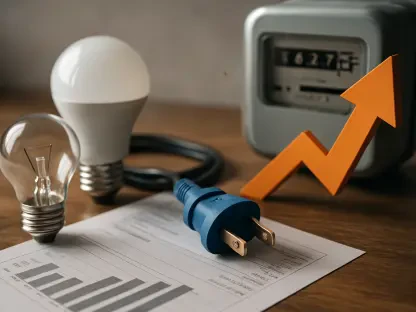
This is a fascinating aspect of the deal, and it hinges on a clever financial structure. NIPSCO is essentially leveraging the revenue from this 15-year contract with Amazon to create a credit system on customers’ electric bills, translating to about $7 monthly savings for residential users. The idea is to use the steady, high-volume payments from a hyperscaler like Amazon to offset operational costs that would otherwise burden existing ratepayers. They’ve filed with the Indiana Utility Regulatory Commission to ensure transparency, detailing how these savings are calculated and distributed, which typically involves a rate adjustment mechanism reviewed periodically. I’ve seen this play out in a midwestern utility deal a few years ago, where a large industrial contract led to a $5 monthly credit for households—it wasn’t huge, but over time, it added up and eased public pushback on rate hikes. It’s a win if executed transparently, but the key is rigorous oversight to ensure those savings don’t erode due to unforeseen costs or miscalculations. For northern Indiana residents, this could be a breath of fresh air, especially after recent bill increases, and I hope it builds trust in how utilities manage large-scale deals.
With GenCo’s plan to build 2.6 GW of gas-fired generation at the Schahfer power plant site, there are concerns about greenhouse gas emissions potentially quadrupling compared to 2023 levels. How do you see this fitting into broader environmental goals, and what drives the decision to prioritize gas over renewables in this case?
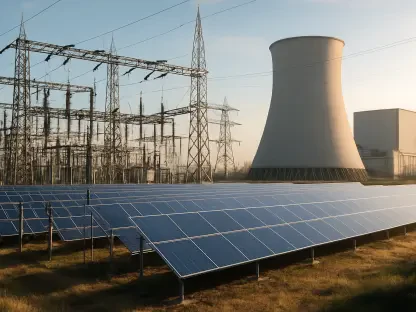
This is a tough one, and it’s a classic example of the tension between immediate energy needs and long-term sustainability. The concern about emissions quadrupling at the Schahfer site compared to 2023 levels is real—gas plants, while cleaner than coal, still emit significant greenhouse gases, and a 2.6-GW buildout is no small footprint. The decision to go with gas likely comes down to reliability and speed; data centers need consistent, high-capacity power on tight timelines, and gas plants can be built and brought online faster than large-scale renewable projects, which often face land-use or permitting delays. Plus, with natural gas infrastructure already in place at Schahfer, the upfront costs might be lower than, say, a sprawling wind farm. I remember a similar debate in the Southeast where a utility opted for gas to meet industrial demand, despite renewable advocacy—emissions rose 30% over five years before leveling off with later solar integration. My hunch is that NIPSCO and GenCo see gas as a bridge fuel here, but without a clear roadmap for renewables or carbon capture, they risk clashing with state and federal environmental targets. It’s a short-term win for grid stability but a long-term question mark for the planet.
NIPSCO’s contract with Amazon includes a one-time option to reduce capacity by 1,200 MW by March 31, 2029. What might prompt Amazon to exercise this option, and how could it ripple through the project’s scope for NIPSCO and GenCo?
That’s an interesting clause, and it introduces a layer of flexibility—and uncertainty—into the deal. Amazon might exercise this option to cut back by 1,200 MW if their data center growth projections don’t materialize, perhaps due to shifts in cloud computing demand, technological efficiencies reducing power needs, or even geopolitical or economic factors slowing expansion. If they pull back, the immediate impact on NIPSCO and GenCo would be a revenue hit, since the contract’s value is tied to that capacity—think of it as losing nearly half of the planned 2.4 GW load by 2032. Step one, GenCo might halt or scale down construction on one of the 1.3-GW gas plants, which could save costs but also disrupt job creation and supplier contracts. Step two, NIPSCO’s transmission buildout might be overbuilt for the reduced load, leaving unused infrastructure that could burden future planning. Finally, the promised $1 billion in ratepayer savings could shrink, as there’s less revenue to offset costs. I recall a tech firm in the Northwest scaling back a similar deal by 800 MW a few years ago—it left the utility scrambling to repurpose assets, and ratepayers saw a smaller-than-expected credit. It’s a contingency NIPSCO and GenCo must game-plan for now to avoid being caught flat-footed.
How will NIPSCO’s approach to handling transmission infrastructure for the Amazon data centers, while keeping costs separate from existing customers’ rates, work in practice to protect ratepayers? Can you share any insights or stories from similar setups?
This separation of costs is critical to maintaining fairness for ratepayers, and it’s a model that can work if done with precision. NIPSCO plans to build, own, and operate the transmission infrastructure specifically for the Amazon data centers, ensuring those expenses stay out of the general ratebase—that means they won’t flow through to residential or small business customers’ bills. In practice, this involves setting up distinct accounting buckets, where Amazon-related costs are tracked separately and funded directly through the contract’s revenue, with oversight from the Indiana Utility Regulatory Commission to enforce compliance. Regular audits and public filings will likely be part of the process to ensure transparency. I saw a similar setup in a western state where a utility built transmission for a major industrial client—costs were isolated, but there was initial skepticism until a third-party audit confirmed no crossover to ratepayers after two years. The challenge here is ensuring no sneaky cost-shifting happens during unexpected delays or overruns, which could erode trust. It’s a solid framework, but the devil’s in the execution, and I’ll be watching how NIPSCO balances this tightrope.
GenCo is already in talks to supply up to 3 GW to additional data center customers, with another 3 GW in developing opportunities. What’s fueling this surge in demand in northern Indiana, and how might GenCo position itself to meet this growth?
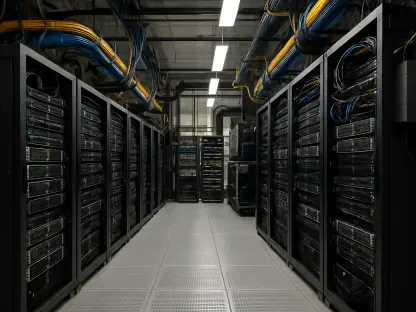
The surge in data center power demand in northern Indiana is part of a broader digital boom—think cloud computing, AI, and data storage needs exploding as businesses go digital at an unprecedented pace. This region offers a sweet spot: access to affordable land, proximity to major connectivity hubs, and, frankly, a utility like NIPSCO willing to scale up fast. That’s why we’re seeing GenCo in talks for another 3 GW, with 3 GW more in the pipeline—it’s a gold rush for hyperscalers. To meet this, GenCo will likely first lean on expanding gas-fired generation for quick deployment, much like the Schahfer site plan, while scouting additional sites for battery storage to balance load. Next, they’ll need to secure regulatory approvals swiftly, ensuring the Indiana Utility Regulatory Commission greenlights new capacity without delays. Long-term, I’d hope they explore renewable tie-ins to offset emissions, though that’s slower. I’ve watched similar trends in the Midwest, where data center clusters popped up near old industrial zones, transforming local economies but straining grids. It’s exciting, but GenCo has to pace itself—overbuilding risks financial strain, while underbuilding could push customers elsewhere. The stakes couldn’t be higher.
Advocacy groups like the Citizens Action Coalition are vocal about protecting residential customers from risks in this Amazon deal, especially after recent $77 monthly bill increases for 1,000 kWh users. How do you see such groups shaping the outcome of large-scale energy contracts, and can you share a past example where their influence made a difference?
Advocacy groups like the Citizens Action Coalition play a pivotal role in keeping utilities accountable, especially when residential bills have already jumped by $77 a month for 1,000 kWh users—that’s a real burden on families. These organizations can influence outcomes by mobilizing public opinion, filing interventions with regulatory bodies like the Indiana Utility Regulatory Commission, and pushing for stricter cost protections or savings guarantees in contracts like this one. Their scrutiny ensures that promises—like the $1 billion in ratepayer savings—aren’t just lip service but are backed by enforceable mechanisms. They might demand public hearings or detailed cost-benefit analyses to expose any hidden risks. I recall a case in the upper Midwest about a decade ago where a consumer group challenged a utility’s industrial power deal—they uncovered a loophole that would’ve shifted $50 million in infrastructure costs to households, and their advocacy led to a revised agreement with ironclad rate protections. It was a turning point in how that state handled special contracts. Here, I expect the Coalition’s involvement could tighten safeguards, ensuring residential customers aren’t left holding the bag if the Amazon deal hits turbulence. Their voice is a counterweight, and it’s vital for equity in these massive projects.
What’s your forecast for the future of data center power demand and utility partnerships in regions like northern Indiana over the next decade?
Looking ahead, I see data center power demand in regions like northern Indiana continuing to skyrocket over the next decade, driven by the insatiable needs of AI, cloud services, and big data—potentially doubling or tripling current projections like the 6 GW GenCo is already eyeing. Utilities will need to forge more partnerships like this one with NIPSCO and Amazon, blending private investment with public oversight to manage the load without breaking the bank for ratepayers. I anticipate a push for hybrid energy solutions—gas for speed, but layered with renewables and storage to temper environmental pushback, especially as emission regulations tighten. The challenge will be balancing rapid expansion with grid stability and affordability; if done right, northern Indiana could become a national model for hyperscaler integration. But if mismanaged, we risk grid strain and public backlash. I’m cautiously optimistic, as long as utilities and regulators learn from each project and adapt swiftly to this digital tidal wave.