
Addressing the Integration of Massive Loads in a Modernizing Grid
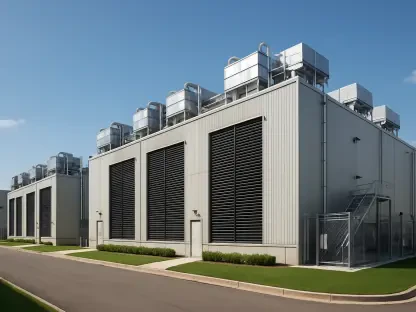
The traditional boundaries between electricity generation and industrial consumption are dissolving as massive data centers and high-tech manufacturing hubs seek to plug directly into the heart of the American power supply. PJM Interconnection, the nation’s largest grid operator, has recently submitted a landmark proposal to the Federal Energy Regulatory Commission (FERC) aimed at overhauling the regulatory framework for behind-the-meter (BTM) generation. This initiative seeks to modernize rules that have remained largely unchanged for decades, ensuring that the cost of maintaining grid reliability is equitably distributed. As data centers and large-scale industrial hubs increasingly seek to colocate with power plants, PJM’s proposed changes aim to address the fiscal and operational pressures these massive “on-site” users place on the collective system.
The Evolution of Netting and the Rise of Colocated Power
To understand the significance of PJM’s proposal, one must look back to the early 2000s, a period when the energy landscape was dominated by traditional manufacturing and smaller-scale onsite generation. In 2004, the practice of “netting” was established, allowing facilities to offset their grid-related charges—such as transmission and capacity costs—by utilizing their onsite generation. For twenty years, this financial mechanism encouraged efficiency and supported industrial stability. However, the emergence of the “AI era” has shifted the scale of demand. Today’s data centers require power at a magnitude previously unseen, often seeking to sit directly behind the meter of existing power plants. This shift has rendered legacy rules insufficient, as the sheer volume of power being “netted” begins to impact the grid operator’s ability to fund and manage the broader transmission infrastructure.
Redefining Energy Thresholds and Transmission Categories
The 50-Megawatt Limit: The End of Universal Netting
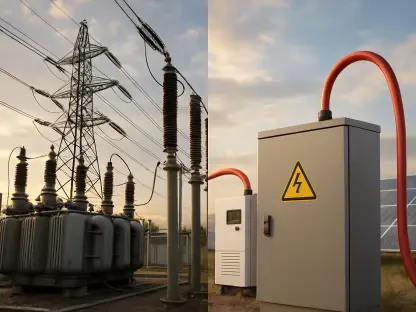
The centerpiece of PJM’s regulatory overhaul is the introduction of a strict 50-megawatt (MW) threshold for behind-the-meter facilities. Under this new framework, any new energy load exceeding this limit would no longer be eligible for the financial benefits of netting. This move is designed to ensure that massive power users, specifically large-scale data centers, contribute their fair share to the maintenance of the high-voltage transmission system. By removing the netting privilege for these “mega-users,” PJM aims to prevent a scenario where the costs of grid upkeep are shifted onto residential and smaller commercial ratepayers who do not have the luxury of onsite generation.
New Service Structures: A Complex Energy Market
In tandem with the 50-MW threshold, PJM is introducing three distinct transmission service categories to provide a structured pathway for large users to interact with the grid: interim network integration, firm contract demand, and non-firm contract demand. These categories are intended to offer flexibility while ensuring that the grid operator can accurately forecast demand and reserve necessary capacity. To mitigate immediate economic shocks, the proposal includes a three-year transition period and a grandfathering clause. This clause protects existing contracts for their remaining terms, allowing current industrial players to adjust their long-term energy strategies without facing an overnight spike in operational costs.
Economic Implications: Industrial Combined Heat and Power
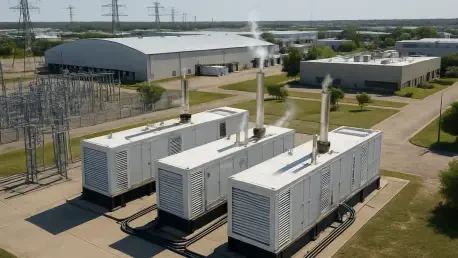
Despite the intended focus on data centers, the proposal has sparked significant concern among traditional industrial sectors, particularly those utilizing combined heat and power (CHP) or cogeneration. Trade groups like the Industrial Energy Consumers of America (IECA) argue that the 50-MW cap could inadvertently penalize manufacturers who rely on onsite generation for operational efficiency. Critics suggest that if these facilities become economically unviable due to the loss of netting, companies may be forced to rely more heavily on the public grid. This could create a paradoxical effect where a policy intended to protect grid stability actually increases the strain on public resources during peak demand periods.
Emerging Trends and the Future of Grid Resource Adequacy
The debate surrounding PJM’s filing reflects a broader national trend: the struggle to balance rapid technological advancement with infrastructure resilience. As AI infrastructure continues to expand, the demand for “firm” power—electricity that is guaranteed to be available—will only increase. We are likely to see further regulatory shifts toward “pay-to-play” models, where the proximity to power generation no longer exempts a user from the costs of the wider network. Furthermore, the integration of more sophisticated monitoring technology will likely lead to real-time pricing for BTM users, potentially replacing static thresholds with dynamic, demand-based cost structures that reflect the actual stress placed on the grid at any given moment.
Navigating the Transition: Strategies for Large Power Consumers
For businesses and industrial stakeholders, the PJM proposal serves as a clear signal that the era of “free” transmission for large onsite users is drawing to a close. To adapt, organizations should prioritize comprehensive energy audits to determine how the 50-MW threshold impacts their current and future expansion plans. Best practices now involve diversifying energy portfolios and exploring “non-firm” demand options that may offer lower costs in exchange for occasional curtailment. Additionally, companies should engage in the regulatory process at FERC, as the final ruling will set a precedent that will likely be mirrored by other regional transmission organizations across the United States.
Balancing Innovation with Infrastructure Equity
PJM’s proposed rule overhaul represented a pivotal moment in the history of American energy regulation. By seeking to close loopholes that allowed massive energy users to bypass transmission costs, the grid operator attempted to safeguard the financial integrity of the system in the face of an AI-driven power surge. While the concerns of the industrial sector regarding cogeneration and manufacturing competitiveness were valid and required careful weighing by FERC, the underlying necessity of the reform remained undeniable. As the nation moved toward a more electrified and data-dependent future, the rules of the grid evolved to ensure that the costs of progress were shared equitably by all who benefited from a stable and reliable power supply.