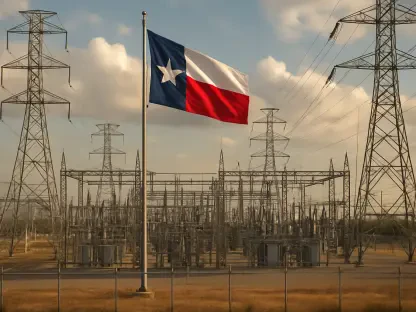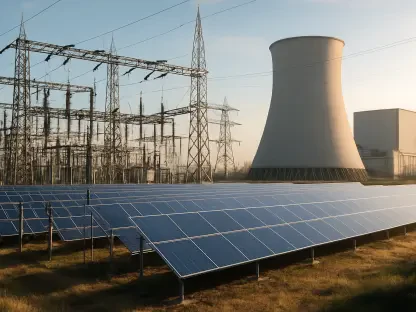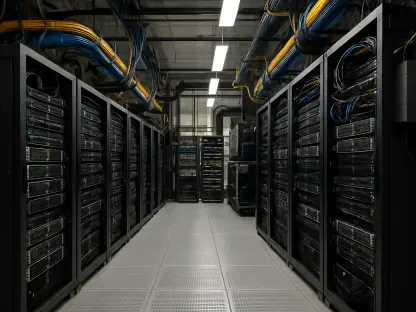

The digital backbone of modern society, from the artificial intelligence powering daily applications to the vast data centers storing global information, runs on an ever-increasing supply of electricity, a demand that is placing unprecedented strain on a power grid built for a different century. This relentless surge in energy consumption is colliding with an infrastructure that has historically evolved at a glacial pace, forcing a critical reevaluation of how the utility sector approaches change. As load forecasts skyrocket, the industry confronts a stark reality: the traditional, cautious methods for testing and adopting new technologies are no longer sufficient to ensure a reliable and affordable energy future.
This tension creates a fundamental challenge for utilities and their regulators. The need to innovate has never been more urgent, yet the very structure of the utility business model, which prioritizes stability and risk aversion, often stifles the adoption of unproven solutions. Utilities are trapped in a cycle where they must modernize to survive but are disincentivized from taking the necessary risks to do so. In response to this gridlock, a new paradigm is emerging from state-level experiments: the regulatory sandbox. This structured, fast-track framework for testing new ideas offers a pathway to de-risk innovation, accelerate learning, and finally align the pace of utility adaptation with the speed of technological progress.
An Unstoppable Surge Meets an Immovable Grid
The nation’s power infrastructure is facing a demand surge of a magnitude not seen in decades. The primary drivers are the exponential growth of energy-intensive data centers and the widespread electrification of transportation and buildings. This wave of new demand is pushing local and regional grids to their breaking points, creating a critical need for solutions that can enhance efficiency, flexibility, and capacity without long, costly infrastructure builds. The challenge is that the utility sector, by design, is methodical and risk-averse. Its regulatory and financial structures were created to ensure universal, reliable service using proven, long-lasting assets, a model that has served the public well for over a century.
However, this legacy of stability has fostered a culture of extreme caution that is now a significant liability. The central question facing the industry is whether this traditional approach can possibly meet the dynamic challenges of the modern era. When faced with exponential load growth and the rapid evolution of technologies like virtual power plants, advanced grid controls, and flexible demand management, the slow, deliberate pace of conventional utility planning and deployment appears dangerously misaligned. The unstoppable force of modern energy demand is testing the limits of an object that was, until now, considered immovable.
The Innovation Imperative and the Utility Catch 22
At the heart of the industry’s struggle is a deep-seated conflict between the imperative to innovate and the financial realities of a regulated utility. Utilities must rapidly integrate new technologies to maintain affordability and reliability, yet their core business model actively discourages investment in solutions that are not yet proven at scale. This paradox is often referred to as the “utility financial disincentive.” To recover the costs of a new technology investment from ratepayers, a utility must first prove to its regulators that the solution will deliver tangible benefits. This requirement creates a catch-22: a utility cannot easily invest in an unproven technology to generate the very data needed to justify the investment in the first place.
This structural barrier to innovation has perpetuated a system of slow, cumbersome pilot projects that are increasingly out of step with the modern world. There is a broad consensus among stakeholders, including utility executives, regulators, and technology developers, that these conventional methods are no longer fit for purpose. The years-long timelines for testing and evaluation cannot keep pace with the exponential rate of technological change and shifting customer expectations. The result is a widening gap between what the grid needs and what the utility industry is institutionally capable of delivering, making a new framework for testing and deployment not just desirable, but essential.
From Failed Pilots to a Breakthrough Framework
For years, the utility industry has relied on traditional pilot programs to test new ideas, but a landmark report from the Lawrence Berkeley National Laboratory (LBNL) concluded that this approach is fundamentally broken. The analysis found that conventional pilots are frequently duplicative of efforts already undertaken elsewhere, are designed in ways that produce inconclusive or biased data, and, most critically, often end without a clear pathway to full-scale deployment. This anatomy of failure means that significant investments of time and ratepayer money are wasted on dead-end projects that contribute little to industry-wide learning or progress. Even successful projects often highlight the problem of speed. For instance, Green Mountain Power’s celebrated virtual power plant (VPP) began with just 20 customers in 2017 and took years to scale to its current size. Similarly, Southern California Edison’s solar-plus-storage VPP pilot, launched in 2020, has demonstrated immense value but has expanded on a multi-year timeline.
In response to these systemic shortcomings, the concept of the “regulatory sandbox” has emerged as a breakthrough solution. A sandbox is a streamlined regulatory framework designed specifically to fast-track the testing of innovative programs within predefined, low-risk boundaries. Rather than a free-form experiment, a sandbox provides structure and certainty. Its core components typically include clear cost limits to protect ratepayers, firm timelines to prevent projects from languishing indefinitely, explicit requirements for sharing data and lessons learned, and, perhaps most importantly, predefined next steps for a project upon its completion. This structured environment encourages utilities and technology vendors to experiment by removing the regulatory uncertainty that has long paralyzed innovation, creating a protected space to test, learn, and either fail fast or scale quickly.
Pioneering States on the Regulatory Frontier
Across the country, several states have become laboratories for regulatory innovation, implementing various forms of sandboxes to spur progress. New Jersey and Hawaii, for example, have leveraged high-level policy directives, such as New Jersey’s Energy Master Plan, to create a clear vision that rallies stakeholders around ambitious goals. In Hawaii, the public utility commission established an Innovative Pilot Framework that streamlines approvals by limiting regulatory review to just 45 days, dramatically reducing the uncertainty around cost recovery for new projects. This approach provides a clear signal to the market that innovation is not just welcomed but expected.
Different states have tailored their frameworks to local needs. In Vermont, Public Utility Commissioner Riley Allen describes the state’s approach as creating “the space to do good things” through a framework with built-in “guardrails.” These guardrails limit ratepayer risk by capping cost increases associated with sandbox projects at 2%, balancing the need for experimentation with the duty to protect consumers. Meanwhile, Michigan’s 2019 Power Grid initiative included an expedited 90-day pilot approval process. While well-intentioned, the results have been mixed, with the LBNL report noting that many pilots under this framework have not yet progressed to full-scale programs. This has led officials like Michigan Public Service Commissioner Katherine Peretick to call on utilities to make better use of the available tools. This spectrum of approaches demonstrates that while there is no one-size-fits-all solution, the underlying principles of structured, expedited review are gaining traction. As Chanel Parson, Director of Clean Energy at Southern California Edison, notes, “It is more imperative now to take innovative projects and pilots to scale quickly because customer adoption, expectations, and technology are evolving at an exponential pace.”
The Connecticut Blueprint for Rapid Innovation
Among the pioneering efforts, Connecticut’s Innovative Energy Solutions (IES) program stands out as a potential national blueprint for a successful sandbox framework. Launched in 2023 by the state’s Public Utilities Regulatory Authority (PURA), the IES program was meticulously designed to overcome the most common barriers to utility innovation. It operates on structured, annual cycles with distinct phases for proposals, selection, deployment, and evaluation, providing a predictable and transparent process for all participants. To lower barriers to entry, the IES framework allows pilots to be led not only by utilities but also by third-party vendors or through collaborative partnerships, fostering a more competitive and creative ecosystem.
The IES program incorporates a “fail-fast” mentality, with clear milestones that projects must meet to receive continued funding, ensuring that unviable concepts are weeded out early. Crucially, Connecticut law also grants PURA the authority to compel a utility to scale a successful pilot, a powerful mechanism to overcome institutional inertia. The framework’s effectiveness was tested in its first cycle with the Piclo grid flexibility pilot. While all parties agreed the program enabled a market to launch faster than ever before, a conflict arose over its future. Piclo, the vendor, argued for its continuation to allow the market to mature, while the participating utilities concluded the pilot was premature. The upcoming ruling from PURA will be a critical test of the sandbox’s ability to resolve such disputes and forge a clear path forward.
This need for speed is particularly acute in addressing the data center challenge. In a powerful demonstration of an accelerated approach, Salt River Project and Emerald AI recently completed a four-step process to prove the viability of data center load flexibility. This targeted demonstration, which will culminate in a full-scale test in mid-2026, is designed to rapidly build the industry confidence needed for wider adoption. Varun Sivaram, CEO of Emerald AI, predicts that this kind of rapid, evidence-based approach will provide system operators with the certainty they need to “open the floodgates” for this type of innovation, transforming a major grid challenge into a flexible resource.
The journey from a broken system of slow and inconclusive pilot projects to the adoption of dynamic, structured innovation frameworks marked a pivotal moment for the American utility sector. It was a transformation born of necessity, as the relentless pressures of electrification and digitization demanded a new way of thinking. The collective experience of pioneering states demonstrated that regulatory sandboxes were not merely a theoretical concept but a practical and effective tool for change. They proved that by establishing clear rules, defined timelines, and shared expectations, regulators and utilities could create an environment where managed risks led to accelerated rewards. The successful implementation of these frameworks provided the critical evidence that the industry could, in fact, innovate at the speed required to build a resilient and modern grid, ensuring that the lights stayed on for a new energy era.