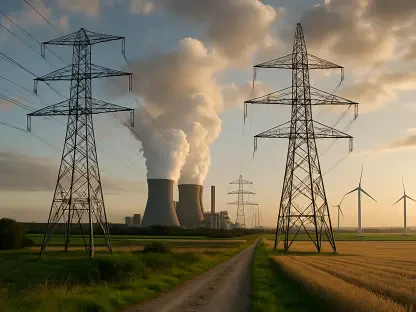

The global energy landscape is currently undergoing a seismic transformation as massive amounts of international capital are redirected toward the most stable and high-demand power markets on the planet. While many global conglomerates are tightening their belts in response to economic volatility, German energy giant RWE AG is doing the exact opposite by earmarking $19.6 billion specifically for the United States. This staggering sum represents nearly half of the company’s total global investment budget through 2031, signaling a massive vote of confidence in the American power market.
The decision marks a definitive end to a period of strategic hesitation, pivoting toward a massive expansion that aims to transform the domestic energy landscape. Investors and analysts see this move as a pivot from a conservative stance to an aggressive pursuit of market share. This multibillion-dollar commitment reflects a belief that the American grid, despite its current challenges, offers the most fertile ground for long-term industrial growth and financial returns.
A Multibillion-Dollar Bet: American Energy Resilience
The sheer scale of this investment indicates that RWE views the United States not just as a secondary market, but as the primary engine for its international growth strategy. By dedicating nearly fifty percent of its global capital expenditure to American soil, the company is betting that the demand for domestic energy resilience will continue to outpace other regions. This financial pivot follows a careful evaluation of global risks, where the American market emerged as a sanctuary of relative stability and high demand.
Furthermore, this capital infusion is intended to address the fundamental vulnerabilities of the current grid infrastructure. As the nation faces increasing pressure from extreme weather events and a rising need for domestic manufacturing, RWE’s investment provides a necessary buffer. This strategy is not merely about adding capacity; it is about building a robust framework that can withstand the logistical and technical pressures of a modern, energy-dependent economy.
Scaling Up: From 13 GW to 22 GW in Strategic Growth
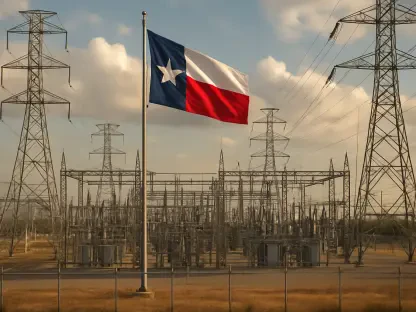
RWE is not just increasing its spending; it is fundamentally scaling its footprint to meet the skyrocketing demand for electricity across various states. By targeting a capacity increase from 13 GW to 22 GW, the company is positioning itself to be a primary provider for a nation currently grappling with aging infrastructure. This expansion builds upon a solid foundation, including the high-profile 2023 acquisition of Con Edison’s clean energy business and successful projects across Texas, New York, and California.
The growth strategy involves a sophisticated geographical spread that targets high-growth corridors where the demand for new generation is most acute. By leveraging its established presence in major power markets like ERCOT and CAISO, the company can navigate local regulatory hurdles with greater efficiency. This massive increase in gigawatt capacity ensures that RWE remains a dominant player in the competitive landscape of American utility-scale power production.
The Hybrid Energy Model: Integrating Gas Peakers with Wind and Solar
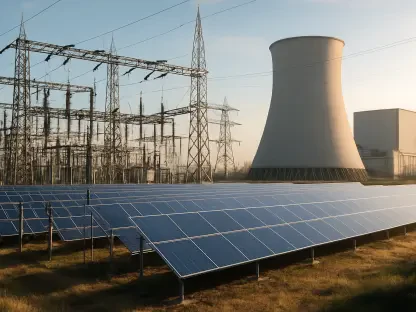
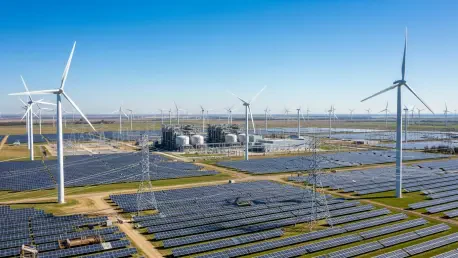
The core of RWE’s new strategy is a pragmatic shift toward a diversified portfolio that balances green aspirations with hard reality. While wind and solar remain central to their mission, the company is prioritizing the construction of gas-fired peaking plants. These facilities serve as a critical safety net, capable of surging to life when weather-dependent renewables cannot meet the immediate needs of the grid. This hybrid approach ensures that the transition to cleaner energy does not come at the cost of reliability.
This model acknowledges that a 100% renewable grid is not yet feasible for large-scale industrial applications without massive battery backups that are still evolving. By integrating natural gas, RWE provides the “firm” power necessary to keep the lights on during peak hours or calm days. This pragmatic diversification allows the company to meet stringent carbon reduction targets while simultaneously guaranteeing the constant supply of electricity required by modern consumers.
The OBBBA Catalyst: Regulatory Clarity for Industrial Expansion
The primary driver behind this renewed investment is the “One Big Beautiful Bill Act” (OBBBA) of 2025, which provided the regulatory certainty RWE needed to move forward. Before this legislation, uncertainty regarding tariffs and shifting tax credits for renewables had caused the company to pause its U.S. operations. The OBBBA streamlined the landscape by accelerating the phase-out of certain credits while simultaneously incentivizing domestic oil and gas production, offering a clear roadmap for long-term capital commitment.
The legislation effectively removed the “wait-and-see” atmosphere that had plagued the energy sector for years. Even with stricter rules on foreign battery components, the clarity provided by the OBBBA allowed for more accurate financial modeling and risk assessment. Consequently, the act served as a green light for RWE to resume full-scale development, proving that policy stability is just as important as financial incentives for attracting foreign direct investment.
Powering the Future: Meeting the Demands of the Data Center Boom
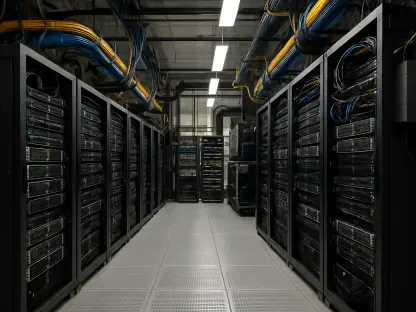
The ultimate goal of this $19.6 billion roadmap is to provide a stable, high-capacity power supply to energy-heavy industries, with a specific focus on the rapidly growing data center sector. To achieve this, RWE is leveraging its existing sites that already possess established grid access, allowing for a faster rollout of new gas units by the end of the decade. This strategy focuses on maximizing efficiency and speed to market, ensuring that the infrastructure is in place to support the next generation of American technological growth.
The surge in artificial intelligence and cloud computing created an insatiable appetite for 24/7 power, a demand that RWE was uniquely positioned to fulfill. By focusing on rapid deployment at “brownfield” sites, the company bypassed many of the permitting delays that hindered new entrants. The initiative successfully prioritized the integration of flexible assets that responded to the specific needs of tech giants, ensuring that the American digital economy remained powered by a reliable, diversified energy mix. The strategy proved that long-term industrial success was tied directly to the speed and reliability of the underlying power infrastructure.