
Beyond Hours: Redefining Grid Reliability for the Clean Energy Era
The global transition toward a clean energy economy is rapidly accelerating, yet the foundational principles used to measure grid reliability are fundamentally misaligned with the challenges of a system powered by renewables. For years, the energy storage conversation has centered on a metric of hours—the time a battery can sustain power through a single evening cycle. While short-duration lithium-ion batteries represent a critical advancement over fossil-fueled backups, they address only one part of a far more complex equation. The inherent intermittency of solar and wind power creates potential reliability gaps that extend beyond hours, often spanning multiple days. This analysis explores the necessary paradigm shift in grid strategy: the future requires a coordinated ecosystem where short-duration storage manages daily cycles while ultra-long-duration energy storage (ultra-LDES) delivers the multi-day resilience vital for a secure, clean, and economically robust power system.
From Diesel to Lithium-Ion: The Evolution of Grid Backup
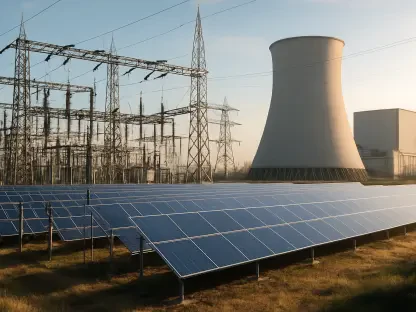
To fully grasp the current market inflection point, it is essential to understand the technological trajectory of grid backup systems. A decade ago, the default solution for power intermittency was the diesel generator—a noisy, polluting, and inefficient technology of last resort. The subsequent era ushered in lithium iron phosphate (LFP) batteries, which quickly established themselves as the industry standard for storing and dispatching energy over a few hours. This technological shift occurred in parallel with massive global investment in variable renewable energy (VRE) sources like wind and solar. This transition has been further catalyzed by the voracious power demands of modern digital infrastructure, particularly data centers, which are projected to require 130 gigawatts of capacity by 2030. Although corporate commitments to clean energy contracts are a primary driver of this growth, they simultaneously expose the grid’s core vulnerability: with VRE sources operating at an approximate uptime of only 40%, the system is being built with predictable, recurring, and sometimes prolonged, deficits in power generation.
The Structural Gaps in Today’s Clean Energy Grid
The Inadequacy of Short-Duration Storage for System-Wide Resilience
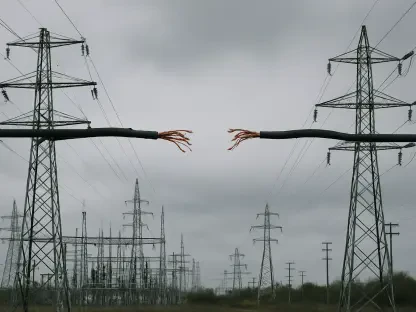
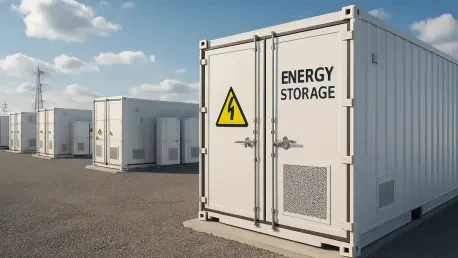
The four-hour LFP battery, despite being a crucial component of the modern grid, is structurally unsuited to guarantee comprehensive system resilience. These systems are expertly designed to solve a predictable, daily problem: absorbing surplus solar energy during peak production hours and discharging it as the sun sets and evening demand rises. However, they are fundamentally incapable of sustaining critical infrastructure through a multi-day disruptive event, such as a severe storm, a prolonged heatwave, or a “dunkelflaute”—a German term describing an extended period of low wind and overcast skies. For a hospital, a military installation, or a data center, a four-hour backup offers a false sense of security when confronting a potential 72-hour outage. Simply scaling the deployment of short-duration batteries fails to resolve this temporal mismatch; it only addresses the initial hours of a potentially days-long crisis, leaving the grid critically exposed.
The Persistent Problem of Polluting Peaker Plants
Historically, the primary method for addressing multi-day energy shortfalls has been the activation of fossil-fuel “peaker plants.” These facilities are the grid’s inconvenient truth—notoriously inefficient, exceptionally expensive to operate, and responsible for a disproportionate share of greenhouse gas emissions and harmful local pollutants. Continuing to rely on these plants as the ultimate backstop for a clean energy system represents a profound contradiction that undermines the core objectives of decarbonization. Moreover, as the global economy moves to electrify transportation and heating while retiring traditional baseload power plants, the strain on the grid will only intensify. This makes the continued dependence on this outdated and polluting technology both an environmental and an economic liability. A future-proof grid cannot be constructed upon a foundation of fossil-fueled emergency responses.
A Coordinated System: Pairing Short- and Ultra-Long-Duration Storage
The most robust and forward-thinking solution is not to champion one storage technology over another but to integrate them into a coordinated, multi-layered defense system. This strategy leverages different storage durations for their distinct operational strengths. Short-duration LFP batteries remain essential for managing the daily, four-to-six-hour fluctuations in supply and demand that characterize a renewable-heavy grid. The true game-changer, however, is the strategic deployment of long-duration energy storage (LDES), which can discharge power for 10 or more hours, and particularly ultra-LDES, which is engineered to store and deliver 100 or more hours of energy. In this integrated model, ultra-LDES functions as the grid’s ultimate resilience backbone—a vast reservoir of clean power prepared to support entire communities and critical infrastructure through multi-day or even week-long periods of VRE scarcity, ensuring uninterrupted service during major disruptive events.
Unlocking System-Wide Value: The Triple Benefit of Ultra-LDES
The value proposition of ultra-LDES extends well beyond providing simple backup power; it unlocks profound system-wide economic and operational benefits that strengthen the entire energy ecosystem. First, it directly solves the multi-day reliability challenge by enabling the shifting of entire days of electrical load, creating a powerful insurance policy against sustained energy deficits and guaranteeing grid stability during extreme weather or other crises. Second, ultra-LDES serves as a powerful instrument for mitigating grid congestion. When strategically sited near large-scale renewable projects, these assets function as a local pressure valve, absorbing enormous quantities of excess energy that would otherwise overload transmission lines and force generators to curtail production. This prevents the wasteful practice of shutting down clean power sources when they are most productive. Third, this technology unlocks immense transmission value by functioning as a “non-wires alternative.” By storing clean energy when the grid has spare capacity and releasing it during periods of peak congestion, ultra-LDES maximizes the efficiency of existing power lines, thereby deferring or even eliminating the need for multi-billion-dollar investments in new transmission infrastructure.
Building the Resilient Grid of Tomorrow: A Strategic Imperative
The central conclusion for the energy market is that the reliability of the future power system will be measured in days, not hours. Achieving this new standard of resilience demands both a philosophical and a strategic departure from one-size-fits-all solutions. For businesses, utilities, and policymakers, the path forward requires acknowledging the distinct yet complementary roles of short- and ultra-long-duration storage. Investment strategies must evolve to support the deployment of ultra-LDES as a foundational asset class, recognizing its essential role in ensuring grid security and economic continuity. This necessitates the creation of market structures and regulatory frameworks that properly value resilience and actively incentivize the development of technologies capable of delivering multi-day power. Moving beyond solutions that are merely “good enough” is not just an incremental upgrade; it is a strategic imperative for constructing a truly modern and resilient power grid.
The Legacy of Certainty: Securing Our Energy Future
In the final analysis, a fully decarbonized and consistently reliable energy grid is an achievable goal, but its realization depends on a coordinated storage ecosystem that pairs the strengths of hourly and daily solutions. The integration of ultra-long-duration storage is the pivotal key to bridging the gap between intermittent renewable generation and the unwavering societal demand for 24/7 power. This transition represents more than just a technological shift; it is a foundational step toward achieving greater energy independence, enhancing economic stability, and bolstering national security. The ultimate legacy of making these critical investments today is the certainty and resilience that a fully coordinated, multi-day storage system delivers to every community it serves.