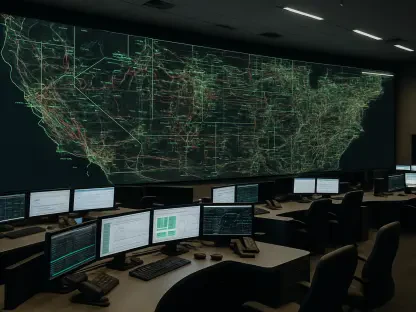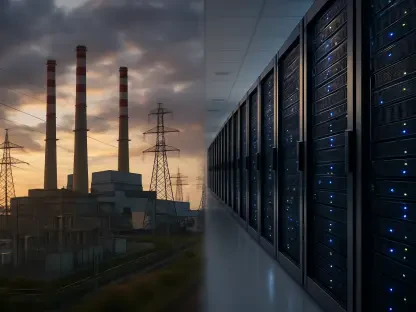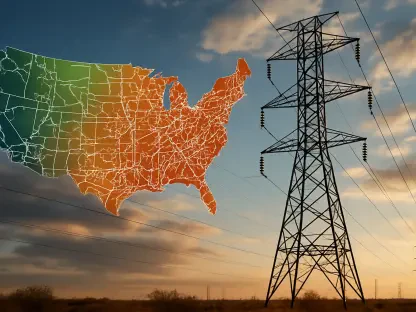

The immense computational force of artificial intelligence, once a theoretical concept, is now actively reshaping the physical world by forging a multi-trillion-dollar “megasector” that irrevocably fuses America’s technology and energy industries. This is not a slow evolution but a seismic shift, driven by a new and insatiable demand for a unique class of electricity: AI-grade power. As tech giants and data center operators race to build the digital infrastructure of tomorrow, a parallel race is unfolding to determine who will control the megawatts that fuel it. The staggering scale of this demand is creating a new Gilded Age, where the fortunes of the next century will be built not on oil derricks or silicon chips alone, but on the complex systems that power them.
The Dawn of the AI Grade Megawatt a New Energy Frontier
The emergence of this new energy frontier is being defined by ambitious, multi-billion-dollar bets that challenge the conventions of power generation. Ventures like Fermi America, with its planned 11-gigawatt “Hyper-Power Campus” in Texas, exemplify the new paradigm. Such projects are not merely power plants; they are integrated energy ecosystems designed from the ground up to serve a single, demanding class of customer. By combining advanced nuclear, natural gas, and solar power, these ventures aim to provide a product previously thought impossible: massive amounts of electricity that are simultaneously clean enough for ESG-minded investors, cheap enough for hyperscale clients, and available with the near-perfect, 24/7 reliability that AI algorithms demand.
This technological and financial convergence marks a fundamental departure from the legacy utility model. The market is no longer just selling kilowatts; it is selling uptime, reliability, and computational capacity. This shift has ignited a gold rush, attracting established energy players, nimble startups, and a torrent of private capital, all vying to develop and control the foundational infrastructure of the digital age. The winners will be those who can master the complex orchestration of disparate energy sources to deliver this new, premium standard of power at an unprecedented scale.
Mapping the Megatrends the Forces Shaping the AI Energy Gold Rush
The Unquenchable Thirst How AI Is Rewriting Power Demand
The unique operational characteristics of artificial intelligence are fundamentally rewriting the rules of electricity consumption. Unlike traditional industrial or residential loads, AI workloads, particularly for continuous model training and inference, are remarkably intolerant of interruption. This creates a need for “firm capacity,” a constant and dispatchable supply of power with a 99.999% uptime guarantee. This stringent requirement is a challenge that intermittent renewables like wind and solar, despite their low-cost generation, cannot meet on their own, as their output is dependent on weather conditions.
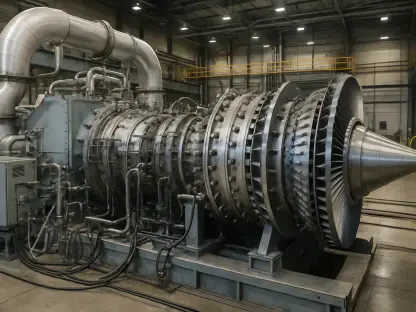
Consequently, the industry is witnessing a pragmatic renaissance of natural gas. Once viewed by some as a transitional fuel, natural gas is now proving to be the indispensable backbone for the nation’s AI build-out. Its primary advantages are practical: combined-cycle gas plants can be dispatched quickly to meet fluctuating power needs and can be co-located with the digital infrastructure they serve, minimizing transmission losses. For investors and developers, it represents a proven, abundant, and reliable resource that provides the bedrock of firmness upon which a cleaner energy portfolio can be built.
This reality has given rise to a new “premium package” for hyperscale clients, centered on hybrid power plants. This model combines the dispatchable reliability of natural gas with the low-cost generation and cleaner public profile of large-scale solar arrays and battery storage systems. This integrated approach offers the best of all worlds: unwavering power to keep AI clusters running, coupled with the cleaner optics necessary to satisfy corporate sustainability mandates and investor expectations.
Projecting the Surge the Trillion Dollar Bet on Computational Power
Market data paints a startling picture of the coming energy demand. Projections indicate that electricity consumption by U.S. data centers is on track to triple by 2030, reaching a scale that will overwhelm existing grid infrastructure. This explosive growth is already creating unprecedented logjams in interconnection queues across major energy markets like ERCOT in Texas and the PJM Interconnection in the eastern U.S., where the wait times for new projects to connect to the grid can stretch for years.
This looming power deficit has not gone unnoticed by the financial world. A significant influx of private equity and infrastructure funding is now targeting dedicated “AI + Power” platforms. This wave of investment signals a long-term belief in the permanent fusion of the energy and technology sectors. Investors are betting that the entities capable of developing and operating these complex, integrated power systems will own a critical, non-replicable asset class for decades to come.
This trend also signifies a profound shift in America’s economic future. The long-held definition of energy dominance, once centered on the export of hydrocarbons like oil and liquefied natural gas, is being redefined. The new measure of global influence will increasingly be tied to the ability to export computational power. Dominance in the 21st century belongs to the nations that control the electrons and power supply chains that fuel the world’s digital backbone.
Navigating the Bottlenecks Hurdles on the Road to AI Grade Power
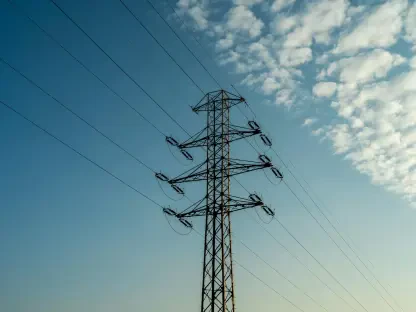
Despite the immense opportunity, the path to building out this new energy infrastructure is fraught with significant hurdles. The most immediate are physical and logistical. Persistent transmission bottlenecks across the country make it difficult to move power from where it is generated to where it is needed most. These challenges are compounded by overwhelmed interconnection queues and lengthy, often multi-year permitting delays for new energy projects, which stifle the pace of development required to meet AI’s exponential growth.
Beyond the physical infrastructure, developers face complex market-driven challenges. Existing financial incentives within many wholesale electricity markets were not designed for the AI era. They often fail to adequately reward the kind of “firm capacity” and extreme reliability that data centers demand, creating a misalignment between what the market needs and what power generators are paid to provide. This makes securing financing for hybrid projects that blend capital-intensive technologies more difficult.
These factors create a risky investment landscape for the aspiring energy barons. While the potential rewards are enormous, so are the challenges. Projects are defined by long construction timelines, high capital expenditures, and surprisingly thin profit margins. Furthermore, the technological complexity of seamlessly integrating natural gas, renewables, and battery storage into a single, cohesive, and reliable system presents an ongoing operational challenge that requires a high degree of technical sophistication.
Rewriting the Rules How Policy Is Paving the Way for a New Power Paradigm
In response to these mounting pressures, a pivotal shift is occurring in federal energy policy. The focus is moving away from purely aspirational renewable energy goals and toward a more pragmatic emphasis on execution, reliability, and deliverability. This recalibration is not an ideological rejection of clean energy but a practical acknowledgment of real-world grid constraints. This is evidenced by a strategic re-evaluation of certain grant programs to ensure that new power generation can actually be delivered to the customers who need it.
A potential game-changer in this new regulatory environment is a landmark rulemaking on large-load interconnections being advanced by the Department of Energy and the Federal Energy Regulatory Commission. This initiative is designed to fast-track the approval process for large industrial and AI clients seeking to connect to the grid. If implemented, this policy could have a transformative impact on power demand, similar to how the Public Utility Regulatory Policies Act of 1978 (PURPA) revolutionized power supply by opening the market to non-utility generators.
Such a regulatory overhaul could empower a new class of “IPP 2.0,” or Independent Power Producers, to innovate outside the traditional utility framework. By creating a clearer pathway for development, these new rules could enable private capital to fund and construct hyperscale microgrids and behind-the-meter power systems tailored specifically to the needs of AI clients. This would allow large power consumers to bypass conventional utility models, securing a more direct, reliable, and customized energy supply.
The Power Portfolio of Tomorrow Blueprints for the Digital Age
An industry consensus is rapidly forming around the optimal model for powering the AI revolution: a hybrid portfolio that strategically integrates multiple technologies. In this blueprint, each energy source plays a distinct and complementary role. Natural gas provides the essential, dispatchable firmness required for 24/7 operations. Renewables, primarily solar, offer low-cost energy generation during peak hours and help companies meet sustainability targets. Finally, battery storage systems provide crucial grid stability, smoothing the intermittency of renewables and offering instantaneous response to ensure seamless power delivery.
While the current build-out relies on this proven trio, the industry is also looking toward emerging technologies to meet future demand. Advanced geothermal, which taps into the earth’s heat for constant power, and next-generation nuclear reactors, which promise clean, firm energy without the footprint of legacy plants, are seen as critical long-term solutions. As these technologies mature and become more cost-effective, they are expected to play a growing role in the power portfolios of tomorrow.
Ultimately, these trends point toward a more decentralized energy future. The era of relying solely on a distant, centralized utility grid is giving way to a model where the digital economy’s largest consumers are powered by custom-built, on-site, or near-site systems. These behind-the-meter solutions offer greater control, reliability, and resilience, making them the new standard for the mission-critical infrastructure that underpins modern computation.
Crowning the New Barons the Future of Energy and American Dominance
The analysis made clear that the explosive growth of artificial intelligence had irrevocably fused America’s energy and technology sectors into a single, interdependent ecosystem. Investment theses and corporate strategies were being redrawn to account for this new reality, where access to scalable, reliable power was no longer an operational line item but a core strategic asset.
The race to meet this demand had positioned a new class of leaders to win. These were not the wildcatters of a bygone era but sophisticated developers, financiers, and operators who demonstrated a mastery of integrating complex technologies, navigating evolving regulations, and structuring novel financial deals. Their success was built on a deep understanding of both electrons and economics.
In its final assessment, this report highlighted that the entities that controlled this new generation of reliable, scalable, and low-carbon power would effectively own the foundational infrastructure of the next-generation digital economy. The definition of American energy dominance had been permanently rewritten, shifting from a focus on exporting hydrocarbons to a future centered on exporting computational power to the rest of the world.