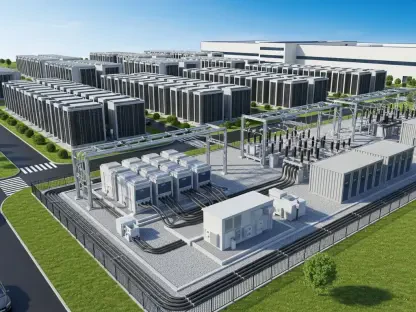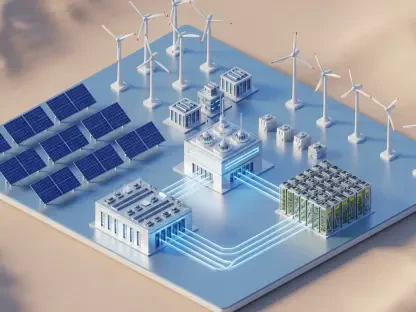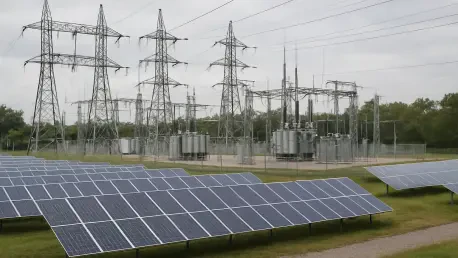

The rapid transformation of the American power grid is no longer a distant theoretical exercise but a high-stakes race to keep the lights on as demand from massive data centers and industrial electrification outpaces traditional infrastructure. For decades, the energy sector relied on a centralized architecture where massive power plants sent electricity across hundreds of miles of transmission lines. Today, that model is fracturing under the weight of interconnection backlogs and skyrocketing costs, forcing a pivot toward distributed capacity procurement (DCP). This shift represents a fundamental change in how the nation generates and stores power, moving the point of production closer to the point of consumption to ensure a resilient and modern grid.
The Rise of Distributed Capacity Procurement in Modern Grid Planning
Market Evolution and Data-Driven Growth
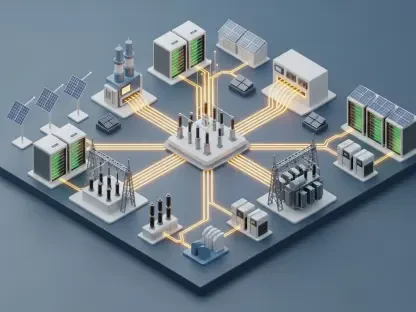
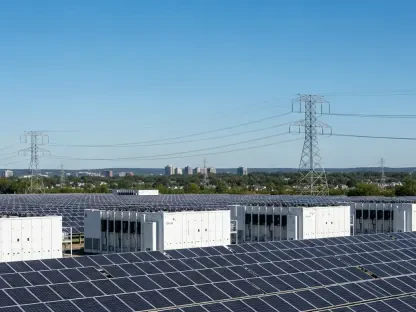
The evolution from traditional centralized power plants to modular, local energy solutions is being accelerated by an unprecedented surge in load growth. While the grid once faced predictable, incremental increases in demand, the sudden arrival of energy-intensive artificial intelligence hubs and localized industrial manufacturing has created a capacity deficit that traditional construction cannot fill quickly enough. Consequently, utilities are turning toward distributed energy resources (DERs) as a primary tool for balancing the system. The sheer scale of this transition is evident in the current landscape, with approximately 83 GW of installed battery capacity across the United States providing critical flexibility to regional operators.
Moreover, the success of localized projects has moved beyond the pilot phase and into the realm of essential infrastructure. With roughly 9 GW of existing community-scale projects already operational, the industry has proven that small-scale, grid-connected assets can perform as reliably as their larger counterparts. This data-driven growth suggests that the future of grid planning will not be defined by a few massive projects, but by thousands of smaller, strategically placed battery and solar installations. These assets allow for a more surgical approach to grid management, addressing specific substation constraints without the decade-long wait times associated with new high-voltage transmission lines.
Real-World Application: The Capacity*Connect Model
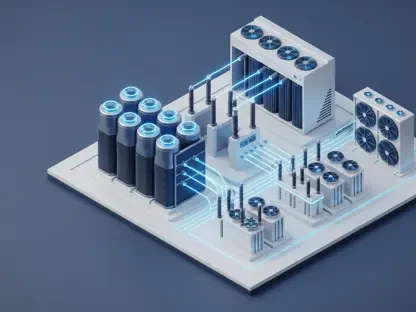
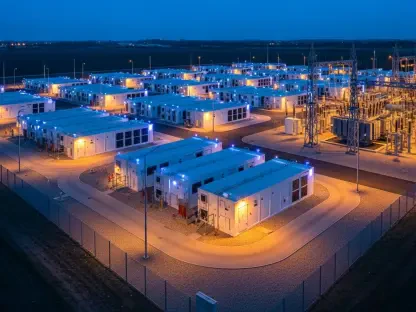
A primary case study for this transition is unfolding in Minnesota, where Xcel Energy has introduced its front-of-the-meter battery storage proposal known as Capacity*Connect. This initiative seeks to bypass the slow-moving “bulk” transmission system by connecting storage assets directly to the distribution grid, where they can respond more quickly to local demand spikes. By positioning batteries at the substation level, the utility aims to defer expensive traditional upgrades while providing a buffer against the unpredictability of renewable energy generation. This model highlights a growing consensus that the distribution grid, once a passive delivery mechanism, must now become an active, two-way participant in energy balancing.
However, the proposal also brings to the forefront a significant tension regarding who should own and control these vital assets. Xcel Energy’s current framework favors a utility-centric “rate-base” ownership model, where the utility builds and owns the infrastructure, passing the costs and a guaranteed profit margin on to consumers. This stands in sharp contrast to the existing third-party competitive developer frameworks that have historically driven innovation in the solar and storage sectors. The debate over Capacity*Connect is therefore a bellwether for the rest of the country, as it forces regulators to decide whether the new distributed grid will be a closed monopoly or an open marketplace.
Industry Perspectives on Ownership and Market Competition
Utility representatives frequently argue that direct ownership is a prerequisite for maintaining grid safety, reliability, and cybersecurity. From their perspective, the complexity of managing thousands of distributed assets requires a single, centralized authority with the power to intervene instantly during a crisis. They contend that because the utility is ultimately responsible for the stability of the local network, it must have exclusive control over the hardware connected to that network. This argument suggests that third-party participation could introduce technical variables or security vulnerabilities that a utility-owned system would inherently avoid.
In contrast, energy developers and regulatory experts argue that technical compliance is a matter of standards, not ownership titles. They point out that sophisticated interconnection agreements already allow utilities to control and monitor third-party assets without needing to own them. Furthermore, the financial structure of these projects creates a divide in risk management. While utility-owned projects are typically funded by ratepayers—meaning the public bears the cost if a project underperforms—private-market initiatives are backed by independent capital. In a competitive model, if a developer’s battery system fails to perform, the developer loses money, not the consumer. This performance-based risk creates a natural incentive for efficiency and technological excellence that a monopoly model may lack.
Future Outlook and Implications for the American Grid
The trajectory of the energy sector now hinges on whether regulatory bodies favor “re-monopolization” or an “open-market” framework. If utilities are granted exclusive rights to procure and own distributed capacity, there is a legitimate risk of stifling the very private-sector innovation that brought battery costs down over the last several years. A closed ecosystem often leads to higher long-term costs for consumers, as the lack of competitive bidding removes the downward pressure on pricing. Conversely, an open market fosters a diverse ecosystem where multiple providers compete to offer the most efficient and cost-effective solutions, potentially saving billions in transition costs over the next decade.
As the grid continues to evolve, the importance of “least-cost” data-driven requirements will become a central pillar of public interest protection. Regulators will need to demand transparent proof that a utility-owned project is truly the most economical option compared to what the private market can provide. If the private sector can deploy 200 MW of storage faster and at a lower cost to the ratepayer, the justification for a monopoly-owned asset weakens. The challenge for the coming years will be to create a regulatory environment that ensures the grid remains a neutral platform for innovation rather than a walled garden for traditional utilities.
Strategic Summary and the Path Toward a Resilient Grid
Distributed capacity procurement has moved from a niche concept to a foundational element of modern infrastructure. The ability to deploy modular storage and generation at the local level is the only viable path to meeting the explosive energy needs of a digital economy. This transition requires a sophisticated balance where utility oversight ensures the physical integrity of the grid, while private-sector competition ensures financial accountability and technological progress. Without both elements, the energy transition risks becoming either too chaotic to be safe or too expensive to be sustainable.
State regulators were tasked with establishing open-access grid platforms that encouraged a variety of ownership models. By moving away from exclusive utility control, they opened the door for private investment to shoulder the financial burden of grid modernization. This shift allowed for a more flexible response to energy shortages and fostered a competitive environment that drove down the price of capacity. Ultimately, the successful integration of distributed resources proved that a decentralized approach, supported by clear technical standards and market-driven incentives, provided the most durable foundation for a reliable and affordable American power system.