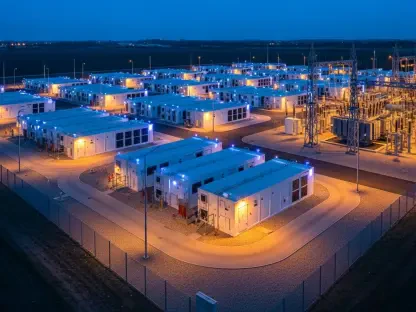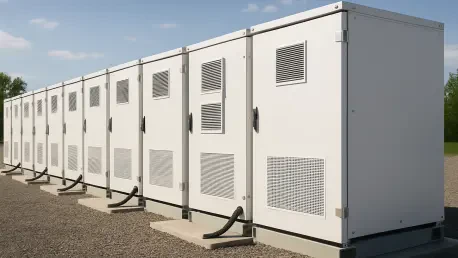

While the electric vehicle market hits a temporary speed bump, a quieter revolution is gaining explosive momentum, fundamentally reshaping the energy landscape. Stationary energy storage, once a niche segment, has rapidly emerged as a critical pillar for modern power infrastructure. These large-scale battery systems are essential for stabilizing electrical grids, seamlessly integrating intermittent renewable sources like solar and wind, and creating a powerful new revenue stream for technology giants. This analysis will dissect the market’s divergence from EV trends, explore the key corporate strategies and policy drivers fueling its expansion, analyze future growth trajectories, and assess the potential challenges on the horizon.
The Great Decoupling: Storage Booms as EV Market Cools
A Tale of Two Markets: By the Numbers
The diverging fortunes of the electric vehicle and energy storage sectors were thrown into sharp relief by Tesla’s performance in the final quarter of 2025. The company deployed a record 14.2 GWh in stationary batteries, a remarkable 29% year-over-year increase that showcased accelerating demand. For the full year, its energy storage deployments surged by 49% to 46.7 GWh. In stark contrast, Tesla’s core automotive business experienced a 16% year-over-year decline in vehicle deliveries during the same quarter, illustrating a clear split in market dynamics.
This trend extends far beyond a single company. The broader North American EV market witnessed a significant slowdown, with sales dropping 46% from the third quarter of 2025. This downturn is largely attributed to the expiration of U.S. federal tax credits for consumer EV purchases, highlighting the sector’s sensitivity to policy shifts. This regional cooling, however, stands against a backdrop of continued global EV market growth of approximately 20% in 2025, suggesting the issue is more localized and policy-driven than a reflection of collapsing worldwide demand.
Corroborating this industry-wide shift, major battery manufacturers like LG Energy Solution and Samsung SDI reported similar experiences. Both companies confirmed that robust demand for their stationary energy storage products provided a crucial financial buffer, helping to offset the slump in their EV battery divisions. This consensus indicates that energy storage is no longer a secondary market but has matured into a foundational component of the modern battery industry, capable of balancing the volatility inherent in consumer-facing sectors.
Industry Titans Pivot: Real-World Strategy in Action
In response to this booming demand, industry leaders are making aggressive strategic pivots. Tesla’s energy division serves as a prime case study, with the company moving swiftly to expand its manufacturing footprint. A new factory near Houston, scheduled to begin operations this year, is set to produce up to 50 GWh of its grid-scale Megapack 3 systems annually. This massive new facility will significantly bolster its existing 80 GWh of combined production capacity from plants in California and China.
Similarly, other major players are localizing production to capitalize on favorable policies and rising regional demand. LG Energy Solution is strategically targeting over 60 GWh of production capacity by the end of 2026, with an ambitious plan to base 80% of that capacity in North America. This move is designed to leverage regional policy incentives, shorten supply chains, and solidify its position in one of the world’s fastest-growing energy storage markets.
These deliberate actions illustrate a broader strategic realignment across the industry. Major battery manufacturers are increasingly leveraging stationary storage as a powerful hedge against the consumer-driven unpredictability of the automotive market. By diversifying into the grid-scale energy sector, these companies are building a more resilient business model, grounded in the long-term, utility-scale demand for grid stability and renewable energy integration.
Voices from the Vanguard: C-Suite Confidence and Policy Catalysts
The industry’s bullish outlook is championed by its most prominent leaders. Tesla CEO Elon Musk articulated this confidence, stating, “energy will have very high growth for as far into the future as we can imagine.” This sentiment reflects a deep-seated belief that the demand for grid-scale batteries is not a fleeting trend but a fundamental, long-term shift in global energy infrastructure.
This executive optimism is backed by strong quantitative forecasts. LG Energy Solution projects that in 2026, the growth in global energy storage production will outpace EV production growth by a factor of four to one. The company also anticipates that driven by major investments from technology firms in data centers and supportive clean energy policies, stationary storage will soon account for nearly half of the total battery demand in North America, signaling a monumental shift in the market’s center of gravity.
Crucially, executives from both LG Energy Solution and Samsung SDI have identified U.S. policy as a primary catalyst for this explosive growth. Government incentives, including tax credits for domestic battery manufacturing and deployment, have been instrumental in de-risking massive capital investments and accelerating the build-out of a North American supply chain. This clear link between policy and market expansion underscores the critical role governments play in shaping the energy transition.
The Horizon: Future Trajectories, Grand Visions, and Potential Headwinds
Looking ahead, the most immediate development is the massive scale-up of production. Tesla’s expansion, which includes its existing 80 GWh capacity and the upcoming 50 GWh Houston plant, exemplifies the industry-wide push to meet exponential demand. This race to build capacity is a direct response to a market that has proven its viability and is now entering a phase of rapid industrialization.
Beyond immediate expansion, some leaders are articulating even grander visions. Elon Musk has outlined an ambitious long-term goal for Tesla to achieve an annual production capacity of 100 GW of solar cells. This plan involves creating a vertically integrated supply chain, from raw materials to finished panels, creating a powerful synergy with its battery business. While no firm timeline was given, the announcement alone signals a profound belief in a decentralized, renewable energy future.
However, this optimistic trajectory is not without potential challenges. Investment bank Jefferies has expressed skepticism regarding the near-term feasibility of Tesla’s solar expansion, noting its absence from the company’s immediate capital expenditure plans. Furthermore, analysts at Wood Mackenzie forecast a potential slowdown for the broader U.S. solar market after 2028. This outlook is attributed to a confluence of factors, including shifting regulations on foreign sourcing, persistent permitting roadblocks, and the scheduled expiration of key investment and production tax credits, which could create significant headwinds for the entire renewable energy sector.
Conclusion: The Dawn of the Grid-Scale Battery Era
The evidence clearly showed that stationary energy storage had entered an explosive, policy-driven growth phase, successfully decoupling its trajectory from the more volatile electric vehicle market. This development was not merely a footnote in corporate earnings reports but a fundamental reshaping of the clean energy landscape. It positioned stationary storage not as a niche ancillary product but as a core, stabilizing pillar of the modern battery industry. This boom fueled a wave of massive investment and innovation, signaling a pivotal shift toward a future where large-scale batteries became central to global energy infrastructure.