
As traditional power grids buckle under rising demand and extreme weather, a quiet revolution is happening within residential garages and rooftops, transforming passive consumers into active energy providers. The shift from centralized utility models to decentralized, software-driven networks is no longer a futuristic concept but a critical necessity for grid stability and decarbonization. This article explores the strategic pivot of industry leaders like Sunrun, the data driving the Virtual Power Plant (VPP) surge, and the expert insights shaping the future of distributed energy resources.
The State of VPP Adoption and Market Dynamics
Market Growth, Capacity Benchmarks, and Storage Trends
The solar industry is navigating a profound transition from high-volume solar acquisition to high-margin grid integration. Analysis reveals a surge in storage attachment rates, which have reached a record 71% in leading residential sectors. This trend indicates that homeowners are prioritizing the ability to manage their own power rather than simply generating it. Statistical overviews of networked battery capacity highlight a major milestone, as distributed storage has reached 4 GWh across the grid.
Subscriber trends are evolving alongside legislative frameworks like the “One Big Beautiful Bill Act,” which has significantly bolstered third-party-owned systems through favorable tax treatment. While traditional installation volumes have seen a temporary downturn, the value per subscriber is being redefined by the long-term utility of integrated storage. These metrics suggest that the focus is shifting away from the sheer number of panels on roofs and toward the total dispatchable capacity of the networked ecosystem.
Real-World Applications and Utility Partnerships
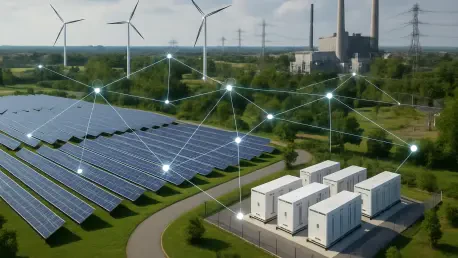
Sunrun’s “home-to-grid” programs serve as a primary case study for this evolution, managing over 106,000 enrolled customers as a single dispatchable asset. By aggregating these individual residential batteries, the company provides meaningful support to the macro-grid during periods of peak demand. This capability effectively turns thousands of homes into a cohesive power plant that can be activated remotely to prevent blackouts. To navigate complex regulatory landscapes and utility rate structures, many companies are shifting toward direct-to-consumer models.
Notable collaborations are also emerging to sustain this growth, such as the joint venture with Hannon Armstrong aimed at diversifying financing for large-scale deployment. These partnerships are crucial for maintaining the capital flow necessary to build out sophisticated infrastructure. Furthermore, industry leaders are reducing their reliance on affiliate sales to maintain strict quality control over the hardware used in these grid-interactive systems. This strategic tightening ensures that every component meets the rigorous technical standards required for autonomous grid participation.
Expert Perspectives on the Distributed Energy Pivot
Industry leaders, including Sunrun CEO Mary Powell, emphasize that the current objective is building the nation’s largest distributed power plant. This “quality over quantity” strategy prioritizes high-margin, grid-integrated customers over raw installation volume. Experts believe that a customer who provides grid services is fundamentally more valuable than one who only consumes solar power. However, this shift has created a steep learning curve for investors accustomed to traditional growth metrics.
Market volatility remains a concern as traditional solar companies evolve into comprehensive energy service providers. Professional opinions suggest that fluctuations in budget bills and tariff uncertainty have complicated long-term infrastructure planning. Despite these headwinds, the consensus among energy analysts is that the movement toward VPPs is irreversible. The focus remains on stabilizing the decentralized energy market by leveraging improved tax yields and more predictable regulatory environments.
The Future of Grid-Integrated Living
Looking forward, improved Investment Tax Credit yields are expected to stabilize the decentralized energy market. Potential developments in software will soon allow for seamless, autonomous energy trading between residential batteries and the macro-grid. This technology will enable homeowners to automatically sell excess power during peak hours without manual intervention. Such advancements will further bridge the gap between individual households and the broader energy economy.
However, significant challenges remain, particularly regarding regulatory hurdles and interconnection delays. The technical complexity of coordinating across diverse utility territories requires a level of standardization that has yet to be fully achieved. Despite these obstacles, the broader implication is a move toward a “prosumer” economy. In this new landscape, residential solar is viewed as a reliable, dispatchable utility asset rather than a standalone consumer product.
The solar industry underwent a fundamental restructuring that moved the focus from volume-based sales to value-based integration. This transition solidified virtual power plants as the cornerstone of a resilient, modern energy grid. Analysts observed that despite short-term market contractions, the underlying shift toward decentralized storage provided a more sustainable framework for long-term growth. The industry moved away from simple hardware sales and toward a sophisticated service model that integrated residential assets into the national power supply.
Stakeholders recognized the necessity of staying ahead of regulatory shifts to capitalize on this new era of renewable energy. The evolution of the market proved that grid stability depended on the successful aggregation of distributed resources. Ultimately, the successful deployment of these networked systems transformed the relationship between utilities and homeowners. This strategic pivot ensured that renewable energy remained a viable and reliable component of the global power infrastructure for years to come.