
The Brewing Storm Over Home Heating Regulations
A high-stakes legal battle over the future of home heating has reached the steps of the U.S. Supreme Court, pitting the natural gas industry against the Department of Energy (DOE). While the term “ban” may be an oversimplification, new federal energy efficiency standards are so stringent that they could effectively phase out the most common type of gas furnace currently sold in America. This article delves into the core of this conflict, exploring the technological divide, the competing legal arguments, and the profound financial implications for millions of homeowners, ultimately clarifying whether a de facto ban is on the horizon.
From Conservation Act to Courtroom Conflict: The Regulatory Backdrop
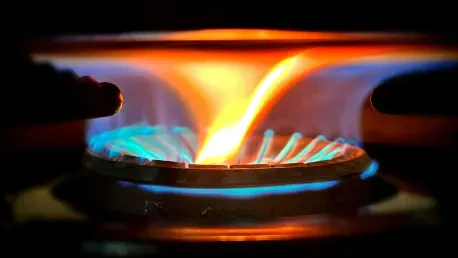
The current dispute is rooted in the Energy Policy and Conservation Act (EPCA), a foundational law empowering the DOE to set minimum energy efficiency standards for appliances. In 2023 and 2024, the DOE finalized new rules that significantly raise the efficiency bar for residential furnaces and commercial water heaters. This move directly targets the distinction between older, non-condensing gas appliances, which achieve around 80% efficiency, and modern condensing units that operate at 90% efficiency or higher. The technological leap comes from a secondary heat exchanger in condensing models that captures waste heat from exhaust gases. Understanding this regulatory and technical history is essential, as the gas industry argues these new rules exploit the law to mandate a specific technology, fundamentally reshaping the market.
Unpacking the Central Arguments and Their Implications
The Gas Industry’s “Performance Characteristic” Defense
Leading the charge against the DOE are three major trade groups: the American Gas Association (AGA), the American Public Gas Association (APGA), and the National Propane Gas Association (NPGA). Their legal argument hinges on a specific provision within the EPCA, which they contend prevents the DOE from setting standards that eliminate a product class defined by a unique “performance characteristic.” The industry asserts that the natural-draft venting system used by non-condensing furnaces—the simple chimney or vent pipe found in millions of homes—is precisely such a characteristic. By setting an efficiency level that only condensing technology can meet, which requires entirely different venting, they argue the DOE has overstepped its authority and unlawfully targeted a protected product category.
The Financial Burden on the American Homeowner
Beyond the legal theory, the gas industry’s case rests on the practical and costly consequences for consumers. Non-condensing furnaces currently represent over half of the U.S. market, and swapping one for a condensing unit is far from a simple replacement. Homes built for non-condensing furnaces often lack the infrastructure to support their modern counterparts, which require new plastic piping for intake and exhaust and a drainage system for the acidic condensate they produce. According to the industry, these “costly renovations” could be prohibitive for many families, potentially forcing them to switch to electric heating systems against their will. Karen Harbert, CEO of the AGA, frames the regulation as an unlawful mandate that will “increase costs… and ban an entire product class” that consumers depend on.
The Government’s Push for Efficiency and Consumer Savings
Conversely, the DOE and its allies, including the Appliance Standards Awareness Project (ASAP), defend the rules as a long-overdue advancement in energy conservation. They argue that the standards are achievable with “proven energy-saving technologies” that are already widely available on the market. From their perspective, the continued sale of 80% efficiency furnaces is a detriment to both the environment and consumers’ wallets. Andrew deLaski, executive director of ASAP, has characterized the industry’s Supreme Court appeal as a “last-ditch push by gas utilities” to protect obsolete technology, a move he claims ultimately “lock[s] families into higher bills” by perpetuating energy waste over the decades-long lifespan of a new furnace.
The Legal Precedent and the Road Ahead
The industry’s path to the Supreme Court was paved by a critical loss at the U.S. Court of Appeals for the D.C. Circuit. In that case, the appellate court sided with the DOE, ruling that an appliance’s venting method does not legally qualify as a protected “performance characteristic” under the EPCA. This decision dismantled the core of the gas industry’s argument and upheld the new standards. The Supreme Court is now being asked to review and potentially overturn that interpretation. Should the court decline to hear the case or rule in the DOE’s favor, the new efficiency standards will stand, cementing a major market shift toward condensing technology and fundamentally altering the future of gas heating in the United States.
Key Takeaways for Consumers and Industry Professionals
The central conflict reveals a fundamental tension between regulatory goals for energy efficiency and the real-world costs of infrastructure upgrades. The primary takeaway is that while not an explicit ban, the DOE’s rules will likely make new non-condensing furnaces unavailable for purchase once fully implemented. For homeowners, this means that replacing an old gas furnace may become significantly more complex and expensive if their home requires retrofitting. For HVAC professionals and builders, the takeaway is clear: the industry is on a path toward the universal adoption of condensing technology, requiring new training, installation practices, and consumer education to manage the transition smoothly.
A Decisive Moment for American Energy Policy
Ultimately, the dispute over gas furnace standards is more than a technical debate; it is a flashpoint in the broader conversation about national energy policy, consumer choice, and federal authority. The Supreme Court’s decision, whether to take the case or not, will have lasting repercussions, setting a precedent for how far federal agencies can go to promote energy efficiency, even if it means rendering an entire class of existing products obsolete. The outcome will directly impact household budgets and the future of the natural gas industry, forcing a critical look at the balance between pushing technological progress and ensuring economic accessibility for all Americans.