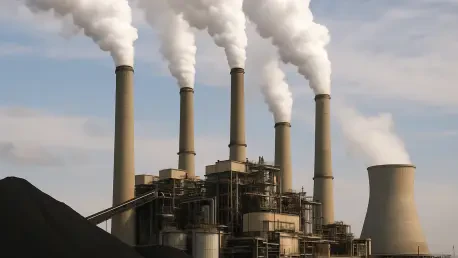

A legislative measure sailing through Congress under the banner of grid reliability is quietly setting the stage for higher electricity bills and a more fragile power system for millions of Americans. While proponents of the “Power Plant Reliability Act” claim it is a necessary tool to keep the lights on, a closer look reveals a policy that props up obsolete, expensive power plants at the direct expense of consumers and grid modernization. This bill, passed by the House of Representatives, grants federal authorities the power to delay the planned retirement of power plants for years, a move critics compare to applying duct tape to a cracked dam—a superficial fix that ignores deep, systemic issues and ultimately worsens the problem. At its core, this legislation threatens to lock the nation into a costly, unreliable past, obstructing the transition to a modern energy system built for the challenges of the 21st century.
A Legislative Cure Worse Than the Disease
The “Power Plant Reliability Act” would empower regional grid operators and state regulators to petition the Federal Energy Regulatory Commission (FERC) to halt a power plant’s retirement for up to five years if it is deemed necessary for reliability. While seemingly pragmatic, this approach fundamentally misunderstands why these plants—overwhelmingly old coal facilities—are scheduled for closure in the first place. These retirements are not sudden decisions; they are the result of years, sometimes a decade, of meticulous planning by utilities and state commissions who have determined that the grid is more affordable, clean, and reliable without them.
This legislative intervention serves as a shortsighted override of these carefully considered plans. It treats the symptom—the closure of a power plant—while completely ignoring the underlying disease: a national grid suffering from underinvestment in transmission, administrative backlogs preventing new resources from connecting, and a failure to embrace modern technologies. By forcing old plants to stay online, the bill creates a false sense of security, diverting attention and capital away from the essential work of building a resilient and efficient power system. The consequence is a grid that remains dependent on aging, failure-prone assets while cheaper, more reliable alternatives wait in line.
Propping Up Zombie Plants on the Consumer’s Dime
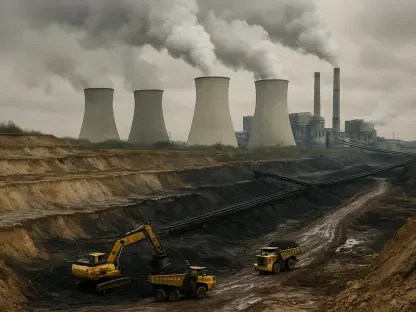
The most immediate and painful impact of this policy will be felt in the wallets of American families and businesses. Keeping these “zombie” coal plants running saddles customers with enormous and entirely unnecessary costs. The price of coal has soared in recent years, adding an estimated $6 billion to annual energy bills nationwide. Analysis shows that delaying the retirement of just 25 gigawatts of coal capacity scheduled to close by 2028 could cost consumers an additional $6 billion, paying plant owners to operate facilities that can no longer compete on their own.
Real-world examples already paint a stark picture of this financial burden. In Michigan, a federal order keeping the J.H. Campbell coal plant open has already cost consumers $113 million in extra payments, even as the state’s top utility regulator confirms “no energy emergency exists.” In Indiana, the operating costs for two coal plants forced to remain online have skyrocketed by 66% and 17%, respectively, directly inflating local utility bills. Meanwhile, Colorado consumers face an additional $85 million per year to keep the broken-down Craig plant operational past its retirement date, a plant that is currently offline for repairs.
These costs are not abstract figures; they represent a significant hardship at a time when household electricity bills are already on the rise and a growing number of families face utility debt. The act effectively facilitates a wealth transfer from the general public to the owners of outdated, inefficient power plants, punishing consumers for a problem they did not create.
The Reliability Irony Coal Is Part of the Problem
The central irony of the “Power Plant Reliability Act” is that the coal plants it aims to save are among the least reliable sources of power on the grid. Data from the North American Electric Reliability Corporation (NERC), the entity responsible for ensuring grid stability, shows that the nation’s coal fleet has an average unplanned outage rate of 11.4%—a higher failure rate than natural gas, nuclear, or hydropower. Further analysis confirms that coal generation suffers from the highest equipment-related outage rate of any power source, making these “coal clunkers” a significant source of grid fragility.
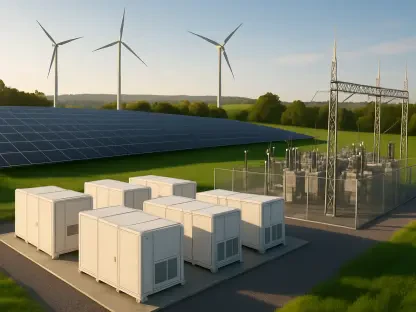
Recent events vividly illustrate this point. The newest coal plant in the United States, Texas’s Sandy Creek facility, broke down and is not expected to return to service until at least 2027. During its extended absence, a combination of renewables and battery storage has successfully met the state’s rising electricity demand. Similarly, the Craig plant in Colorado and the Schafer plant in Indiana—both kept online by federal orders specifically for reliability—are currently non-operational due to mechanical failures. This performance record dismantles the very premise of the bill, proving that reliance on these aging facilities introduces more risk, not less.
A Federal Overreach That Sidelines States and Markets
This legislation represents a significant federal intrusion into areas traditionally managed by states and competitive markets. Robust mechanisms to ensure grid reliability already exist. In regions like the Midwest and New England, grid operators run sophisticated capacity markets where they procure power resources years in advance to meet projected demand. In other parts of the country, long-term resource plans are developed by utilities and meticulously vetted by state regulators to ensure a reliable and affordable power supply.
The act bypasses these established, market-based processes, creating a top-down federal mandate that usurps the authority of the state experts best positioned to make decisions for their citizens. It allows a federal agency to override local determinations about what is most cost-effective and reliable, undermining the careful balance of interests that state commissions are designed to protect.
Moreover, the bill misdiagnoses the true market failure. In regions like the PJM Interconnection, which serves 65 million people from Illinois to the East Coast, recent shortfalls in power capacity were not caused by a lack of available generation but by PJM’s own administrative failure to connect new resources stuck in its interconnection queue. This backlog of ready-to-build projects has already cost consumers an estimated $3.5 billion. The solution is not to force old plants to stay open but to fix the broken processes that prevent new, cheaper resources from coming online.
Forging a Truly Resilient Grid the Solutions We Need
Instead of clinging to the technologies of the past, a genuinely forward-looking approach to grid reliability would focus on modernizing infrastructure and clearing administrative bottlenecks. The challenge facing the American grid is not a shortage of power plants but a failure to build the connective tissue needed to deliver clean, affordable energy from where it is generated to where it is needed.
A comprehensive strategy for a resilient 21st-century grid must prioritize several key actions. First and foremost is accelerating the interconnection of new resources by reforming the cumbersome queueing process that has stalled thousands of wind, solar, and battery storage projects. Second is making strategic investments in high-voltage transmission lines to move power efficiently across regions, which would reduce congestion and improve resilience during extreme weather events.
Alongside new construction, deploying Grid-Enhancing Technologies (GETs) can unlock significant capacity on the existing system quickly and cost-effectively. Finally, leveraging demand-side solutions by empowering large energy users to invest in onsite storage, efficiency, and demand response programs can create a more flexible and responsive grid. These proven solutions offer a durable path to a reliable energy future, one that does not rely on propping up the expensive and unreliable plants of yesterday.
The debate over the “Power Plant Reliability Act” presented a clear choice between two futures. One path involved clinging to an outdated energy model, burdening consumers with higher costs and relying on increasingly fragile infrastructure. The other path led toward innovation, investing in a modern, resilient, and affordable grid capable of powering a prosperous economy for decades to come. By focusing on genuine solutions like transmission development and market reform, policymakers could have built a stronger foundation for America’s energy security, leaving the duct-tape fixes behind.