
The Strategic Convergence: Intelligence and Industrial Power
Global industrial output has historically traveled a parallel path with electricity consumption, but the rise of agentic intelligence is threatening to sever this traditional bond forever. As manufacturers encounter the dual pressures of persistent labor shortages and the necessity for extreme operational agility, Artificial Intelligence (AI) and advanced robotics have transitioned from experimental novelties to the primary engines of competitiveness. This evolution presents a fundamental question regarding whether these intelligent systems can truly decouple industrial expansion from energy demand. The current trajectory suggests that while technology increases efficiency, it also shifts the burden from human effort to power infrastructure. This analysis explores the shifting dynamics of energy requirements in a world where silicon-based decision-making replaces traditional manual labor.
Historical Context: From Labor Scarcity to the Automation Paradox
The current industrial shift is a direct response to a global labor market that has remained structurally tight for several years. With an aging demographic profile and a shrinking pool of specialized institutional knowledge, nearly 93% of industry leaders have reached a consensus that autonomous systems are the only viable path forward. Unlike previous industrial revolutions that focused on mechanical strength, the present era prioritizes the replacement of human cognitive tasks with agentic AI capable of real-time adjustment. This transition, however, creates an energy paradox. The very tools designed to eliminate waste and optimize workflows rely on a sophisticated energy backbone that many existing electrical grids were never designed to support, creating a new bottleneck for growth.
The Scaling Reality: Assessing Autonomous Systems
Pilot Programs: The Deceptive Simplicity of Early Deployment
In the initial phases of technological adoption, the energy footprint of AI-driven robotics often appears deceptively low. For example, high-profile deployments of humanoid units have demonstrated power costs as low as one dollar per shift, leading many operators to believe that automation is an inherently low-energy endeavor. These figures frequently overlook the total systemic requirements of a fully digitized environment. While an individual machine might be efficient, the secondary infrastructure—including high-speed data processing units, persistent low-latency connectivity, and specialized climate control for sensitive electronics—substantially alters the base power load of a facility. Manufacturers must move beyond “per-unit” metrics to understand the collective energy demand of a synchronized production floor.
Decoupling Power: Breaking the Linear Link to Production
The most significant promise of AI lies in its potential to facilitate “decoupling,” a state where production volume increases without a corresponding linear rise in energy use. Historically, scaling up meant running more machines for more hours, leading to predictable spikes in electricity consumption. Modern AI agents are disrupting this pattern by managing machine health and operational cycles with granular precision. By utilizing predictive analytics, these systems ensure that equipment operates in an optimal state, eliminating the massive energy waste caused by mechanical friction, overheating, and inefficient idle times. In this model, the efficiency gains generated by the AI essentially compensate for its own power consumption, enabling a more sustainable expansion of industrial capacity.
Market Friction: Navigating Resource Competition and Grid Constraints
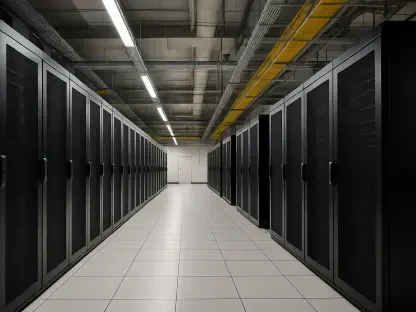
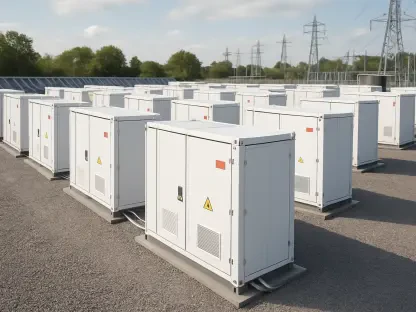
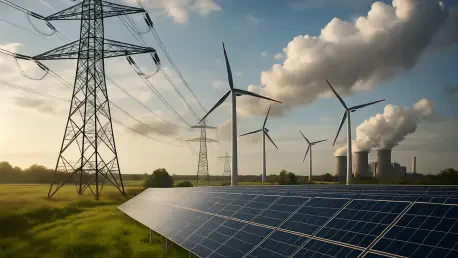
The aggressive push toward AI has placed industrial firms in a direct rivalry with the data center industry for limited regional power resources. This competition for grid access has turned energy availability into a primary factor for site selection and expansion. Consequently, the market is moving toward decentralized energy models where firms invest in localized renewable generation and behind-the-meter storage. By utilizing digital twin simulations, sophisticated operators are learning to sequence heavy energy loads to coincide with periods of high renewable availability. This proactive approach allows manufacturers to bypass the delays currently affecting high-demand industrial zones while stabilizing their long-term operational costs.
Future Outlook: Anticipating the Evolution of AI-Driven Industry
Through the remainder of the decade, the concept of “Energy-Aware Manufacturing” will likely become the standard for the sector. AI agents will expand their roles to act as real-time energy brokers, automatically shifting heavy production tasks to windows where power is cheapest and cleanest. Regulatory environments are also expected to shift, with new incentives favoring facilities that can demonstrate a decreasing energy intensity per unit of output. Furthermore, the commercialization of small modular reactors (SMRs) and advanced solid-state batteries could provide the independent, high-density power required to sustain the next generation of autonomous factories without straining public utilities.
Strategic Frameworks: Pathways to Sustainable Industrial Growth
Industrial leaders must now treat energy as a strategic variable rather than a fixed overhead cost. Implementing digital twin simulations before any physical deployment allows businesses to forecast their power profiles with high accuracy. Another critical step involves the integration of sensor-based predictive maintenance, which offers immediate dividends by reducing the energy lost to mechanical degradation. Professionals should also prioritize the alignment of their automation roadmaps with localized power generation projects. By integrating technology procurement with energy strategy, companies can insulate themselves against price volatility and infrastructure limitations, ensuring that their growth remains resilient.
Retrospective Insights: The Path to Energy-Efficient Expansion
The analysis demonstrated that the successful decoupling of growth from power demand became the defining challenge for the modern industrial sector. While the integration of agentic AI and robotics introduced significant complexities in power management, these technologies also provided the essential tools for optimization. The transition favored manufacturers who viewed energy foresight as being as critical as the technology itself. By mastering the ability to do more with less, the industry moved toward a future where intelligent systems drove productivity without a corresponding surge in environmental costs. Strategic investments in localized energy and predictive efficiency ultimately established a new standard for the sustainable factory.