
The rapid expansion of the digital economy has placed the global power sector in a precarious position where the mandate for consumer affordability clashes directly with the urgent necessity for multi-billion-dollar grid modernization. As of 2026, utility providers find themselves at a crossroads, attempting to satisfy the voracious appetite of artificial intelligence and hyperscale data centers while simultaneously shielding residential ratepayers from the rising costs of infrastructure. This phenomenon, often described as the electricity paradox, suggests that the very investments required to secure a high-tech future are the same ones that trigger political resistance due to their impact on monthly utility bills. However, viewing these upgrades as a financial burden ignores the transformative potential of large-scale industrial growth to actually stabilize the system. To bridge this gap, regulators and energy leaders must transition from a defensive posture to a proactive strategy that integrates new demand as a catalyst for efficiency.
Navigating Modern Demand and Political Pressures
The Surge in Energy Requirements
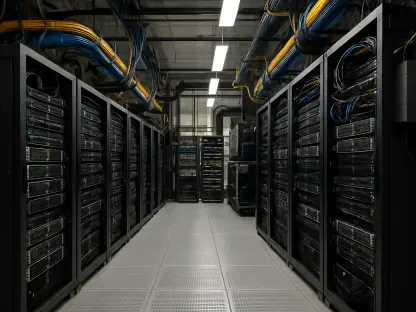
The utility landscape is currently experiencing a monumental shift as three decades of flat energy demand have abruptly ended, replaced by an aggressive upward trajectory driven by the digital revolution. At the heart of this transformation is the exponential rise of generative artificial intelligence and the massive computational power required to sustain it, which has led to a construction boom for hyperscale data centers. These facilities are not merely adding incremental load but are demanding gigawatts of power on timelines that traditionally move much faster than utility planning cycles. This surge is further amplified by the ongoing reshoring of heavy manufacturing and the widespread adoption of industrial electrification, which collectively place a strain on existing transmission and distribution networks. Meeting this demand requires a departure from the conservative planning models of the past, as the grid must now accommodate a level of intensity and complexity that was previously unimaginable in the modern era.
Beyond the immediate needs of the technology sector, the broader push toward societal electrification is fundamentally altering how energy is consumed across the residential and commercial sectors. The proliferation of electric vehicle charging networks and the transition to heat pumps in building systems have created a new baseline for power consumption that remains consistently high throughout the day. This shift necessitates significant upgrades to local substations and distribution lines that were originally designed for much lower peak loads and less frequent usage patterns. As these various drivers of demand converge, the utility industry is forced to accelerate its investment in both traditional generation and advanced grid management technologies. While the sheer scale of this transition can appear daunting, it also serves as the primary engine for modernizing an aging infrastructure that has long been in need of a comprehensive overhaul. By embracing this growth, the sector can build a more resilient system capable of supporting a truly electrified economy.
Balancing Short-Term Politics and Long-Term Stability
In the current political environment, the concept of affordability has been increasingly utilized as a campaign tool, leading to significant pressure on regulators to implement rate freezes or delay major capital projects. Governors and state legislators, particularly in high-growth regions like Virginia and New Jersey, are facing intense scrutiny from constituents who are concerned about the rising cost of living and the impact of utility bills on household budgets. This political sensitivity often results in short-term mandates that prioritize immediate price stability over the long-term health of the energy system. However, these populist measures can inadvertently create a cycle of underinvestment that leaves the grid vulnerable to outages and price volatility. When essential upgrades are postponed to satisfy electoral cycles, the eventual cost of catch-up work is almost always higher, as utilities are forced to resort to emergency measures to maintain reliability. Navigating this tension requires a nuanced dialogue between policy makers and the public.
The danger of prioritizing short-term political wins over strategic grid planning is most evident in the resulting reliance on reactive, high-cost power procurement strategies that ultimately hurt the very consumers they were intended to protect. When utilities are prevented from investing in efficient, large-scale generation and transmission today, they are often forced to buy expensive spot-market power or operate inefficient legacy plants during periods of peak demand. This reactive approach not only increases the carbon intensity of the grid but also leads to unpredictable price spikes that can be far more damaging to residential ratepayers than a steady, planned rate adjustment. To achieve genuine long-term stability, the industry must foster a regulatory framework that rewards prudent, forward-looking investment rather than just penalizing current spending. By aligning the incentives of utilities with the goal of systemic resilience, policymakers can ensure that the infrastructure remains capable of supporting economic expansion without compromising on the core promise of reliable service.
Leveraging Growth for Consumer Benefit
The Economic Logic of Scaling the Grid
Contrary to the prevailing narrative that industrial expansion naturally drives up prices for everyone, the economic principle of spreading fixed costs suggests that large-scale users can actually improve affordability for residential households. Every modern power grid carries massive inherent costs related to maintenance, administration, and basic transmission that remain relatively constant regardless of total throughput. When massive new consumers, such as data centers or semiconductor factories, join the network, they contribute a disproportionately large share of revenue toward these fixed expenses. This influx of capital from industrial giants effectively dilutes the financial burden placed on individual homeowners, as the same infrastructure costs are shared across a much wider volume of kilowatt-hours sold. If managed through transparent regulatory oversight, this growth acts as a powerful subsidy that can lower the per-unit cost of electricity for the average citizen while funding the next generation of energy technology.
This economic synergy is particularly effective when utilities implement cost-allocation frameworks that ensure industrial players pay for the specific upgrades their presence requires. By requiring large-load customers to fund dedicated substations and transmission lines, utilities prevent the socialization of these specific costs to the residential rate base. Once these assets are integrated, the ongoing operational revenue generated from these high-volume users provides a steady stream of income that can be used to offset general rate increases. This mechanism turns the arrival of “Big Tech” and heavy industry into a strategic asset for local communities, providing the financial bandwidth needed to maintain low rates while upgrading the system. When the public understands that industrial growth is not a zero-sum game but a means of stabilizing the entire economic ecosystem, the political resistance to necessary infrastructure projects often begins to fade in favor of a more collaborative and sustainable energy strategy.
Proven Strategies for Regional Success
The successful integration of massive power loads is already becoming visible in regions where utilities have moved toward innovative regulatory agreements that prioritize public benefits. A prime example is Georgia Power, which recently secured approval for a significant expansion of its generation capacity by demonstrating a clear financial advantage for its existing customers. Under this structured agreement, the utility committed to utilizing the incremental revenue from new industrial and data center contracts to provide substantial credits to residential ratepayers. This model proves that massive infrastructure projects do not have to be speculative bets placed on the backs of captive taxpayers. Instead, they can be fully funded and even profitable ventures that directly reduce the monthly expenses of local families. By creating a direct link between industrial expansion and consumer relief, the utility successfully navigated the political hurdles that often stall progress in other jurisdictions.
Similar trends are emerging in states like Arizona and New Mexico, where developers of hyperscale data centers are increasingly being required to tie their projects to local generation and long-term infrastructure commitments. These regional successes highlight the importance of proactive planning and the use of power purchase agreements that guarantee long-term stability for both the utility and the consumer. In these areas, the focus has shifted from merely reacting to demand to strategically courting industries that are willing to invest in the local grid as a condition of their operation. By ensuring that these large-scale projects are not isolated islands but integrated components of the regional energy strategy, these states are building a blueprint for how to thrive in a high-demand era. These examples show that when growth is managed with transparency and a focus on mutual benefit, it becomes a tool for regional economic development rather than a source of financial strain for the general public.
The Role of Corporate Responsibility
Major technology companies have recognized that their long-term viability depends on a stable and socially acceptable relationship with the power grid, leading to a shift toward community-first infrastructure models. Firms like Microsoft and Google have begun to transition away from simply demanding power and toward a strategy of co-investment in the energy systems where they operate. This involves not only paying their fair share for transmission upgrades but also investing in local renewable projects and water-cooling technologies that minimize their environmental footprint on the surrounding area. By taking a proactive role in solving grid constraints, these corporations are attempting to mitigate the political friction that often accompanies large-scale developments. This collaborative approach transforms these companies from perceived burdens on public resources into essential partners in the modernization of the energy landscape, helping to accelerate projects that might otherwise take decades to complete.
Furthermore, this shift in corporate responsibility is encouraging the development of microgrids and onsite storage solutions that can provide ancillary services to the broader utility network during times of stress. When a data center is equipped with its own advanced battery storage or backup generation, it can act as a buffer for the grid, reducing its demand during peak periods or even injecting power back into the system when needed. This technical integration provides a layer of resilience that benefits the entire community, making the grid more robust against extreme weather and unexpected outages. As tech giants continue to align their sustainability goals with the operational needs of utilities, the resulting synergy creates a more efficient and affordable system for all users. This evolution suggests that the future of the power sector will be defined by deep partnerships between public utilities and private innovators, where the shared goal is a reliable, clean, and cost-effective energy supply for the digital age.
The challenges of the electricity paradox were successfully addressed by moving toward a model of strategic transparency and shared investment. Policymakers and utility leaders recognized that stalling growth was a path toward higher costs and reduced reliability, whereas embracing it allowed for a massive infusion of capital that modernized the grid. By 2026, the transition toward high-load integration became a standardized practice, with clear frameworks ensuring that industrial giants contributed their fair share to infrastructure development. This shift allowed residential consumers to benefit from a more stable and technologically advanced system that lowered the long-term price trajectory of power. Moving forward, the industry should focus on expanding these collaborative models to include emerging technologies like small modular reactors and long-duration storage. Sustaining this momentum required a commitment to proactive planning and a rejection of short-term political fixes in favor of a vision that viewed energy abundance as a fundamental pillar of national competitiveness and consumer security.