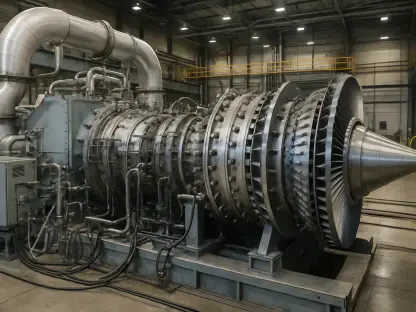

The massive steel turbines of the American heartland were once viewed as the unbreakable pulse of a growing nation, but today they often stand as silent monuments to an era that can no longer keep the lights on or the costs down. While the marketing of fossil fuels has long relied on the imagery of rugged, unceasing reliability, the modern reality is a stark landscape of emergency maintenance and surging utility rates. Across the country, the infrastructure that promised a steady “baseload” is increasingly buckling under the weight of its own obsolescence, leaving consumers to foot the bill for technology that belongs in a museum rather than a power grid.
This systemic failure is not merely a matter of environmental concern; it is a profound fiscal and operational crisis that is reshaping how we define energy security. As extreme weather patterns become more frequent, the rigid nature of coal-fired generation has transformed from a perceived asset into a significant liability for grid operators. The narrative of “cheap” coal is being systematically dismantled by the superior economics of modern alternatives, forcing a long-overdue reckoning with the high price of nostalgia in a world that requires flexibility and fiscal solvency.
The Multi-Billion Dollar Breakdown of an Aging Energy Icon
The physical deterioration of the domestic coal fleet has reached a critical tipping point where unplanned outages are now more common than uninterrupted service. Many of these facilities were designed for a different century, and their complex mechanical systems are struggling to handle the thermal stresses of a modern grid. This degradation manifests in a constant cycle of emergency repairs, where massive boiler tubes and high-pressure steam valves fail without warning, triggering a cascade of financial consequences for the surrounding communities.
Beyond the mechanical failures, the human and economic cost of maintaining these behemoths has become prohibitively expensive. Utility companies are finding that the price of replacement parts and specialized labor for outdated equipment is rising far faster than inflation. When a plant sits idle, the fixed costs of its operation do not vanish; instead, they are redistributed into the monthly bills of families and small businesses, creating a hidden tax on the public to support a failing industrial model.
Why the “Baseload” Narrative Is Failing the Modern Consumer
The traditional concept of “baseload” power—the idea that a grid needs massive plants running at a constant output—is rapidly losing its relevance in an era of dynamic demand. Coal plants are notoriously difficult to adjust; they cannot simply be turned on or off like a light switch to meet the fluctuating needs of a digital society. This inherent lack of flexibility means that when demand spikes or drops, these aging giants often operate inefficiently, wasting fuel and increasing the wear and tear that leads to catastrophic failures during peak periods.
Furthermore, the transition toward a more resilient grid requires assets that can respond in milliseconds to changes in supply and demand. Modern energy storage and smart-grid technologies offer a level of precision that coal simply cannot match. By clinging to the outdated baseload model, utilities are ignoring the reality that a diverse portfolio of flexible resources provides a more stable and cost-effective foundation for the future than a few large, prone-to-failure coal units ever could.
The Operational Reality: From Comanche Unit 3 to National System Failures
Colorado’s Comanche Unit 3 serves as a cautionary tale for the entire industry, representing the failure of even the newest coal infrastructure to meet its promises. Despite being the most modern coal-fired unit in the state, it has spent over 25% of its operational life offline due to persistent mechanical issues, such as leaking steam valves and generator breakdowns. These failures have not only compromised local energy security but have also driven the cost of electricity 45% higher than original projections, proving that even “new” coal is a high-risk investment.
This pattern of unreliability extends far beyond the borders of Colorado, reflecting a nationwide trend of underperformance. In Texas, the state’s youngest coal facility recently suffered a two-year outage, while national data indicates that coal plants across the country average a 12% annual downtime. This lack of availability forces grid operators to scramble for expensive emergency power, further inflating costs. The inability of these plants to ramp up or down quickly makes them increasingly incompatible with a modern energy system that prioritizes agility and demand-response capabilities.
The Economic Verdict: Expert Data on Coal vs. Renewables
The financial math has shifted so dramatically that it is now cheaper to build new renewable energy projects than to keep existing coal plants running. Research from Energy Innovation reveals a staggering reality: 209 out of 210 coal plants in the United States are currently more expensive to operate than it would be to replace them with wind, solar, or battery storage. This economic gap is not narrowing; as technology improves and manufacturing scales, the cost of clean energy continues to fall while the maintenance of coal assets only becomes more burdensome.
Despite these market signals, political maneuvers and federal subsidies often keep non-competitive plants on life support. These interventions create an artificial market that protects shareholders at the expense of the ratepayer, delaying the transition to lower-cost power. Additionally, the “cheap” coal narrative conveniently ignores the massive hidden externalities, such as the public health impacts of mercury, arsenic, and lead. When the medical costs associated with respiratory illnesses and environmental cleanup are factored in, the true price of coal becomes an unsustainable burden on the national economy.
A Framework for Transitioning to a Stable and Solvent Energy Future
The path forward required a fundamental shift from the rigid baseload mindset toward a model defined by flexible capacity and resource adequacy. By integrating large-scale energy storage with diverse renewable sources, grid operators created a system that could absorb fluctuations and provide power exactly when needed. This transition prioritized the retirement of failing coal assets before they could drain more capital, allowing utilities to redirect those funds into high-performance technologies that offered both lower costs and higher reliability for the public.
Effective decommissioning strategies also addressed the long-term liabilities of toxic coal ash and excessive water consumption. By proactively managing the closure of these sites, communities mitigated the risk of environmental disasters and reduced the healthcare costs previously shifted onto local populations. The shift toward a clean energy portfolio ultimately proved to be the most fiscally responsible decision, as it replaced volatile fuel expenses with predictable, low-cost power generation. This evolution ensured that the energy grid remained a driver of economic growth rather than a drain on household budgets.