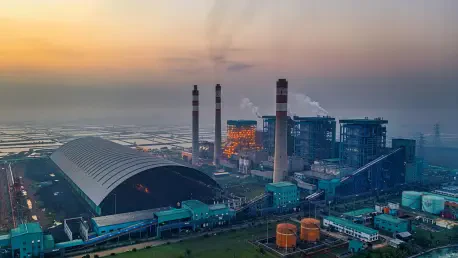

The sudden collision between state-level environmental mandates and federal emergency powers has transformed a quiet rural power station in Washington into the most significant legal battlefield for the American energy transition. At the center of this dispute is the Centralia power station, a facility that has become a symbolic tug-of-war between state-led environmental initiatives and federal concerns regarding national grid reliability. As Washington seeks to finalize its departure from coal-based generation, a sudden federal intervention has paused these plans, raising profound questions about the limits of state authority in the face of national energy security. This analysis explores the complexities of the Centralia retirement, examining the federal government’s use of emergency powers to keep the plant operational while balancing the technical necessity of maintaining a stable power grid.
The significance of this transition extends beyond simple environmental metrics; it represents a fundamental shift in how the region manages its energy resources. Understanding this historical context is vital because it explains why the recent federal intervention has been met with such intense resistance from local regulators. For state planners, the retirement was a settled matter, built into years of long-term utility modeling and economic forecasting. The sudden reversal of this trajectory by federal authorities has disrupted these foundational plans, creating a period of unprecedented regulatory uncertainty that ripples through the entire Pacific Northwest energy market.
Navigating the Legacy and Transition of Washington’s Coal Infrastructure
For decades, the Centralia coal plant has served as a cornerstone of the regional power supply, providing hundreds of megawatts of baseload electricity to the Pacific Northwest. However, as climate change concerns intensified, Washington state passed SB 5769, a landmark law requiring the cessation of coal-fired power generation. This legislative mandate aimed to transition the state toward a cleaner energy portfolio, with the final unit of the Centralia plant scheduled for permanent decommissioning. This move was seen as a major victory for environmental advocates and a signal of the state’s commitment to a carbon-neutral future.
This historical backdrop is essential for grasping the current market friction. The planned closure was part of a broader strategy to replace “firm” coal power with a mix of renewable sources and natural gas. When federal regulators stepped in to delay this decommissioning, they did not just postpone a date; they challenged the legal and economic framework that the state had constructed over the last decade. This creates a scenario where a state’s long-term environmental roadmap is effectively hijacked by federal concerns over short-term seasonal demand spikes, highlighting a systemic gap in how national and local energy priorities are aligned.
The Friction: Regional Reliability vs. Environmental Policy
Invoking Section 202(c): The Argument for Grid Security
The primary catalyst for the current dispute is an emergency order issued by the U.S. Department of Energy under Section 202(c) of the Federal Power Act. This rarely used authority allows the federal government to mandate the operation of power plants during perceived energy emergencies. Federal officials argue that surging electricity demand—driven by everything from extreme weather events to the proliferation of data centers—has left the Pacific Northwest vulnerable. In their view, retiring a significant amount of reliable coal power during the winter months represents a risk to public safety that outweighs state-level environmental deadlines.
The Divergence: Market Reality vs. Regulatory Perception
While the federal government points to a potential crisis, the plant’s owner has presented a more nuanced view of the current market. Company leadership has noted that the region is currently well-supplied with hydroelectric power, suggesting that the actual need to burn coal at Centralia is minimal. This creates a strange paradox where a plant is legally mandated to remain “ready” even if market conditions suggest its services are not required. The challenge lies in the logistical and financial burden of maintaining a workforce and fuel supply for a facility that was supposed to be offline, leading to difficult discussions regarding cost recovery.
Legal Challenges: The Demand for Transparency
The state of Washington and various environmental coalitions have not accepted the federal mandate quietly, launching a series of lawsuits to block the order. These legal challenges rest on the claim that federal regulators failed to provide substantial evidence of a legitimate energy emergency. Furthermore, the state has sued for transparency, demanding access to the data sets and internal communications used to justify the intervention. This aspect of the dispute highlights a growing skepticism regarding federal motives, with critics suggesting that the emergency order may be more about political maneuvering than addressing a genuine threat to grid stability.
Evolving Dynamics in National Energy Governance
The Centralia dispute is likely a precursor to future conflicts as more states move to retire aging fossil fuel infrastructure. We are seeing an emerging trend where federal regulators prioritize “firm” baseload power over the intermittent nature of wind and solar. This suggests a shift toward a more aggressive federal role in state energy planning, particularly as the national grid faces increasing strain. Projections suggest that the Department of Energy may continue to use emergency orders as a tool to slow down retirements across the country until new battery storage and alternative technologies are fully deployed.
Furthermore, the role of natural gas is becoming more defined as a necessary bridge. Despite the fight over coal, all parties involved in the Centralia dispute seem to agree on the plant’s eventual conversion to natural gas. This technological shift represents a middle ground that reduces emissions significantly while maintaining the reliability that federal regulators demand. Moving forward, the industry will likely see more “repowering” projects where coal sites are repurposed, allowing for a transition from 2026 to 2028 that satisfies both state environmental goals and federal reliability requirements.
Strategic Takeaways: Navigating an Era of Energy Uncertainty
The situation in Centralia provides several key insights for stakeholders in the energy sector. First, the transition away from fossil fuels is rarely a straight line; it is subject to the immediate pressures of grid physics and political shifts. For utilities and state planners, the takeaway is the necessity of resource adequacy—ensuring that before a plant is retired, there is a redundant and reliable replacement ready to take its place. Businesses must also prepare for regulatory limbo, where the status of power resources can change rapidly due to federal intervention, potentially impacting utility rates and long-term sustainability goals.
To navigate this landscape, industry professionals should prioritize flexibility in their long-term planning. This includes investing in diverse energy portfolios and advocating for clearer communication between state and federal regulatory bodies. By understanding that grid reliability will almost always be prioritized over environmental timelines in a crisis, stakeholders can better anticipate federal pushback. Building more resilient transition strategies that account for both climate objectives and the technical realities of the power grid remains the most effective way to manage these complex regulatory risks.
The Lasting Implications: Lessons From the Centralia Stand-off
The federal dispute over the Centralia coal plant functioned as more than a local disagreement; it became a microcosm of the global struggle to redefine the energy landscape. It highlighted the friction between the urgent need for climate action and the non-negotiable requirement for a stable power supply. As the legal challenges unfolded and the courts weighed the evidence, the resolution of this conflict established a major precedent for how much control states truly possessed over their energy futures.
Ultimately, the Centralia case underscored that the road to a carbon-free grid was fraught with legal and operational hurdles. Whether the plant closed on its original schedule or remained as a federally mandated insurance policy, its story served as a reminder that the energy transition was a complex balancing act. Stakeholders recognized that future success depended on integrating federal reliability standards into state-level environmental planning from the outset. The enduring significance of this topic lay in its ability to force a national conversation on how to bridge the gap between environmental aspirations and the immediate demands of the modern world.