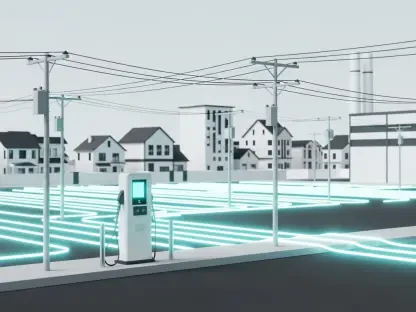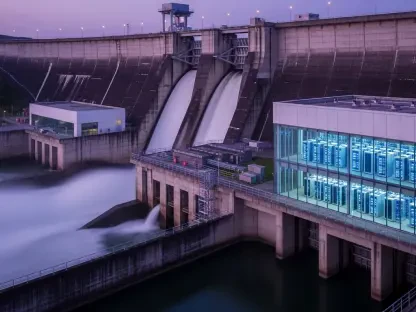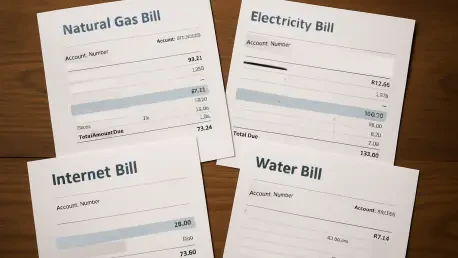

The American power grid is currently facing a transformative era where a projected $1.4 trillion expansion must overcome the stubborn reality of soaring material prices and high interest rates. This transition marks a fundamental shift away from simple demand-driven growth toward a complex system-cost stress test that challenges traditional utility operations. As the sector scrambles to modernize for the artificial intelligence revolution, the financial weight of these upgrades is straining the relationship between regulated utilities and their stakeholders.
The Central Tension Between Essential Grid Expansion and Rising Capital Costs
The conflict centers on the necessity of building out massive new infrastructure while commodities like copper and steel remain at historically elevated prices. This structural inflation complicates the execution of long-term capital plans, as the costs of transformers and high-voltage transmission lines frequently exceed original budget projections. Consequently, the industry is witnessing a shift where traditional demand models are being replaced by rigorous financial scrutiny of total system costs.
Moreover, the rapid rise of AI data centers creates a unique pressure point for the sector. While these facilities promise significant economic benefits, their immense power requirements necessitate immediate and expensive grid enhancements. This creates a friction point where utilities must decide how to fund these projects without placing an undue burden on residential ratepayers. Balancing this modernization with the financial health of regulated utilities has become the primary challenge for leadership.
The Background of the US Infrastructure Super-Cycle and Its Economic Relevance
The current infrastructure super-cycle is primarily catalyzed by the global race for AI supremacy, which requires a dense network of high-capacity substations and transmission corridors. This buildout is no longer a matter of simple maintenance; it has become a prerequisite for national economic competitiveness and technological leadership. A reliable grid serves as the backbone of the modern economy, ensuring that the United States remains at the forefront of the digital age.
Understanding these financial dynamics is critical for the stability of the entire utility investment landscape. If affordability reaches a breaking point, the political will to support necessary modernization could evaporate, leading to a degraded grid and stalled economic growth. Investors and regulators alike are watching closely as the industry attempts to balance these competing priorities while maintaining the stability of utility investments.
Research Methodology, Findings, and Implications
Methodology
Researchers scrutinized extensive data from Morningstar DBRS and Charles River Associates to map the trajectory of infrastructure spending against current rate trends. The analysis focused on how historical unit cost benchmarks have been rendered obsolete by structural inflation in grid-critical metals. By tracking the price of essential commodities, the study established a clearer picture of why project budgets are consistently being revised upward.
Furthermore, the research included a comprehensive comparison of electricity rates across 34 states to identify geographic outliers. This regional analysis allowed for a separation of national inflation trends from localized cost drivers. This provided a more granular view of where consumers are feeling the most significant price pressure and how utilities are managing cost-containment.
Findings
The investigation identified metals inflation as a permanent baseline shift rather than a temporary spike. This shift is driven by the limited capacity of global mining to meet the surge in demand for electrical equipment. It suggests that the cost of building new capacity will remain structurally higher than it was in previous decades. Such a shift forces utilities to operate in an environment where past efficiency gains are easily wiped out by rising material inputs.
Regional disparities also emerged as a key finding, with significant price increases largely isolated to California and the Northeast. In many other parts of the country, rate increases have actually tracked closely with general inflation. However, the phenomenon of regulatory lag remains a pervasive risk, as the time required to recover these surging capital outlays continues to grow, potentially undermining utility credit profiles.
Implications
As capital spending outpaces historical assumptions, the likelihood of regulatory friction increases. Commissions are becoming more skeptical of spending that exceeds legacy cost projections, leading to potential disallowances. This creates a climate of uncertainty for utilities that must commit to multi-year projects without a guarantee of full cost recovery.
There are also significant trade-offs regarding how data centers fund their specific infrastructure needs. If these large-scale users provide direct funding, the assets are often excluded from the utility rate base. While this protects other customers, it reduces the long-term earnings potential for the utility. This may lead to a political shift where infrastructure costs are increasingly directed toward large tech entities rather than residential consumers.
Reflection and Future Directions
Reflection
The difficulty of accurately forecasting capital needs was a recurring theme in the research, especially when supply chains cannot keep pace with demand. Regional factors, such as wildfire mitigation efforts in the West, have often skewed the national perception of why electricity rates are rising. This makes it challenging to have a unified national conversation about grid affordability when the drivers of cost are so localized and varied.
Balancing rapid technological expansion with the political necessity of public affordability remains a delicate task. The research highlighted that while the grid must grow, the pace of that growth is limited by the social and political appetite for higher rates. Successfully navigating this environment required a departure from traditional utility management toward a more agile and transparent communication strategy with the public.
Future Directions
Future research should focus on alternative funding models that allow utilities to earn returns on assets funded directly by large-scale users. Exploring how AI-driven demand impacts the long-term sustainability of current regulatory frameworks will also be vital. As the demand for power continues to skyrocket, the old rules of cost-of-service regulation may need a complete overhaul to remain functional.
Investigating potential breakthroughs in material science is another critical path forward. If new materials can reduce the reliance on expensive grid-critical metals, the structural inflation currently plaguing the sector might be mitigated. Technological innovation on the hardware side of the grid could eventually provide the relief that financial and regulatory maneuvers cannot.
Summarizing the Transition Toward a High-Intensity Utility Investment Model
The study demonstrated that the utility sector entered a high-intensity investment phase where the collision of infrastructure needs and structural inflation became unavoidable. Navigating these regulatory risks was essential to ensure that both grid reliability and consumer protection were maintained during the transition. The findings indicated that the old models of cost recovery were no longer sufficient to handle the speed of the AI-driven energy revolution. Ultimately, the industry had to evolve its business-as-usual approach to survive the mounting pressures of this new economic reality. It became clear that success depended on balancing aggressive expansion with a renewed focus on long-term affordability for all classes of ratepayers.