
Christopher Hailstone is a seasoned expert in energy management and utility regulation with a career dedicated to the complex intersection of grid reliability and consumer affordability. As a veteran strategist in the electricity delivery sector, he has witnessed firsthand how federal mandates and technological shifts dictate the pulse of the American energy landscape. Our conversation today centers on the recent legislative moves in the U.S. House of Representatives to overhaul appliance efficiency programs and repeal major residential rebates. We explore the multifaceted impacts of these changes, ranging from the immediate financial burdens on low-income families to the long-term strategic investments required from manufacturers and developers to maintain a stable, efficient national grid.
How would a mandated three-year payback period for new appliances change current manufacturing cycles, and what specific challenges do engineers face when trying to hit a 10% efficiency improvement threshold while simultaneously keeping upfront costs low for consumers?
A mandated three-year payback period would fundamentally disrupt the long-term research and development cycles that currently define appliance manufacturing. Engineers typically work on five- to ten-year horizons, but this rule would force them to prioritize low-cost, incremental tweaks over the high-performance innovations that truly move the needle. Hitting a 10% efficiency improvement threshold while keeping price hikes minimal is an immense technical hurdle; it often requires expensive specialized components like high-efficiency compressors or advanced insulation materials. When you consider that some appliances must also save at least 0.3 quadrillion Btu to justify a new standard, the pressure to cut corners becomes palpable. If the math doesn’t result in a three-year return for the buyer, manufacturers might simply stop pursuing those efficiency gains altogether to avoid regulatory friction.
If the $4.5 billion rebate program for heat pumps and insulation is eliminated, how can low-income households realistically fund energy upgrades, and what alternative financial models or state-level programs could bridge the gap between high purchase prices and long-term utility savings?
The elimination of the $4.5 billion High-Efficiency Electric Home Rebate Program creates a massive “affordability gap” that most low-income households simply cannot cross on their own. Without these upfront federal subsidies, many families will be forced to stick with aging, energy-guzzling equipment that drains their bank accounts through high monthly utility bills. To bridge this gap, we would likely see a shift toward “on-bill financing” models where utilities front the cost of the upgrade and the customer pays it back through their monthly savings. However, state-level programs vary wildly, and without federal backing, the availability of grants for contractor training and weatherization will likely dry up in many regions. It is a callous reality where those who need the savings most are the ones least able to afford the technology required to achieve them.
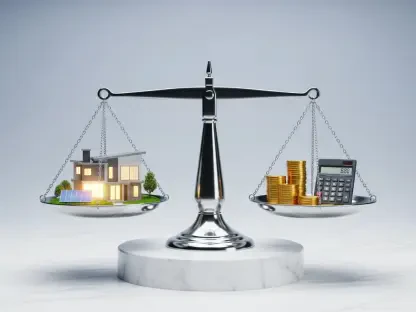
New building codes are estimated to increase construction costs by up to $31,000 per home. How should developers balance these immediate expenses against the potential for lower monthly bills, and what specific design trade-offs are most effective for maintaining affordability without sacrificing energy performance?
Developers are currently caught in a vice between the high cost of the 2021 International Energy Conservation Code and the urgent demand for affordable housing. A $31,000 price hike on a new home is a deal-breaker for many first-time buyers, even if it promises lower bills over the next thirty years. To balance this, developers often look for “value engineering” trade-offs, such as optimizing the building envelope with better air sealing rather than just adding more expensive windows. They might also shift toward modular or prefabricated components that reduce labor costs to offset the price of high-efficiency HVAC systems. The goal is to reach a “sweet spot” where the home is airtight and thermally efficient, yet the mortgage remains within reach for the average American family.
Removing mandatory six-year reviews for efficiency standards might reduce regulatory pressure on manufacturers. How does this shift impact long-term research and development investment, and what does a slowdown in efficiency gains mean for the stability of the national electric grid during peak demand?
Removing the six-year review cycle provides a temporary sigh of relief for manufacturers who feel stifled by “arbitrary” mandates, but it creates a vacuum of long-term certainty. Without a predictable regulatory roadmap, companies are less likely to invest millions into the next generation of breakthrough energy technologies. From a grid perspective, this is a major concern because efficiency is one of our most effective tools for “load shedding” during peak summer or winter events. If we allow energy-wasting appliances to stay on the market, we are essentially locking in higher peak demand for decades. This forces utilities to keep dirtier, more expensive “peaker” plants online, which ultimately compromises the reliability and cost-effectiveness of the entire national electric grid.
High-efficiency appliance standards have saved the average household roughly $6,000 over the last decade. If these standards are weakened or frozen, what metrics should families use to evaluate the total cost of ownership, and how can they identify which “budget” appliances will actually cost them more over time?
Families must look past the sticker price and focus on the “Second Price Tag”—the cumulative cost of energy and water over the machine’s lifespan. If standards are frozen, the market will likely be flooded with budget models that look attractive at $400 but might cost an extra $100 every year to operate compared to a high-efficiency unit. Consumers should meticulously check the EnergyGuide labels for estimated yearly operating costs and calculate the ten-year total; often, a model that is $200 more expensive at the store pays for itself in just two years. We’ve seen that these standards have saved households $6,000 on average over ten years, so a “cheap” appliance is frequently the most expensive thing you can buy. It’s about understanding that every dollar saved at the register could result in five dollars lost to the utility company.
What is your forecast for the future of residential energy efficiency in the United States?
I anticipate a period of significant fragmentation where energy efficiency becomes a matter of geography rather than a national standard. If federal mandates are rolled back and rebates are repealed, we will likely see a “two-speed” Americprogressive states will implement their own strict codes and incentive programs, while other regions will see a stagnation in building quality and appliance performance. This will create a complex landscape for manufacturers who prefer uniform national standards to maximize their economies of scale. Ultimately, the market will eventually be driven by consumer demand for lower bills, but without federal leadership, that transition will be much slower, more expensive, and less equitable for the most vulnerable members of our society.