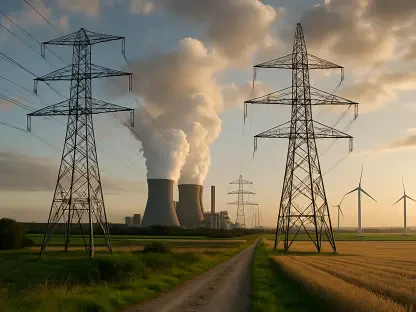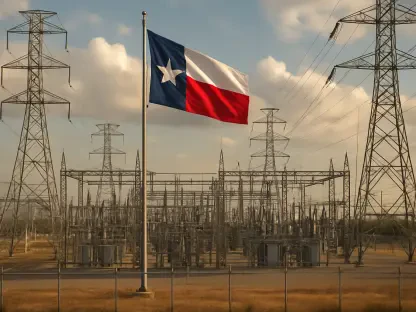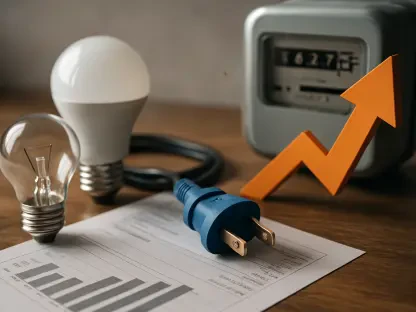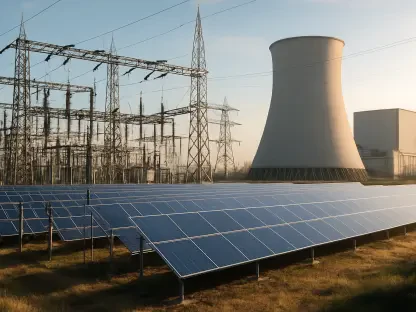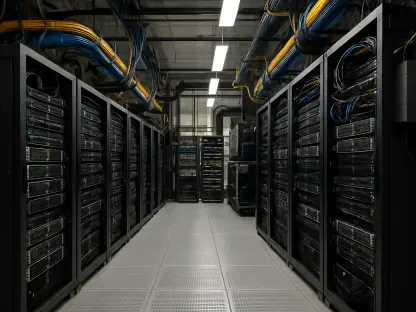

Every month, millions of American households open their utility bills only to discover that the price of progress in the artificial intelligence era is becoming an increasingly heavy financial burden. The digital renaissance, characterized by a historic boom in high-tech manufacturing and the rapid proliferation of data centers, is driving the economy forward at a breakneck pace. However, the bill for this advancement is arriving in the mailboxes of everyday consumers who are struggling with electricity prices that have hit record highs. An aging grid, which must simultaneously fend off climate-induced storms and satisfy the voracious appetite of massive data centers, is currently pushed to its absolute breaking point.
This pressure is no longer merely an economic concern; it has become a central political issue for governors and regulators who face a public increasingly unwilling to choose between grid reliability and financial stability. The central challenge lies in the fact that the traditional methods of expanding energy capacity are too slow and too expensive to meet the immediate needs of a changing society. Fortunately, the path to lower bills does not require waiting for decades of new construction or a total overhaul of the energy sector. Instead, it starts with the intelligent optimization of the infrastructure we already have, utilizing modern tools to ensure that the growth of the digital economy does not come at the expense of the average citizen.
The High Cost of the Digital Renaissance
The digital transformation of the United States is no longer a distant promise but a power-hungry reality that is testing the limits of every state’s infrastructure. While the rapid expansion of massive data centers and domestic factories drives economic growth, it also triggers record-high electricity prices that leave consumers feeling the pinch of rising operational costs. This tension has transformed energy policy into a high-stakes political battlefield, forcing governors and regulators to find ways to balance the necessity of innovation with the fundamental right to affordable power. The era of “business as usual” for utilities is over, as the demand for power outpaces the speed at which new wires can be strung across the landscape.
The solution lies not in waiting for a new generation of power plants to be built over the next decade but in maximizing the capacity of the systems currently in place. By shifting the focus toward optimization and surgical technology deployments, states can mitigate the rising costs that threaten to derail the economic benefits of the technological boom. There is a growing realization that the most affordable megawatt is the one that does not require a billion-dollar transmission project to deliver. As policymakers look for immediate relief, they are discovering that the intersection of software and hardware offers a blueprint for a more resilient and cost-effective energy future.
The Convergence of Demand and Decay
A “perfect storm” of three intersecting trends is currently battering the American energy landscape, beginning with a surge in demand that caught many utilities off guard. The rapid integration of generative AI into every facet of business has forced load projections to be rewritten overnight, placing an immense strain on a transmission network that was already showing its age. This decay results in significant congestion costs, where electricity must be rerouted through inefficient, longer paths because the primary routes are overloaded. These hidden fees are often passed directly to the ratepayer, inflating monthly bills without providing any tangible improvement in service quality or reliability.
Compounding these technical hurdles is the increasing frequency of extreme weather events that necessitate constant, expensive grid-hardening efforts and emergency repairs. Policymakers are realizing that the old model of “steel-in-the-ground” expansion is simply too slow and costly to address these immediate threats effectively. Consequently, there is a burgeoning movement toward high-tech, immediate interventions that can extract more value from existing assets without the multi-year delays of traditional construction. This shift from physical expansion to digital optimization represents the most promising path toward maintaining a stable economy while protecting the financial health of the residential consumer base.
Four Pillars of Immediate Energy Affordability
It is a poetic irony that the very technology straining the grid can also serve as its primary savior through advanced management software. Modern utilities are moving away from the siloed, manual planning models of the past in favor of AI-enabled systems that unify interconnection and dispatch into a single, streamlined process. For instance, PJM Interconnection is refining regional planning with high-performance algorithms, while companies like Portland General Electric use data models to expedite data center connections. These tools allow utilities to navigate complex grid demands with surgical precision, reducing the operational overhead that typically inflates consumer rates.
While building new transmission lines remains a multi-billion-dollar endeavor, Advanced Transmission Technologies offer a more immediate and cost-effective alternative for state planners. By deploying Grid Enhancing Technologies, such as dynamic line ratings and advanced conductors, utilities can squeeze significantly more capacity out of existing wires. PPL Electric Utilities showcased the potential of this approach by saving over $60 million in one year through dynamic line ratings, effectively avoiding a $50 million rebuild. This success proves that “smart” infrastructure is often a much better investment than simply building more of the same, providing relief to ratepayers who would otherwise shoulder the burden of massive capital projects.
Managing energy affordability also requires a fundamental shift in how consumers interact with the grid through demand-side flexibility. Virtual Power Plants, which network residential solar panels, home batteries, and smart appliances, allow “homegrown energy” to satisfy peak demand without firing up expensive, high-emission backup plants. Furthermore, as electric vehicles become mobile energy assets, they provide a buffer that balances the grid more effectively. When consumers are incentivized to shift their usage to off-peak hours, the entire community benefits from lower rates, turning the average household into an active participant in the stability of the state’s energy ecosystem.
As data centers continue to proliferate, regulators must ensure that the massive infrastructure costs they incur are not unfairly shifted onto residential households. Implementing “large load tariffs” and stringent cost-sharing agreements allows states to protect average families while supporting industrial growth. AEP, for example, successfully used these requirements to clear speculative projects from its queue, ensuring that only committed, grid-ready developments moved forward. By making large-scale users pay their fair share of the expansion costs and requiring flexibility commitments, states can ensure that the growth of the digital economy acts as a shock absorber for the grid rather than an anchor on the local economy.
Expert Perspectives on the Modern Grid
Energy analysts and industry leaders increasingly agree that the primary obstacles to a more affordable grid are political and regulatory rather than technological. Organizations like the World Resources Institute have pointed out that the tools for immediate relief are already available; the challenge is fostering the policy willpower to implement them. Industry experts argue that the focus must remain on proactive governance that anticipates shifts in demand rather than merely reacting to them after prices have already spiked. The consensus is that a modernized grid is not a luxury for the future but a necessity for the present that requires a departure from traditional utility incentives.
By adopting ratepayer protection pledges and collaborating with technology giants on voluntary cost-sharing, states can bridge the gap between corporate expansion and consumer protection. This collaborative approach turns potential liabilities into assets, ensuring that the infrastructure required for the future is funded fairly and managed efficiently. It is this shift in perspective—viewing the grid as a dynamic, software-optimized system—that allows states to maintain their competitive edge without sacrificing the financial stability of their residents. Experts emphasize that the states which move first to adopt these technologies will be the ones that secure the most sustainable economic growth over the coming years.
Practical Strategies for State Policymakers
For state officials looking to deliver tangible financial relief, the first step involved mandating technology upgrades that prioritized efficiency over traditional capital spending. Regulators required utilities to incorporate AI-driven modeling and advanced transmission technologies into their long-term planning cycles. This policy shift forced a move toward cost-saving innovations like dynamic line ratings, which allowed the existing grid to carry more power without the need for expensive and time-consuming new construction projects. These mandates ensured that utilities could not overlook low-cost software solutions in favor of high-margin physical assets that would inflate the rate base for decades.
Incentivizing consumer participation also played a critical role in stabilizing the energy ecosystem during this period of rapid growth. States simplified the regulatory hurdles that previously prevented residential energy resources from joining wholesale markets, turning every home with a smart thermostat or an electric vehicle into a contributor to grid stability. Furthermore, the implementation of protective large-load tariffs ensured that massive industrial facilities acted as shock absorbers for the grid, providing flexibility during peak events in exchange for more competitive distribution rates. This comprehensive strategy successfully transformed the energy crisis into a model for a modern, responsive, and affordable utility system that empowered both the industry and the individual consumer.