
A Critical Crossroads for America’s Energy Future
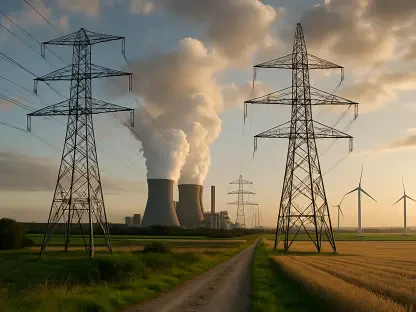
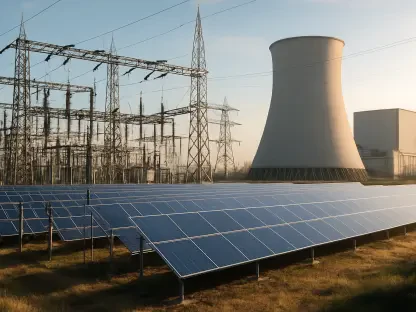
The United States stands at a critical juncture, facing the twin imperatives of decarbonizing its economy and meeting a historic surge in electricity demand. Driven by the explosive growth of artificial intelligence, hyperscale data centers, and industrial electrification, this new demand is relentless, requiring 24/7 baseload power that intermittent renewables alone cannot provide. Nuclear energy, with its carbon-free, grid-stabilizing profile, is the obvious technological solution. Yet, despite its clear advantages, the industry has been stagnant for decades, haunted by staggering costs and schedule overruns. This article explores the argument that the primary impediment to a nuclear buildout is not a failure of technology but a profound and outdated financial problem. It posits that by adopting project finance—the proven model used across nearly every other major energy sector—the nuclear industry can finally de-risk its ventures, attract vast pools of private capital, and unleash the renaissance required to power the future.
The Legacy of a Flawed Financial Blueprint
To understand the path forward, we must first examine the financial model that led the nuclear industry to its current impasse. Historically, new nuclear power plants were funded directly on the corporate balance sheets of regulated utilities. This traditional approach concentrates all construction, operational, and financial risk onto a single entity. When projects faced inevitable delays and cost escalations, the financial burden fell squarely on the utility’s shareholders and, ultimately, its ratepayers. This model’s catastrophic failure was vividly illustrated by Georgia Power’s Vogtle Units 3 and 4, where initial cost estimates of around $14 billion spiraled to over $30 billion. The immense financial strain threatened the utility’s credit rating, dramatically increased its borrowing costs, and sent a chilling message to investors, regulators, and the public: new nuclear was simply too risky to finance. This legacy of concentrated risk has effectively walled off the nuclear sector from the modern capital markets that finance the rest of our critical infrastructure.
Forging a New Path: The Mechanics of Modern Nuclear Finance
The Architectural Shift to Project Finance
The solution lies in fundamentally restructuring how nuclear projects are funded and managed. Project finance offers a proven alternative that has been conspicuously absent from the nuclear industry. The core of this model is the creation of a special purpose vehicle (SPV), a distinct legal and financial entity for each individual nuclear plant. This simple but powerful step isolates the project’s debt and liabilities, shielding the parent utility and its customers from construction risk. Instead of lending to a corporation, investors and lenders provide capital directly to the project itself, with their returns secured by the plant’s projected contractual cash flows. This structure imposes a level of discipline and accountability that the old model lacked, forcing a rigorous alignment of incentives between builders, operators, and financiers by allocating specific risks to the stakeholders best equipped to manage them.
Assembling the Capital Stack for a New Nuclear Era
Under a project finance framework, a diverse coalition of investors can be brought to the table, each playing a specific role. Construction equity can be provided by the massive, untapped pool of capital from infrastructure funds, pension investors, and sovereign wealth funds—estimated at over $350 billion in available “dry powder”—which are compensated with higher returns for taking on early-stage risk. Long-term debt would be supplied by banks and life insurance companies seeking stable, long-duration assets, with their investment de-risked and made cheaper through US Department of Energy loan guarantees. The final, critical piece is the offtaker. Large technology and industrial companies, desperate for clean, reliable power, can sign long-term power purchase agreements (PPAs) that guarantee a predictable revenue stream, making the entire project “bankable.” This financial structure is further enhanced by the Inflation Reduction Act’s investment tax credit, which provides a crucial financial cushion against budget overruns and boosts investor confidence.
Reframing Risk: From Vogtle’s Lessons to Regulatory Reform
Adopting this new model requires re-evaluating past failures and addressing persistent regulatory hurdles. The Vogtle project, often cited as a cautionary tale, should instead be seen as a costly but essential learning experience. Its completion, though fraught with challenges, has created a trained workforce of 30,000 and validated a now-mature domestic supply chain for the AP1000 reactor. Future projects can leverage this foundation to achieve significant cost and efficiency gains. However, financial innovation alone is not enough. The US Nuclear Regulatory Commission (NRC) currently operates under a single mandate for safety, which, while vital, has led to excessive conservatism and costly uncertainty for investors. Experts suggest the NRC should adopt a dual mandate, balancing safety with societal benefit, similar to the FDA. A more stable and predictable regulatory environment would directly lower the cost of capital, a powerful lever that could bring the price of new nuclear power into a commercially competitive range.
The Dawn of Standardized, Bankable Nuclear Fleets
The convergence of project finance with technological and industrial trends is shaping a promising future. The most significant emerging trend is the move toward fleet standardization—building multiple, identical reactors to leverage learning-curve effects, streamline supply chains, and reduce construction times by as much as 30%. When this industrial efficiency is combined with the disciplined financial structure of project finance and underwritten by long-term PPAs from the world’s largest corporations, a virtuous cycle is created. Nuclear power shifts from a high-risk, one-off megaproject to a predictable, scalable, and highly attractive asset class for institutional investors. This evolution presents the first credible opportunity in a generation to build the nuclear fleet of the future, not as isolated projects, but as a systematic and financially sound industrial rollout.
A Blueprint for Action: Activating the Nuclear Renaissance
The path to revitalizing nuclear energy is clear, and its core takeaways point toward actionable strategies. The central insight is that the industry’s primary challenge is a solvable financial structuring problem, not an intractable technological one. The traditional on-balance-sheet financing model is broken and must be replaced by the proven, risk-mitigating framework of project finance. To implement this shift, policymakers must focus on reforming the NRC to provide greater regulatory certainty and reduce investor risk. Utilities and developers must embrace the SPV model to attract private capital. Finally, infrastructure investors and industrial offtakers must recognize the immense opportunity to partner on projects that meet both their financial return requirements and their escalating demand for clean, reliable energy. This blueprint provides a practical roadmap for all stakeholders to collaborate and unlock the capital necessary for a nuclear buildout.
The Missing Link to a Carbon-Free Future
The narrative of nuclear energy in America has long been defined by what has held it back. Yet, the conversation is finally shifting to what can propel it forward. The immense demand for clean, constant power has created an unprecedented market pull, while the maturation of reactor designs and domestic supply chains has created a strong industrial push. The missing link connecting this supply and demand is a modern financial structure capable of managing risk and attracting capital. Project finance is that link. By embracing this financial innovation, the United States can finally overcome the decades-long inertia that has stalled this essential carbon-free technology. Aligning America’s deep and sophisticated capital markets with its advanced nuclear capabilities is no longer just a strategic option; it is a national imperative for achieving energy security and climate goals.