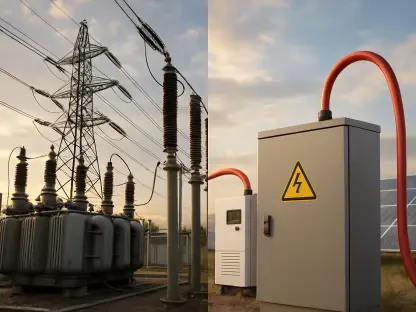

The Collision of Digital Infrastructure and Grid Reliability
The relentless expansion of high-density computing clusters across the eastern United States has forced a high-stakes confrontation between the rapid-fire demands of technological innovation and the historically cautious pace of electrical grid management. As the demand for artificial intelligence and cloud computing surges, the race to power the next generation of data centers has led to a controversial concept: colocation. By placing massive digital warehouses directly next to power plants, developers aim to bypass a congested electrical grid and secure a steady energy supply. However, a recent regulatory proposal by PJM Interconnection, the nation’s largest grid operator, has ignited a fierce debate. While intended to provide a structured pathway for these partnerships, the framework is now under fire from a broad coalition of energy producers and tech giants who argue that the rules may do more to stifle innovation than to enable it. This article explores whether PJM’s approach serves as a bridge to the future or a structural blockade for the digital economy.
The tension stems from the fundamental difference in how digital and electrical infrastructures are built and scaled. Data centers can often be constructed in less than two years, whereas major transmission upgrades often take a decade or more to finalize. This disconnect has made the idea of plugging directly into a power plant’s “behind-the-meter” supply incredibly attractive to hyperscale operators. Yet, the grid operator must ensure that these private arrangements do not destabilize the public system or leave other customers vulnerable to outages. The current proposal attempts to formalize these connections, but critics suggest the resulting bureaucratic hurdles might negate the geographic advantages that colocation was supposed to provide.
The Friction Between Regulatory Timelines and Market Urgency
The 2029 Implementation Gap and Its Economic Consequences
One of the most significant hurdles in PJM’s proposal is a requested implementation delay until June 1, 2029. PJM maintains that the transition requires complex software updates and comprehensive system overhauls to maintain grid stability. However, independent power producers argue that a three-year waiting period from the current point in 2026 is incompatible with the breakneck speed of data center development. In an industry where capacity is needed today, a multi-year delay creates a massive investment vacuum, potentially pushing critical infrastructure projects to other regions with more agile regulatory environments.
Moreover, the prolonged timeline signals a lack of institutional agility that could deter long-term venture capital. When billion-dollar projects are sidelined by administrative wait times, the economic ripples affect everything from local job markets to national competitiveness in the AI sector. Industry observers note that while safety and reliability are paramount, the current schedule lacks the sense of urgency required to sustain a leading position in the global digital landscape.
The Erosion of Physical Proximity Benefits
The primary incentive for colocation is the promise of direct, uninterrupted access to power. Yet, stakeholders point out that PJM’s “interim Network Integration Transmission Service” effectively nullifies this advantage. By treating colocated generation as part of a general “network resource pool” rather than a dedicated supply, the framework subjects data centers to the same curtailment risks as any other grid user. This “operational rigidity” means that even if a developer builds a power plant specifically for their facility, they may still be forced to power down during grid stress, removing the very energy security they sought to purchase.
This policy shift essentially treats a direct wire like a standard grid connection, which many developers find illogical. If a data center sits twenty feet from a generator, the expectation is that the proximity should provide a buffer against regional transmission failures. By ignoring this physical reality in favor of a theoretical pool model, the regulatory framework risks making the significant capital investment required for colocation projects appear unjustifiable to corporate boards.
Balancing Grid Stability Against Fair Cost Allocation
While tech companies push for flexibility, independent market monitors raise alarms regarding economic equity and system reliability. There is a growing concern that new service classes, such as the “Non-Firm Contract Demand Service,” could allow data centers to use the broader grid as a subsidized backup without paying their fair share of transmission maintenance costs. This creates a complex paradox: if the rules are too lax, existing ratepayers may shoulder the financial burden of new data centers; if they are too strict, the region loses the economic boost provided by the digital sector.
Finding a middle ground requires a sophisticated understanding of how these massive loads interact with the existing network. Some analysts suggest that data centers should be viewed not just as consumers, but as potential grid assets that can provide flexibility during peak demand. However, until a fair pricing mechanism is established that accurately reflects the costs of standby transmission capacity, the debate over who pays for the wires will likely remain a primary obstacle to widespread colocation adoption.
Operational Deadlocks: Ramping Hurdles and Draconian Penalties
The framework’s finer details reveal practical barriers that many experts deem “functionally unworkable.” For instance, the proposal fails to account for the phased nature of data center growth, where power needs scale up over several years rather than hitting peak demand on day one. Furthermore, the inclusion of “all-or-nothing” penalties—where a facility could lose its entire transmission service for failing to follow a single load-shed order—is viewed as an unacceptable risk for multi-billion-dollar investments. These technical friction points suggest a disconnect between traditional grid management and the realities of modern commercial scaling.
Risk mitigation is a cornerstone of digital infrastructure, and the threat of total service termination creates a level of uncertainty that most institutional investors avoid. Instead of fostering a collaborative environment where loads are managed dynamically, the current rules appear to rely on punitive measures that do not reflect the nuances of server farm operations. This binary approach to compliance could lead to operational deadlocks where neither the grid nor the data center can function at optimal efficiency.
Strategic Paths Toward a More Flexible Energy Future
To move past the current deadlock, PJM and its stakeholders had to prioritize a framework that balanced immediate capacity needs with long-term grid integrity. Industry leaders suggested moving away from “all-or-nothing” penalty structures toward more nuanced, graduated compliance measures. Additionally, revising the resource pooling logic to recognize the physical reality of colocated assets restored the “colocation advantage” without compromising the wider network. Adopting a modular, phased implementation plan allowed the region to capture investment opportunities while the grid evolved.
Furthermore, integrating advanced monitoring technologies could have bridged the gap between the grid operator’s visibility and the data center’s internal load management. By creating a real-time data exchange, both parties could have anticipated stress points before they required drastic curtailment. This proactive approach would have shifted the relationship from one of mutual suspicion to one of strategic partnership, where the stability of the grid and the reliability of the data center were seen as interdependent goals rather than conflicting interests.
Redefining the Partnership Between Power and Pixels
The conflict over PJM’s colocation framework highlighted a fundamental shift in how the United States managed its energy resources. The proposal, in its original form, risked becoming a barrier to entry that stalled the growth of the digital economy across 13 states. For colocation to succeed, the regulatory environment needed to mirror the innovation of the industries it served, providing clear, predictable, and commercially viable pathways for growth. As federal regulators reviewed these contested rules, the outcomes set the precedent for how the entire country integrated high-demand digital loads into an aging electrical infrastructure.
Ultimately, the resolution of this dispute required a departure from traditional “siloed” thinking. Regulators and developers began to explore the potential for data centers to act as “virtual power plants,” using their on-site backup systems to support the grid during emergencies. This evolution in thought turned a source of friction into a tool for resilience. By moving toward a more decentralized and responsive regulatory model, the energy sector finally provided the necessary foundation for the next chapter of the digital revolution.