
A groundbreaking composite material, engineered by merging molecular imprinting technology with biochar, is emerging as a powerful tool for environmental cleanup, offering a highly selective and efficient method for purifying contaminated water. This innovative substance, aptly termed “smart biochar,” is designed to recognize and capture specific pollutant molecules with remarkable precision, a significant advancement over conventional, non-selective adsorption techniques. The core of this research aims to transform low-value agricultural and forestry biomass into an intelligent, high-value material capable of addressing some of the most pressing environmental contamination issues. By creating a sorbent that can single out harmful compounds from complex mixtures, scientists are paving the way for more targeted and sustainable water treatment solutions that can protect both human health and delicate ecosystems from the persistent threat of chemical pollution.
The Science Behind Smart Biochar
A Tale of Two Technologies
At the heart of this innovation is biochar, a porous and carbon-rich material produced through the pyrolysis of biomass, which involves heating organic matter like crop residues in a low-oxygen environment. Biochar is already well-regarded for its valuable properties, including its low production cost, extensive surface area that provides a multitude of binding sites, and its environmentally friendly origins as a product of recycled waste. These characteristics make it an excellent adsorbent material. However, its primary limitation lies in its inherent lack of specificity. Biochar’s adsorption capabilities are typically broad, meaning it binds a wide range of substances without any particular preference. This non-selective nature makes it less effective for removing specific, highly toxic pollutants that may be present at very low concentrations alongside many other, less harmful compounds in a complex environmental matrix like wastewater or industrial effluent.
To overcome the non-selectivity of biochar, researchers have integrated a sophisticated technique known as molecular imprinting. This process effectively creates a “molecular memory” within a polymer matrix, allowing it to recognize and bind to a specific target molecule. The method works by polymerizing functional monomers and crosslinkers around a “template” molecule, which is the exact pollutant designated for removal. Once this polymerization is complete, the template molecule is carefully extracted, leaving behind custom-shaped recognition cavities within the polymer structure. These cavities are precisely tailored in terms of size, shape, and chemical functionality to selectively re-bind only the original template molecule. This functions much like a biological lock and key, where the imprinted cavity is the lock and the target pollutant is the key, ensuring an exceptionally high degree of selectivity that standard adsorbents cannot achieve.
Creating the Composite
The true innovation of smart biochar lies in the synergistic fusion of these two distinct technologies. By synthesizing molecularly imprinted polymers (MIPs) directly onto the vast surface of biochar, scientists have created a composite that marries the high adsorption capacity of the carbonaceous support with the exceptional selectivity of the imprinted polymer layer. This results in a “smart sorbent” that can accurately identify and capture chosen contaminants from complex mixtures with unparalleled efficiency. The biochar acts as a robust and porous scaffold, providing a large area for the selective MIP layer to be grafted onto, while the MIP layer provides the crucial molecular recognition capability. This hybrid material overcomes the individual limitations of its components, producing a powerful purification agent that is both capacious and highly targeted, making it far superior to using either biochar or MIPs alone.
The performance and effectiveness of the final composite material are heavily dependent on several critical design choices made during its preparation. A fundamental decision is the imprinting mechanism; the most widely adopted approach is noncovalent imprinting, which relies on relatively weak intermolecular forces such as hydrogen bonding and van der Waals forces. This method is favored for its simplicity, rapid kinetics, and, crucially, its compatibility with aqueous environments, making it ideal for water treatment applications. Another key aspect is the polymerization strategy used to graft the imprinted layer onto the biochar. Methods like precipitation polymerization and emulsion polymerization are common for creating discrete particles, while electropolymerization allows for uniform films on conductive biochar. The choice of chemical building blocks—the functional monomers, crosslinkers, and initiators—is also paramount for creating effective recognition sites that can strongly and selectively bind to the target pollutant, enabling the material to not only capture contaminants quickly but also distinguish them from other similar molecules.
Transformative Applications and Future Hurdles
Targeted Environmental Remediation
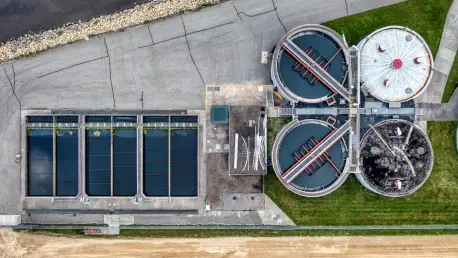
The most urgent and promising application for molecularly imprinted biochar is the removal of trace organic pollutants from water sources. These contaminants, which include a wide array of substances like antibiotics, pesticides, industrial chemicals such as plasticizers, and disinfection by-products, are often highly toxic even at very low, parts-per-billion concentrations. Conventional water treatment facilities frequently struggle to remove these compounds efficiently because they exist in complex chemical mixtures and at levels that are difficult to target with standard adsorbents like activated carbon, which lacks the necessary selectivity. Smart biochar directly addresses this challenge by offering a tailored solution that can be designed to specifically capture these high-risk pollutants, pulling them out of the water with high affinity and leaving other, benign molecules behind, thereby streamlining the purification process.
This advanced technology has already yielded several successful and innovative purification systems demonstrated on a laboratory scale. For instance, researchers have developed a molecularly imprinted magnetic biochar to selectively extract antibiotics like oxytetracycline and sulfamethoxazole from water. The inclusion of magnetic nanoparticles within the composite allows for the rapid adsorption of the target antibiotic, followed by the easy separation and recovery of the sorbent from the water using an external magnetic field, which greatly facilitates its reuse. In another particularly innovative approach, the selective adsorption process is coupled with advanced oxidation or photocatalysis. In this synergistic system, the imprinted biochar first captures and concentrates the pollutant, after which a catalytic process is initiated to degrade the captured molecule. One compelling example involved an imprinted biochar that achieved over 80% equilibrium adsorption of naphthalene in just a few minutes, followed by a coupled oxidation process that destroyed the captured contaminant and simultaneously regenerated the imprinted cavities.
Beyond Cleanup Sensing and Analysis
The unique molecular recognition capabilities of this technology open doors to other advanced applications beyond large-scale environmental cleanup, particularly in the fields of sensing and analytical chemistry. By growing the imprinted polymer films directly onto conductive biochar-based electrodes, researchers have successfully fabricated highly selective electrochemical sensors. These devices are designed to detect specific target molecules, such as antibiotics, heavy metal ions, and plasticizers, with high sensitivity and a rapid response time, even when operating in complex sample matrices like river water or biological fluids. This development offers a promising avenue for creating portable, on-site sensors for real-time water quality monitoring, providing an immediate and cost-effective alternative to time-consuming laboratory analyses and enabling quicker responses to contamination events.
Furthermore, molecularly imprinted biochar serves as an excellent material for a technique known as solid-phase extraction (SPE). In this application, the material is used to preconcentrate trace levels of contaminants from environmental, food, or biological samples before they are analyzed by more sophisticated instruments like chromatographs. The high selectivity of the imprinted biochar allows it to isolate the target analytes from a complex sample, effectively cleaning up the sample and concentrating the substance of interest. This preconcentration step significantly improves the detection limits of analytical instruments and reduces interference from other compounds that may be present in the sample matrix. The outcome is more accurate, reliable, and sensitive analytical results, which are critical for regulatory monitoring, food safety analysis, and clinical diagnostics.
The Path to Real World Implementation
Despite the technology’s immense promise demonstrated in laboratory settings, the authors of a recent review stressed that critical challenges related to environmental safety and scalability had to be addressed before widespread deployment could be considered. A primary concern was the potential for the composite material to release harmful components into the environment, such as residual unreacted monomers, crosslinkers, or any metal oxide nanoparticles that might have been used in its synthesis. The biochar component itself also posed a potential toxicity risk if the production conditions during pyrolysis were not carefully controlled, which could have led to the formation of hazardous by-products. These risks underscored the need for rigorous testing and validation before these materials could be safely integrated into public water systems or environmental remediation projects on a large scale.
To mitigate these risks, the review called for a decisive shift towards greener and more sustainable synthesis routes. This included favoring water-based polymerization over solvent-based methods, developing and utilizing less toxic functional monomers, and establishing stringent quality controls over the pyrolysis conditions used to produce the biochar. Moreover, it was determined that comprehensive long-term studies on the material’s aging and stability, along with full life cycle assessments, were needed to fully understand its environmental footprint, leaching behavior, and ecotoxicity in comparison to existing technologies. As summarized by researcher Yuhu Zhang, while these materials had demonstrated clear advantages in selectivity, capacity, and reusability on a laboratory scale, the crucial next step was to validate their safety, cost-effectiveness, and durability for continuous operation in real-world treatment systems, a necessary prerequisite for transforming this promising innovation into a practical solution.