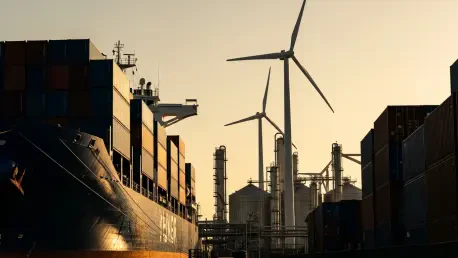

The rhythmic clanging of steel mills across the European heartland is increasingly being drowned out by the silent, mounting financial pressure of carbon permits that now threaten to shutter the very foundations of the continent’s manufacturing legacy. What began as a pioneering market mechanism to lead the world in climate action has transformed into a focal point for a fierce political rebellion. As heavy industries grapple with a perfect storm of skyrocketing energy costs and geopolitical instability, a coalition of ten member states has issued a stark warning. The current carbon pricing framework may inadvertently trigger an industrial exodus, turning the green transition into a narrative of economic decline.
This standoff is no longer a simple debate about environmental targets; it is a battle for the survival of the European industrial core. For decades, the Emissions Trading System (ETS) served as the primary tool for reducing greenhouse gas emissions through market incentives. However, the intersection of persistent inflation and a volatile energy landscape has shifted the internal logic of the policy. The question facing Brussels is whether the aggressive pace of decarbonization remains compatible with maintaining a competitive global presence.
The High Cost of Decarbonization: A Continental Standoff
The European Union currently finds itself at a crossroads where climate ambition meets the harsh reality of industrial overhead. The coalition of ten nations—including Italy, Poland, and Austria—argues that the financial weight of the ETS has surpassed the threshold of manageable regulation. These countries contend that the rapid escalation of carbon prices, combined with high natural gas costs, is pushing energy-intensive sectors toward a breaking point. This is not merely an ideological dispute but a reflection of the localized economic pain felt in Central and Southern Europe.
The tension within the bloc reveals a deep-seated fear that the “Green Deal” is becoming a deindustrialization trap. While the European Commission maintains that the high cost of pollution is necessary to drive innovation, manufacturers in the steel and chemical sectors argue that the capital required for such shifts is being drained by compliance costs. This struggle highlights a growing concern that the very industries needed to build a carbon-neutral infrastructure might not survive long enough to see the transition through to its conclusion.
From Climate Solution to Industrial Burden
Initially, the ETS was celebrated as a sophisticated, market-driven solution that would provide a predictable path toward a low-carbon future. In recent years, however, the system has evolved into a structural threat for “hard-to-abate” sectors such as cement and aluminum. These industries face a unique disadvantage because their production processes require intense heat and chemical reactions for which low-carbon alternatives are either non-existent or prohibitively expensive at scale.
The burden is exacerbated by the fact that European producers must compete in a global market where many international rivals do not face similar carbon constraints. This creates a “carbon leakage” risk, where production moves to regions with lower environmental standards, resulting in the same global emissions but with a destroyed European tax base. Consequently, the carbon market is now viewed by many as a tax on domestic production rather than a catalyst for global environmental change.
The Rising Coalition for Carbon Reform
The push for change is led by a formal petition from a ten-nation bloc, including Hungary, the Czech Republic, and Romania, demanding an immediate overhaul of the ETS framework. Their primary objective is to protect the industrial heartlands that provide millions of jobs across the continent. This group is specifically calling for an extension of free carbon allowances and a significant delay in the phase-out of these credits, which is currently slated to accelerate between 2026 and 2034.
In contrast, a smaller group of “Defenders,” led by Denmark, the Netherlands, and Finland, remains steadfast in protecting the integrity of the carbon market. They argue that any softening of the ETS would undermine the EU’s credibility and slow down the necessary shift toward renewable energy. This ideological divide has fractured the Union, leaving policymakers to decide between maintaining a rigid climate roadmap and offering a financial lifeline to struggling manufacturers who see a “2034 cliff” looming in their long-term planning.
Expert Perspectives on Strategic Independence
Industrial analysts and strategic advisors warn that the EU risks trading its former dependence on foreign fossil fuels for a new dependence on foreign industrial goods. If the carbon market continues to drive up domestic production costs without a corresponding global price on carbon, Europe may lose its strategic autonomy. Commission President Ursula von der Leyen has defended the ETS as a vital source of revenue for clean-tech innovation, yet her own administration’s reports now acknowledge the “complex intersection” of extreme electricity prices and carbon costs.
The danger lies in the potential for market speculation to drive carbon prices beyond what fundamental industrial shifts can support. Financial experts suggest that without intervention, the volatility of carbon permits could discourage the very long-term investments needed for green hydrogen or carbon capture technologies. There is a growing consensus that for the green transition to succeed, it must be shielded from the predatory cycles of energy market instability that have characterized the past several years.
Navigating the Shift: Strategies for Industrial Survival
To prevent a total industrial exodus, manufacturers are lobbying for an accelerated legislative review of the carbon market. One proposed strategy involves implementing a price-cap mechanism or a volatility buffer that would stabilize the cost of allowances during energy crises. By creating a more predictable pricing environment, the EU could allow companies to plan multi-decade investments in green technology without the fear of sudden, localized financial shocks.
Another essential pillar of survival involves bridging the “green premium”—the cost difference between traditional manufacturing and expensive, low-carbon alternatives. Using revenues generated from the ETS to directly subsidize these gaps could ensure that companies remain in Europe while they modernize. Ultimately, the survival of the continent’s industry depended on synchronizing climate goals with the rapid deployment of affordable, renewable energy infrastructure. The path forward required a delicate balance where the cost of carbon served as a signal for change rather than a mandate for liquidation. These actions provided a blueprint for an industrial strategy that prioritized both the planet and the economic sovereignty of the European people.