
The Bright Glare of a Divided Solar Revolution
The United States is currently navigating an unprecedented solar energy expansion, with installations surging past five million and solar power now accounting for the vast majority of new electricity generation capacity being added to the national grid. This rapid growth paints a compelling picture of a nation marching confidently toward a cleaner energy future. However, beneath this bright surface lies a deepening paradox: the transformative benefits of this green revolution are not being shared equally among its citizens. While affluent communities are increasingly powered by the sun, low-income households—those who stand to gain the most from dramatically reduced energy costs—are systematically being left behind. This article explores the deep-seated inequities in the rooftop solar industry, examining the systemic barriers that prevent its adoption where it is needed most and outlining a multi-faceted strategy to build a truly inclusive and sustainable energy system for all.
A Tale of Two Policies: State Ambition vs. Federal Uncertainty
The current solar landscape has been largely shaped by a “one step forward, two steps back” dynamic between federal and state governance. The industry’s rapid expansion, which saw solar and storage represent a remarkable 84% of new grid capacity in 2024, signals a powerful and undeniable market momentum. This progress, however, is becoming increasingly precarious in the face of shifting national priorities. Recent executive orders and significant funding cuts at the federal level have begun to limit long-standing solar tax credits and impose challenging eligibility deadlines, creating a climate of uncertainty for developers and consumers alike. This creates a significant drag on the market’s potential.
In stark contrast to this federal reticence, many state governments have stepped in to fill the void, becoming the primary drivers of growth through their own grants, consumer rebates, and streamlined permitting processes. States from California to Massachusetts are demonstrating that regional leadership can sustain and even accelerate the adoption of renewable energy technologies. This pronounced push-and-pull between federal hesitation and state-level ambition has created a complex and fragmented environment. While regional progress continues, a cohesive national strategy for an equitable and comprehensive energy transition remains frustratingly elusive, leaving the market vulnerable to inconsistencies and slowing the pace of inclusive growth.
Unpacking the Paradox of Solar Deployment
Why Solar Panels Are Concentrated in Affluent Zip Codes
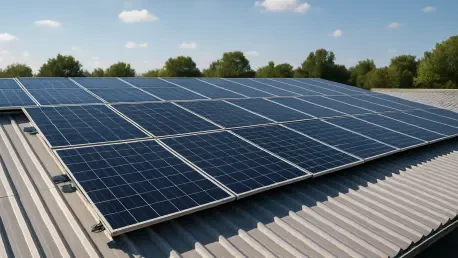
The current solar deployment model is, by its very design, skewed toward wealth and financial stability. Solar developers, operating on logical and established business principles, naturally target demographics with both a demonstrated interest in renewable energy and the substantial capital required to invest. With a median upfront cost hovering around $30,000 before any incentives are applied, rooftop solar remains a luxury good, financially inaccessible to a large and vital portion of the American population. This economic reality has created a stark geographical and socioeconomic divide in adoption rates across the country.
This trend is not merely anecdotal; it is confirmed by comprehensive academic research. A landmark Cornell University study illustrates this disparity, showing that solar installations are heavily concentrated in high-income regions, with areas like California leading the way. The research uncovered a critical irony: while lower-income neighborhoods possess an estimated 14.7% greater carbon offset potential due to housing density and other factors, they have 47% fewer solar installations. This gap represents a massive missed opportunity for both climate action and social justice, indicating that the current market structure is failing to capture the full environmental and economic potential of distributed solar generation.
The Crushing Weight of Energy Poverty on Low-Income Households
This deployment gap is not just an environmental issue; it is a profound and pressing economic one that exacerbates existing inequalities. According to data from the U.S. Department of Energy, low-income households spend an average of 8.6% of their total income on energy costs—a figure that is nearly triple the 3% spent by their higher-income counterparts. For these families, volatile and high utility bills are not an inconvenience but a significant and persistent financial burden that can force difficult choices between keeping the lights on and affording other necessities.
In this context, rooftop solar offers a direct and powerful solution, transforming from an environmental nicety into a vital tool for poverty alleviation. By enabling households to generate their own power, solar can dramatically reduce or, in some cases, even eliminate monthly electricity bills. Furthermore, in markets with net metering policies, homeowners can sell excess energy back to the grid, creating a crucial source of supplementary income. This provides a tangible pathway toward financial stability, offering a buffer against the pressures of rising living costs and stagnant wages for the communities that need it most.
Overcoming the Invisible Walls: Cost, Access, and the Trust Deficit
The barriers preventing widespread solar adoption in low-income communities are multifaceted and deeply entrenched. Beyond the obvious hurdle of high upfront costs, many households are effectively locked out by a lack of access to traditional financing. Poor or nonexistent credit histories often disqualify them from the loans and lease programs that have made solar accessible to middle-class families. Moreover, structural issues present significant practical obstacles; a large percentage of low-income individuals are renters with no authority to make property alterations, while homeowners may live in properties with older or structurally unsound roofs that are unsuitable for installation without costly repairs.
Compounding these practical challenges is a deep and justifiable “trust deficit” that has been cultivated over decades. Predatory energy service companies (ESCOs) have historically targeted marginalized communities with aggressive sales tactics, confusing contracts, and misleading promises, often resulting in unexpected rate hikes. This history has fostered a pervasive and understandable skepticism toward any new energy offer. Consequently, it has become incredibly difficult for legitimate solar providers to engage with these communities, as their outreach is often viewed through the same lens of suspicion, creating a formidable barrier that financial incentives alone cannot overcome.
Innovations and Strategies to Bridge the Divide
Flipping the scales toward a more equitable solar future requires moving beyond one-size-fits-all solutions and embracing targeted, community-centric strategies. A key pathway is the implementation of robust and thoughtfully designed policy. Exemplary state-run initiatives, like California’s “Disadvantaged Communities – Single-family Solar Homes” program, offer a powerful model for the nation. By covering the full cost of installation for qualifying homeowners, this program removes the financial barrier entirely, rather than simply reducing it. For renters and those with unsuitable rooftops, community solar has emerged as a game-changing alternative. These programs allow individuals to subscribe to a share of a local solar farm and receive credits directly on their utility bills, democratizing access to solar savings.
Despite significant federal setbacks, such as the recent termination of the $7 billion “Solar for All” grant program, states are demonstrating remarkable resilience. Massachusetts, for instance, has launched its own enhanced solar program with new, stringent equity requirements for community solar projects, proving that progress can be maintained through state-level leadership. This policy innovation, when paired with advanced data tools, creates a powerful framework for strategic deployment. Technologies like GeoAI and satellite modeling can now precisely identify rooftop solar potential in underserved neighborhoods, allowing for targeted and efficient allocation of resources to maximize impact.
Actionable Blueprint for Change
Achieving a just energy transition demands an integrated strategy that aligns policy, technology, and authentic community engagement. First, policymakers must prioritize and expand programs that offer full-cost subsidies and aggressively promote community solar frameworks. This ensures that the financial benefits of renewable energy are accessible to all, regardless of income, credit score, or homeownership status. These policies must be designed with simplicity and accessibility at their core to avoid creating new bureaucratic hurdles for the families they are intended to serve.
Second, solar developers and industry advocates must invest heavily in building trust through transparent, community-led education and outreach campaigns. This outreach must focus on the clear, tangible benefit of reducing household utility bills and must be linguistically and culturally distinct from the predatory sales rhetoric of the past. Partnering with trusted local organizations is essential to this effort. Finally, urban planners and technology firms can collaborate to leverage data-driven tools to identify and prioritize high-potential, low-income areas. By using geospatial analysis to map viable rooftops in communities from Northern New Jersey to Southern California, public funding and development efforts can be directed with unprecedented precision to where they will have the greatest social and environmental impact.
Powering a Future That Is Both Green and Just
The rooftop solar boom holds the immense promise of a cleaner, more resilient, and more affordable energy system, but its current trajectory threatens to deepen existing social and economic divides rather than heal them. The challenge ahead is not a question of technological feasibility or market potential but of strategic will and intentional design. To unlock the full, equitable potential of solar energy, stakeholders must deliberately merge innovation with inclusion. By combining data-driven planning, equitable funding models, and authentic community engagement, it is possible to transform urban landscapes into engines of renewable power that benefit everyone, not just a select few. The ultimate goal is to move beyond a solar boom for the wealthy and build a sustainable energy system that is truly accessible, affordable, and just for all.