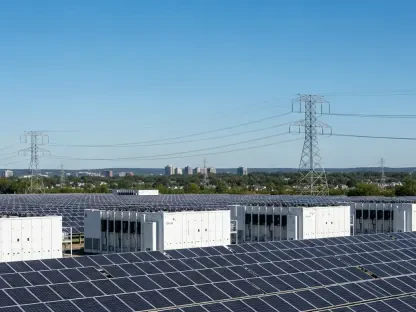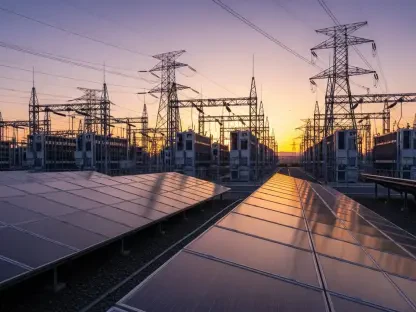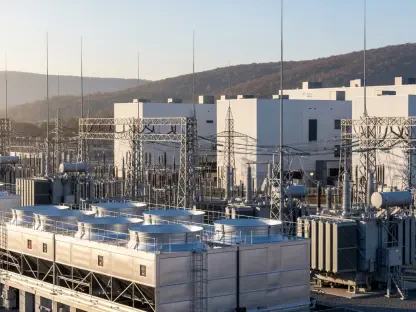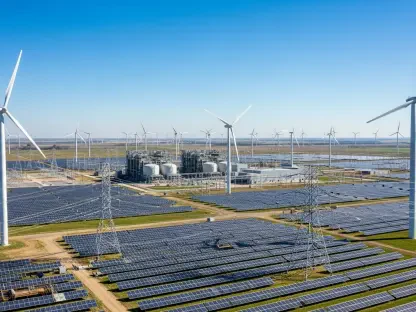

The decision by German power house RWE AG to inject $19.6 billion into the United States energy grid represents a seismic shift in how international capital views the American domestic market as a sanctuary for long-term growth. This massive commitment, representing nearly half of the firm’s global $40 billion expenditure plan through 2031, targets an increase in installed capacity from 13 gigawatts to 22 gigawatts over the next five years. Such a substantial financial maneuver suggests that the United States has successfully transitioned from a period of regulatory hesitation to one of high-velocity infrastructure development. By analyzing this pivot, one can see how the intersection of legislative stability and the insatiable power hunger of the digital economy is redefining the energy transition.
Contextualizing the Shift: From Uncertainty to Regulatory Clarity
To grasp the significance of this $19.6 billion allocation, it is essential to revisit the climate of apprehension that previously tethered global energy investors. Until recently, inconsistent trade policies and shifting technological mandates created a volatile environment, forcing major players like RWE to pause their American expansion plans. The landscape underwent a fundamental transformation with the passage of the “One Big Beautiful Bill Act” (OBBBA) in 2025, which replaced ambiguity with a structured, multi-year roadmap. This legislation acted as the primary catalyst for the current investment surge by providing the long-term fiscal certainty required to greenlight projects with decade-long lifespans.
While the OBBBA introduced a more aggressive schedule for phasing out traditional wind and solar tax credits, it balanced the scales by stabilizing incentives for battery storage through 2033. Furthermore, the act actively promoted domestic oil and gas production, signaling a departure from narrow energy policies toward a more inclusive “all-of-the-above” strategy. This legislative pivot moved the United States into a phase of defined priorities, where the focus shifted from purely ideological goals to the pragmatic necessity of domestic energy security. For RWE, this clarity was the signal needed to transition from a defensive posture to an aggressive growth phase.
Bridging the Reliability Gap with Gas Peaking Plants
The Integration of Flexible Gas Assets and Renewables
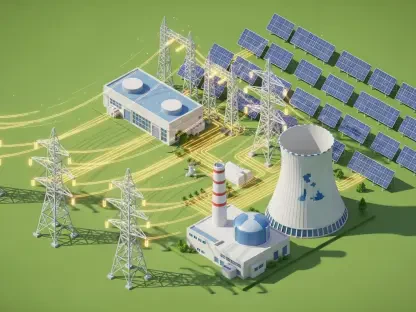
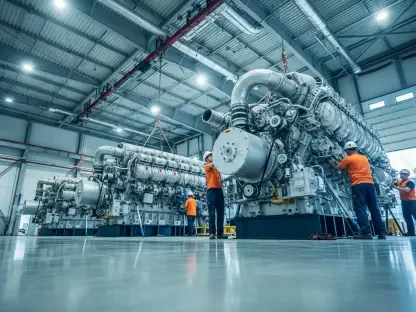
A centerpiece of this expansion is RWE’s strategic entry into the American gas-fired peaking plant market, a move that highlights the evolving nature of grid management. Unlike base-load facilities that remain operational around the clock, peaking plants are designed to activate instantly when renewable generation drops or demand spikes. By weaving these flexible gas units into a portfolio that already boasts 13 gigawatts of green energy, the company is directly addressing the intermittent nature of wind and solar power. This hybrid approach reflects an industry-wide recognition that maintaining grid frequency is just as vital as reducing carbon footprints.
The challenge for modern energy providers lies in harmonizing fossil-fuel assets with overarching corporate sustainability targets. RWE is navigating this by focusing on “site recycling,” where new gas units are installed at existing locations that already possess grid connections. This method reduces the environmental impact of new construction and bypasses the bureaucratic hurdles associated with establishing fresh interconnection points. Consequently, the company is able to strengthen the grid’s backbone without completely abandoning its long-term decarbonization trajectory, illustrating a nuanced path through the energy transition.
Supporting the Digital Economy and Data Center Growth
The current explosion in electricity demand is being fueled by the rapid expansion of artificial intelligence and the massive data centers required to process it. These high-tech hubs operate on a 24/7 basis and cannot tolerate the variability often associated with a purely renewable grid. Leadership at RWE has pointed out that current battery technology is not yet sufficient to bridge the gap during prolonged periods of low wind or solar output. Therefore, the investment in gas peakers serves as a necessary safety net for the technology sector, ensuring that the digital economy remains shielded from power fluctuations.
This relationship creates a unique synergy between energy providers and Silicon Valley, where reliable power becomes the most critical raw material for innovation. By placing storage units and gas peaking plants near major demand centers, RWE is positioning itself as an essential partner for tech giants. While this reliance on natural gas attracts scrutiny from certain environmental quarters, the move is increasingly viewed as a functional necessity for maintaining the pace of technological advancement. It underscores a reality where energy “firming” is becoming the most valuable commodity in the modern utility market.
Navigating Regional Market Dynamics and Policy Nuances
The rollout of this $19.6 billion plan is not a uniform process but rather a sophisticated adaptation to diverse regional environments across Texas, California, New York, and Arizona. Each state offers a different regulatory flavor, from the deregulated, price-driven market of Texas to the more stringent, policy-heavy landscape of the West Coast. Success in these varied territories requires a high degree of agility and local expertise. RWE is leveraging its existing footprint to expedite deployment, ensuring that it remains competitive even as other global firms vie for a piece of the American market.
Furthermore, the company must meticulously manage its supply chain to comply with the OBBBA’s specific foreign entity requirements, particularly regarding battery storage components. Ensuring that projects remain eligible for federal credits involves a complex dance of domestic sourcing and strategic partnerships. This regional and logistical complexity means that the expansion is as much about legal and administrative precision as it is about engineering. By mastering these nuances, the company sets a precedent for how foreign direct investment can be successfully integrated into the American infrastructure fabric.
Future Outlook: Balancing Stability with Innovation
Looking forward, the trend toward energy “firming” is expected to accelerate as more intermittent sources are added to the national grid. We are likely to see a convergence of technologies where green hydrogen or carbon capture eventually retrofits the very gas peaking plants being constructed today. Regulators will probably continue to favor projects that offer immediate stability while the broader infrastructure for a fully renewable future matures. The next decade will likely be defined by this transitionary period, where the ability to guarantee power regardless of weather conditions becomes the industry’s primary benchmark for success.
Strategic Takeaways for the Energy Transition
The RWE expansion offers several vital lessons for the broader energy sector. First, it demonstrates that legislative clarity is the most powerful tool for unlocking massive capital reserves; without the OBBBA, this investment might have been redirected to other global markets. Second, a diversified portfolio that bridges the gap between traditional and renewable sources is currently the most resilient model for ensuring energy security. Stakeholders must recognize that the transition is an evolutionary process that requires the intelligent integration of various technologies rather than the immediate abandonment of reliable fossil-fuel backups.
A Pragmatic Path Forward
RWE’s multi-billion-dollar commitment moved the needle for the American energy sector by prioritizing operational pragmatism over ideological rigidity. By doubling down on a diverse mix of wind, solar, and gas, the company addressed the dual needs of the modern ersustainability and unwavering reliability. Business leaders and policymakers had to acknowledge that the path to a cleaner future required a stable foundation built on existing grid strengths. The strategy proved that global firms could navigate complex legislative changes to support the rising power demands of the digital age. This investment served as a definitive blueprint for the next phase of the energy transition, where flexibility and grid security became the cornerstones of progress.