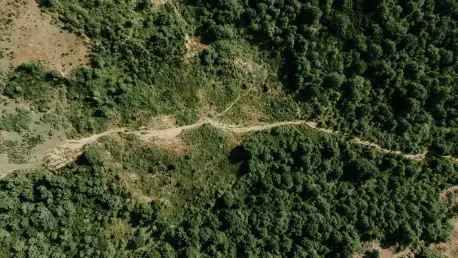

In a powerful demonstration of reversing environmental neglect, the provincial government of San Luis, Argentina, has initiated a landmark program to settle long-standing financial debts with the stewards of its most critical ecosystems. The distribution of significant funding to local producers marks a pivotal shift towards reinforcing the protection of native forests, which are indispensable in the global fight against climate change and biodiversity loss. This renewed commitment aligns with the National Law for Environmental Protection of Native Forests, aiming to create a sustainable and predictable framework for those who integrate conservation with their productive activities. The initiative not only addresses past administrative shortcomings but also establishes a new foundation for sustainable rural development, formally recognizing the immense value of the ecosystem services these forests provide, from water regulation and soil protection to vital carbon sequestration. By empowering local communities, the program champions a balanced approach where economic well-being and ecological health are pursued as interconnected goals, offering a compelling model for regional environmental governance.
A Renewed Commitment to Environmental Stewardship
Settling an Overdue Environmental Account
The government of San Luis has taken a decisive first step in rectifying a period of administrative inaction by disbursing 220 million pesos to 34 local producers. This substantial payment settles outstanding obligations from 2022 for environmental services rendered under the national forest protection framework. The funds provide immediate and much-needed relief to landowners and communities who continued their conservation efforts despite the lack of financial support, demonstrating a tangible commitment to their work. This action moves beyond simple financial settlement; it represents a formal acknowledgment of the crucial role these producers play in maintaining the ecological balance of the region. The delay had created significant uncertainty, hindering long-term planning and investment in sustainable practices. The infusion of capital is therefore not just a payment for past services but a critical enabler for future conservation projects, allowing producers to purchase necessary equipment, hire labor, and improve infrastructure dedicated to preserving these vital natural habitats for the long term.
To ensure the long-term success and stability of its conservation strategy, the provincial government has also announced an ambitious plan to bring all outstanding payments up to date. Officials have pledged to settle all funds corresponding to the years 2023, 2024, and 2025 within the next twelve months, a move designed to create financial predictability for the region’s environmental stewards. This forward-looking commitment is essential for fostering a climate of trust and collaboration between the government and the producers. With the assurance of regular and timely payments, landowners can confidently develop and implement multi-year conservation and sustainable management plans. This stability directly supports the objectives of the National Law for Environmental Protection of Native Forests, which aims to reduce deforestation rates by providing economic incentives for conservation. By guaranteeing this financial pipeline, San Luis is not only fulfilling its legal obligations but is also cultivating a resilient network of guardians dedicated to protecting ecosystems critical for regional climate resilience and biodiversity.
Unlocking National and International Support
The recent distribution of funds was made possible only after a significant administrative and financial overhaul within the provincial government. For years, the province’s accounts related to environmental funding had been delinquent, with a lack of proper reporting and regularization dating back to 2018. This administrative lapse effectively blocked the flow of crucial resources from the national level, leaving local conservation efforts underfunded and jeopardized. To remedy this, officials undertook a comprehensive effort to bring all financial records into compliance, meticulously documenting environmental service provisions and submitting the required reports to national authorities. This diligent work successfully unlocked over 1.140 billion pesos in retained national funds that had been earmarked for San Luis but were inaccessible due to the administrative disarray. The restoration of this financial channel is a monumental achievement, ensuring a consistent and robust stream of support for the province’s native forests and the communities that depend on them.
Beyond restoring access to national resources, the administrative regularization has also reopened doors to valuable international cooperation and support. The province’s renewed standing has allowed it to recover contributions from United Nations programs specifically aimed at empowering communities with tools and training for forest fire prevention, a critical need in an era of increasing climate-related risks. Furthermore, San Luis has been reintegrated into sophisticated programs focused on integrated livestock and forest management. These collaborative initiatives, often involving leading universities and rural community organizations, promote advanced sustainable practices that allow for economic productivity while enhancing forest health. This multifaceted approach, blending local action with national funding and international expertise, creates a powerful synergy. It ensures that the efforts to protect native forests are not isolated but are part of a larger, well-supported strategy that leverages scientific knowledge and global partnerships to build a more sustainable and resilient future for the region.
The Tangible Impact of Directed Funding
Fostering a Mosaic of Sustainable Projects
The injection of funding is already catalyzing a diverse and impactful array of projects on the ground, showcasing the ingenuity of local producers in blending conservation with economic viability. These initiatives extend far beyond simple preservation, creating a mosaic of sustainable land use that actively enhances the ecosystem. Many producers are implementing regenerative livestock systems, where carefully managed grazing patterns mimic natural herd movements, improving soil health, increasing carbon sequestration, and promoting the growth of native grasses. Others are focusing on large-scale ecological restoration, reintroducing native plant species to degraded areas to rebuild habitats and strengthen biodiversity. Beekeeping has also emerged as a popular and synergistic activity; by supporting pollinator populations, producers not only generate a valuable economic product in honey but also enhance the reproductive success of the native flora, creating a positive feedback loop that benefits the entire forest ecosystem. These projects demonstrate a sophisticated understanding of ecological principles and a commitment to creating livelihoods that actively heal the land.
The scope of the funded initiatives also includes critical efforts in public safety and community engagement, further strengthening the connection between the people of San Luis and their natural environment. A significant portion of the resources is being directed toward strategic fire prevention, including the creation of firebreaks, the management of combustible undergrowth, and the training of local brigades to respond effectively to wildfires. In parallel, projects are underway to recover lands previously degraded by erosion or unsustainable practices, transforming them back into productive and ecologically functional landscapes. Crucially, many of these efforts incorporate strong environmental education components, working with local schools and community groups to raise awareness about the importance of native forests. Some producers are even undertaking ambitious fauna reintroduction programs, working to bring back native animal species to their rightful habitats. These multifaceted projects underscore a holistic approach where conservation is interwoven with community resilience, education, and the restoration of a complete and vibrant ecosystem for future generations.
A Framework for Ecological and Economic Resilience
The comprehensive initiative undertaken by the government of San Luis established a powerful new framework for regional sustainability. By settling its environmental debts and ensuring a future stream of funding, the province formally recognized that the services provided by native forests—such as clean water, climate regulation, and biodiversity—held tangible economic value. This validation created a compelling incentive for landowners to prioritize conservation and sustainable management over potentially destructive extractive industries, such as clear-cutting for agriculture or mining. The program successfully demonstrated that environmental stewardship and economic prosperity were not mutually exclusive but could be mutually reinforcing. The result was the cultivation of a green economy rooted in the health of the land, providing a durable model that championed the well-being of both the ecosystem and the rural communities who acted as its primary caretakers. This shift in perspective proved fundamental to building long-term ecological and economic resilience across the province.
Ultimately, the revitalization of the province’s environmental programs delivered multifaceted benefits that resonated far beyond the forest boundaries. Socially, the initiative empowered rural communities by providing them with the financial resources and technical support needed to become active agents of conservation. It fostered sustainable livelihoods that were deeply connected to the local environment, reducing rural flight and strengthening the social fabric of these regions. Environmentally, the guaranteed protection and restoration of key ecosystems fortified the province’s defenses against the impacts of climate change, while also preserving a rich repository of biodiversity for generations to come. The direct investment in fire prevention and land restoration provided practical tools to combat immediate threats. The entire effort culminated in a balanced and integrated approach to development, one where ecological health was seen as the bedrock of community well-being and a cornerstone of a prosperous future.