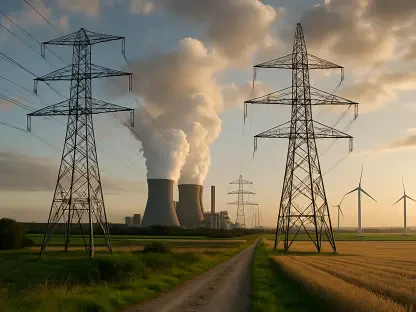

The meteoric rise of artificial intelligence is casting a long shadow over America’s power grid, prompting a federal inquiry into whether the public is being forced to unfairly finance the next technological revolution. As the insatiable energy demands of AI data centers grow, a high-stakes debate is unfolding over who should bear the immense cost of upgrading the nation’s energy infrastructure to support this digital transformation.
The Digital Gold Rush: AI Data Centers Reshaping the Energy Landscape
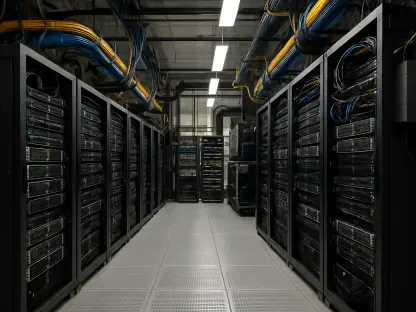
A new industrial revolution is quietly taking place, powered by silicon and electricity. The rapid expansion of the AI data center industry marks a pivotal moment in modern technology, with these facilities serving as the backbone for everything from generative AI models to autonomous systems. Key industry players, including Google, Microsoft, Amazon, and Meta, are engaged in a fierce competition, channeling billions of dollars into building out the massive infrastructure required to secure a competitive edge in the AI-driven economy.
This expansion, however, carries a significant energy cost. Unlike traditional data centers that primarily store and retrieve information, AI facilities are built for intensive computation. Training and running complex AI models requires specialized processors that consume exponentially more power, transforming these buildings from simple storage depots into energy-hungry supercomputers. This fundamental difference in function is what places an unprecedented strain on local and regional power grids, setting the stage for a national energy challenge.
Surging Demand: Charting Explosive Growth and its Grid Impact
The AI Boom: From Tech Trend to National Power Drain
The primary driver behind the data center boom is the global race for supremacy in generative AI. What began as a technological trend has quickly escalated into a strategic arms race among a handful of tech behemoths. This competition is compelling companies to build ever-larger “hyperscale” data centers, often clustered in specific regions with favorable tax laws or land availability, creating concentrated pockets of extreme energy demand that local grids were never designed to handle.
This sudden surge has sent shockwaves through the energy sector, forcing utility companies to drastically revise their long-term load forecasts. Projections that once anticipated modest, steady growth in electricity demand are now being rewritten to account for the explosive needs of AI. The result is a looming capacity crisis in many areas, where the pace of digital expansion is outstripping the ability of the existing power infrastructure to keep up, creating a direct conflict between industrial ambition and public resource limitations.
By the Numbers: Quantifying the Energy Footprint and Soaring Bills
The scale of this new energy demand is staggering, with current projections showing the electricity usage of data centers in the United States is on track to triple in the coming years. This has led to “alarming reports” from communities with a high concentration of these facilities, where residential electricity rates have begun to climb sharply. The direct correlation between the arrival of a new data center and higher utility bills for surrounding homes and businesses has become a point of significant public concern.
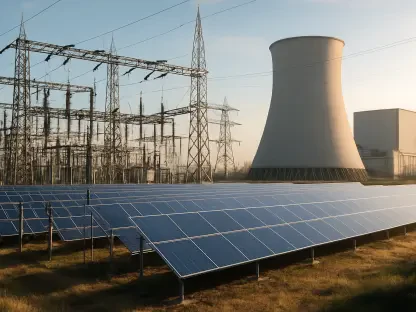
To meet this demand, utility providers estimate that multi-billion dollar investments in new power plants, transmission lines, and substations are urgently required. These are not minor tweaks but fundamental upgrades to the national grid. The immense capital cost of this modernization effort raises a critical and contentious question about how these expenses will be allocated, fueling fears that ordinary consumers will be left to cover the costs of infrastructure that primarily benefits a select group of the world’s wealthiest corporations.
The Billion-Dollar Question: Who Foots the Bill for AI’s Power Play?
At the heart of this issue lies a fundamental conflict: how to fairly distribute the costs of the massive grid modernization required by the AI industry. The traditional utility model, designed to spread infrastructure costs across all users, is being tested by the arrival of a new class of customer whose energy needs dwarf those of entire cities. This creates a difficult balancing act for utility commissions and regulators across the country.
Utility companies find themselves in a challenging position, caught between serving the needs of a few massive industrial customers and protecting their much larger base of residential and small business ratepayers. Approving rate hikes for all customers is the simplest path to financing grid upgrades, but it risks placing an inequitable burden on those who do not directly benefit from the AI boom. This has led to a growing debate about whether new pricing models are needed for such large-scale energy consumers.
The primary risk, as outlined by consumer advocates and lawmakers, is that residential ratepayers and other local businesses will be left “footing the bill” for the tech industry’s expansion. This concern is magnified by the boom-and-bust nature of technological trends; if the current AI frenzy were to fade, communities could be stuck with expensive, oversized infrastructure and the long-term debt used to build it, while the tech giants that drove the demand have moved on.
Capitol Hill Sounds the Alarm: The Push for Legislative Oversight
In response to these growing concerns, a formal investigation has been launched by Senators Elizabeth Warren, Chris Van Hollen, and Richard Blumenthal. The inquiry directly targets the major players in the AI space, including Google, Microsoft, Amazon, and Meta, demanding answers about their energy consumption and its impact on public utilities and consumer costs.
The senators’ core argument is that ordinary Americans should not be forced to subsidize the expansion of an already highly profitable industry. They contend that the costs of building the energy infrastructure necessary to power AI data centers should be borne by the companies creating that demand, not passed on to captive ratepayers who have no other choice for their electricity provider. The inquiry seeks to bring transparency to the cost-sharing agreements between tech firms and utilities.
Initial responses from the targeted tech firms have been guarded. While some, like data center operator Digital Realty, have expressed a general willingness to cooperate with officials on investing in digital infrastructure, there has been a notable lack of concrete commitments. The public statements from the largest tech companies often mention paying their “fair share,” but a clear and uniform definition of what that entails remains elusive, leaving the central conflict unresolved.
Powering the Future: Navigating AI Ambition and Energy Reality
The path forward will likely require a combination of new regulatory frameworks and technological innovation. Policymakers are exploring alternative pricing models for large industrial energy users, such as connection fees or dedicated rates that more accurately reflect the infrastructure costs they impose. These models aim to ensure that the companies driving the need for grid expansion are the ones who primarily pay for it.
Simultaneously, there is a strong push within the tech industry to make data centers more energy-efficient. Innovations in cooling systems, server architecture, and workload management can significantly reduce the power consumption of these facilities. However, efficiency gains alone may not be enough to offset the sheer scale of the industry’s growth, making them a part of the solution rather than the entire answer.
Ultimately, the debate continues over what constitutes a “fair share” for tech companies to contribute to the energy grid that supports them. This negotiation involves complex questions of economic development, public good, and corporate responsibility. Finding a balance that fosters technological innovation without imposing an undue financial burden on the public is the central challenge facing regulators, utility companies, and the tech industry itself.
Balancing Progress and People: A Call for a Sustainable Digital Future
The recent inquiry into the rising energy costs associated with AI data centers highlighted a critical tension between the pursuit of technological progress and the principle of equitable cost distribution. The findings revealed a growing gap between the private benefits reaped by large tech corporations and the public costs borne by communities, exposing a need for updated regulatory frameworks to address this new industrial dynamic. The debate brought to light the significant financial burden that grid modernization places on residential ratepayers.
This situation underscored the urgent need for greater transparency and accountability from the technology industry. As these companies reshaped the nation’s energy landscape, the investigation made it clear that their immense resource consumption could no longer be an externality pushed onto the public. The call for companies to pay their “fair share” became a central theme, demanding a more direct link between industrial energy use and infrastructure investment.
In the end, the senators’ probe served as a crucial first step toward establishing a more sustainable and equitable policy for the digital age. It initiated a vital national conversation about how to manage the resource demands of AI, ensuring that the remarkable benefits of this technology did not come at an unfair and disproportionate cost to the American public. The actions taken in response to this inquiry have set a precedent for how society will navigate the intersection of technological ambition and public welfare.