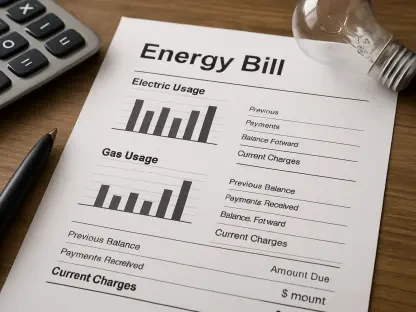

When an average American household opens its monthly electric bill, they rarely suspect that a portion of that total is paying for the very lawyers hired to make that bill even more expensive next year. This financial cycle represents one of the most controversial aspects of modern utility regulation, creating a scenario where the consumer is essentially financing the opposition in a high-stakes legal battle over their own cost of living. While the average person struggles with the rising costs of groceries and housing, investor-owned utilities are frequently permitted to treat the legal fees for their rate-increase requests as a standard cost of doing business.
The paradox inherent in this system is striking. When a utility company determines that its revenue is insufficient to meet its profit targets or infrastructure needs, it initiates a formal request for a price adjustment. To ensure the highest probability of success, the company hires a fleet of elite lawyers and financial consultants, some of whom command fees exceeding $600 per hour. Under the current regulatory frameworks in most states, the utility does not absorb these costs from its own profits. Instead, the final bill for this expensive legal firepower is passed directly to the customers, meaning the more a utility spends on experts to justify a rate hike, the more the customer eventually pays just to cover the cost of the argument itself.
This mechanism has sparked a fierce debate across the country, particularly as states like Massachusetts and Connecticut grapple with the ethics of monopoly power. Advocates for reform argue that this practice creates an inherent imbalance of power, while utility companies maintain that these costs are necessary for the maintenance of a reliable energy grid. The tension centers on whether a guaranteed service provider should have the right to use captive customer funds to lobby for higher prices, or if those costs should be a risk borne by the shareholders who stand to profit from the outcome.
The Price of Asking for a Raise
When a utility company decides it is time for a rate increase, the process is far from a simple bureaucratic notification. It is an adversarial proceeding that requires thousands of pages of documentation, testimonies from economic experts, and rigorous legal defense. In the current economic climate of 2026, where infrastructure modernization is a constant requirement, these “rate cases” have become more frequent and significantly more expensive. The professional fees associated with these filings have reached unprecedented heights, yet the burden remains firmly on the shoulders of the ratepayer rather than the investor.
This traditional “cost of doing business” classification means that the financial risk of seeking a raise is virtually non-existent for the utility. If a private corporation in a competitive market wants to raise its prices, it must weigh the cost of marketing and legal strategy against the risk of losing customers to a competitor. However, because utilities operate as protected monopolies, they have no competitors. Customers cannot simply switch to a different electric grid if they disagree with the legal fees being tacked onto their bills. This lack of market pressure has led to a culture of open-ended spending during regulatory hearings, as the utility knows it will likely be reimbursed for its expenses.
The sheer scale of this spending is often obscured by the complexity of utility billing. While a single rate case might cost several million dollars, that amount is spread across hundreds of thousands of customers, making the individual impact seem negligible. However, critics point out that this is a matter of principle and cumulative impact. In several high-profile cases over the last few years, the total legal and consulting spending by major utilities has reached tens of millions of dollars within a single state. This creates a system where the public is forced to fund a corporate strategy designed to extract more wealth from their own communities.
The Financial Architecture of a Rate Case
The process of setting energy prices is far more complex than a simple administrative update; it is a high-stakes, “court-like” proceeding that can span nearly a year. These cases are held before state regulators, such as a Department of Public Utilities (DPU) or a Public Service Commission, which act as a surrogate for the market competition that utilities lack. Because there is no competitor to keep prices down, the regulator must review every dollar the utility spends to ensure it is “just and reasonable.” This creates an environment where utilities must prove their case through exhaustive evidence and expert testimony.
Investor-owned utilities must petition these state regulators whenever they wish to change their base rates, a move that triggers a massive mobilization of resources. Historically, legal fees and consultant costs have been classified as standard operating expenses, which utilities are permitted to recover directly from their customer base. This classification is rooted in the idea that because the state mandates the regulatory process, the costs of participating in that process are a legitimate expense of providing the service. However, this logic is increasingly being challenged by those who see a distinction between the cost of maintaining a wire and the cost of paying a lawyer to argue for a 10% profit margin.
The scope of this spending is often staggering when viewed at the state level. In Massachusetts alone, gas and electric companies have spent roughly $30 million on these cases in recent years, with a single proceeding often costing between $1 million and $3 million. This money pays for specialized accountants who calculate the “revenue requirement” and “rate of return,” as well as attorneys who cross-examine witnesses from environmental groups and consumer advocacy organizations. The complexity of these cases ensures that only those with significant financial backing can participate effectively, further tilting the scales in favor of the utilities that are spending ratepayer money to win.
The Hidden Mechanics of Profit and Infrastructure
While a few million dollars in legal fees might seem like a drop in the bucket for a major utility, these expenses serve a much larger strategic purpose that impacts long-term affordability. It is vital to understand that utilities do not generally profit from the energy they sell—the gas and electricity are passed through to the consumer at cost. Instead, utilities generate profit from the infrastructure they build and own. This creates a powerful incentive to constantly propose new pipelines, substations, and transmission lines, as every dollar spent on construction carries a state-guaranteed profit margin for shareholders.
High-priced consultants are hired specifically to convince regulators to approve a higher “Return on Equity” (ROE), which is the profit margin the utility is allowed to earn on its capital projects. By successfully arguing for a higher ROE, the legal team sets the stage for massive future returns. For a utility planning $5 billion in infrastructure upgrades over the next decade, even a small increase in the allowed profit margin, secured through a single rate case, can result in hundreds of millions of dollars in additional profit for shareholders. In this context, the legal fees are not just administrative costs; they are a high-return investment funded by the customers.
This creates a “subsidized conflict” where ratepayers fund both sides of the fight. Currently, the public pays for the utility’s legal team through their monthly bills and also funds the state’s Attorney General’s office, which acts as the consumer advocate, through taxes or separate regulatory assessments. This creates an uneven playing field where consumers are effectively paying for the attack on their wallets while also paying for their own defense. Moreover, the utility’s budget for these cases often dwarfs the budget of the consumer advocate, allowing the utility to overwhelm the regulatory process with sheer volume of data and specialized expertise.
The Balancing Act: Regulatory Stability vs. Consumer Protection
The debate over these charges isn’t just about fairness; it involves complex economic trade-offs that experts and industry leaders continue to contest. Utility representatives, such as those from Eversource, argue that rate cases are a mandatory regulatory requirement for a monopoly. They contend that a “blanket disallowance” of these costs ignores the necessity of seeking the capital needed to maintain a reliable power grid. From the industry perspective, if the state requires a legal proceeding to set prices, the state cannot then expect the company to pay for that proceeding out of its profit margins, which are already capped.
Former regulators warn that aggressive crackdowns on utility spending can lead to “regulatory risk,” a term that describes the perceived instability of a state’s investment environment. If credit rating agencies like S&P Global perceive a state as hostile to utilities, the utility’s borrowing costs rise. Because utilities rely on massive loans to fund the construction of power plants and transmission lines, even a slight increase in interest rates can lead to significantly higher costs. Paradoxically, if a state tries to save ratepayers money by cutting legal fee recovery, it could end up costing them more in the long run if the utility’s credit rating drops and its cost of capital increases.
The cautionary tale of Connecticut serves as a frequent point of reference in these discussions. After implementing strict rules against rate recovery and rejecting several high-profile rate hikes, Connecticut saw utility credit ratings drop, which led to higher costs for consumers because the companies had to pay more to borrow money for essential repairs. This dynamic creates a delicate balancing act for legislators: they must find a way to protect consumers from being “nickeled and dimed” by corporate legal fees without destabilizing the financial health of the companies responsible for keeping the lights on.
Strategies for Reform and Consumer Advocacy
Legislators and advocates are looking at various frameworks to address the perceived “broken” system without destabilizing the utility sector’s financial health. The most direct approach, which has gained significant traction in the Massachusetts State Senate, requires utilities to use their own profits to pay for the legal proceedings used to request rate hikes. This shifting of the burden to shareholders creates an immediate incentive for the utility to be efficient and frugal with its legal spending, as every dollar spent on a lawyer is a dollar that does not go into a dividend check.
A middle-ground strategy involves setting hard limits or spending caps on how much a utility can recover for legal fees. This prevents the open-ended spending currently seen in many states and forces utilities to prioritize their most essential legal arguments. Other states, like Colorado and California, use a hybrid cost-sharing model where shareholders and ratepayers split the legal fees. This approach acknowledges that while the rate case is a necessary regulatory expense, the shareholders are the primary beneficiaries of the resulting rate increase and should therefore bear a portion of the cost.
Furthermore, new legislative proposals aim to tighten the reins on how utilities use ratepayer money for other non-essential activities. This includes banning the use of customer funds for lobbying, trade association memberships, and promotional advertising that serves no public benefit. By expanding transparency requirements, advocates hope to ensure that every dollar collected from a customer is used solely for the safe and reliable delivery of energy, rather than for corporate influence or the pursuit of higher profit margins.
The resolution of this issue required a fundamental reevaluation of the social contract between monopolies and the public they served. Policymakers in several jurisdictions ultimately determined that the historical practice of charging customers for the costs of seeking rate hikes was no longer defensible in an era of heightened economic pressure. By implementing new rules that shifted these expenses toward shareholders, state governments successfully introduced a level of fiscal discipline that had previously been absent from the regulatory process. These actions underscored a broader commitment to ensuring that the financial interests of corporate investors did not take precedence over the basic affordability of essential public services. As a result, the regulatory environment transitioned toward a more transparent and equitable model that prioritized consumer protection and discouraged excessive litigation.