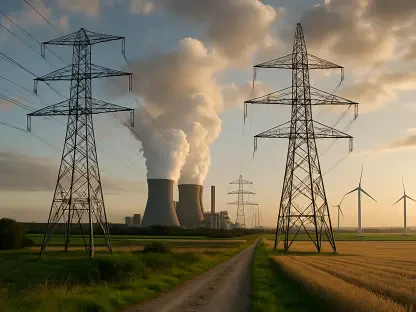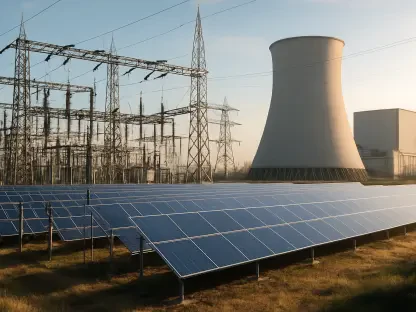

A modern economy built on digital innovation and clean energy is finding itself tethered to an electrical grid designed for a bygone industrial era, now buckling under the unprecedented strain of new demands. The rapid expansion of power-hungry data centers, the accelerating adoption of electric vehicles, and a resurgence in domestic manufacturing are collectively pushing this aging infrastructure to its limits. Modernizing the nation’s electricity grid is no longer a distant goal but a pressing national imperative, essential for ensuring economic stability, bolstering energy security, and enabling a successful transition to a clean energy future. This analysis examines the current state of grid planning across the United States, highlighting the key drivers of change, the stark regional disparities in progress, and the essential elements required to build a resilient and reliable grid for generations to come.
The State of the Grid a National Report Card
Uneven Progress in Transmission Planning
A comprehensive analysis of electricity transmission planning reveals a national landscape marked by significant, albeit uneven, progress. According to a detailed report released on February 3, 2026, by the organization Americans for a Clean Energy Grid (ACEG), a majority of U.S. regions have improved their approaches to building crucial grid infrastructure since a benchmark assessment in 2023. This positive momentum is a direct result of new federal requirements fostering more proactive and long-term strategic thinking among grid operators.
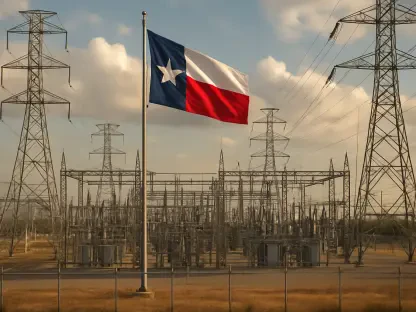
This overarching trend of improvement, however, is sharply contrasted by persistent failures and even backsliding in key areas of the country. The regional disparities are starkly illustrated in the report’s “report card” grading system. New England, for instance, has demonstrated remarkable progress, with its grade soaring from a “D+” to a “B,” signaling a successful adoption of more forward-looking principles. In contrast, the grade for Texas has deteriorated, slipping from a “D+” to a “D-,” while the Southeast remains the most problematic area, receiving a persistent “F” grade.
The primary catalyst for the improvements seen in regions like New England is the ongoing implementation of the Federal Energy Regulatory Commission’s (FERC) landmark Order No. 1920. This federal rule is compelling grid planners to abandon outdated methodologies in favor of more comprehensive, long-range strategies. The ACEG report confirms that where this guidance has been embraced, the results are tangible improvements in planning for a more robust and modern electrical system.
Surging Demand and Policy in Action
The need for modernization is being accelerated by very real-world pressures, most notably a dramatic and sustained surge in electricity demand across the country. This massive load growth is fueled by the rapid expansion of data centers, a significant resurgence in domestic manufacturing, and the broad electrification of both transportation and buildings. This escalating demand compresses planning timelines and significantly raises the stakes for regions that continue to rely on incremental or purely reactive methods.
In response to these challenges, FERC Order No. 1920 mandates that grid planners engage in long-term, forward-looking regional transmission planning. This represents a fundamental shift, pushing operators away from the antiquated practice of making small, piecemeal upgrades only after problems arise. Instead, the order requires a proactive approach that anticipates future needs and builds infrastructure strategically to meet them.
The consequences of inaction are acutely visible in the Southeast, where a systemic resistance to change continues to stifle necessary upgrades. The ACEG report highlights a critical lack of transparency and a deep-seated opposition to the construction of large-scale, high-voltage transmission lines in the region. This failure to plan proactively not only jeopardizes grid reliability but also prevents the area from capitalizing on new economic development opportunities, effectively leaving it behind as the rest of the nation modernizes.
Expert Insights on the Modernization Imperative
The consensus among energy experts is clear: proactive planning is the only viable path forward. This sentiment is captured by Christina Hayes, executive director of ACEG, who stated, “Transmission planning works when it’s proactive, coordinated, and long-term.” Her statement reinforces the core principle that successful grid modernization cannot be achieved through reactive, short-sighted measures. It requires a holistic vision that integrates future demand, technological advancements, and economic benefits into a cohesive strategy.
While federal reforms like FERC Order 1920 are showing early positive effects, experts uniformly agree that the overall progress is too slow and uneven to meet the nation’s urgent energy needs. The fragmented nature of the improvements, with some regions leaping forward while others stagnate or fall behind, creates systemic vulnerabilities. The pace of change is simply not keeping up with the exponential growth in demand, creating a precarious gap between the grid’s capabilities and the country’s requirements.
This slow pace comes with a significant warning from industry analysts. Failing to swiftly adopt widespread proactive planning will inevitably lead to a reliance on inefficient, short-term fixes. These stopgap measures are not only less effective at ensuring long-term reliability but also impose significantly higher costs on consumers. Without a coordinated, forward-looking approach, the nation risks building a patchwork grid that is both more expensive and less resilient than a strategically planned system.
The Roadmap to a Resilient and Reliable Grid
The future benefits of embracing proactive planning are substantial, extending beyond mere reliability. This strategic approach is proven to deliver the lowest long-term costs to consumers by capturing economies of scale and building high-capacity infrastructure ahead of demand. By anticipating where new generation and load centers will emerge, planners can develop transmission solutions that are more efficient and less disruptive than the “just-in-time” projects that characterize reactive planning.
However, the primary challenge remains the slow implementation timeline for FERC Order 1920. While the rule sets a new standard, its full impact is still years away. Compliance plans from major grid operators like the Midcontinent Independent System Operator (MISO), New York ISO (NYISO), and the Southwest Power Pool (SPP) are not due until mid-2026, with ISO New England’s deadline extending even further to mid-2027. This protracted rollout means that the most critical grid upgrades are still in the planning stages, even as demand continues to soar.
To guide regions toward better outcomes, the ACEG report outlines five essential elements that form a blueprint for effective transmission planning. These include adopting a 20-year proactive horizon for load growth, utilizing advanced scenario-based planning that accounts for extreme weather, assessing projects with a multi-value portfolio approach, ensuring technological and business model inclusivity, and creating tightly integrated planning processes that coordinate across regions. Together, these principles provide a clear roadmap for building a truly modern grid.
Conclusion Forging the Future of American Energy
The United States stood at a pivotal moment, with federal policy driving a critical but fragmented shift toward modern grid planning. An overwhelming trend emerged, driven by the dual pressures of surging electricity demand and a nationwide energy transition, which made the modernization of an aging infrastructure a matter of national priority. Progress, however, was uneven, with some regions embracing forward-looking strategies while others clung to outdated, reactive methods, creating a patchwork of preparedness that exposed systemic vulnerabilities. The successful widespread adoption of proactive, coordinated, and long-term planning was identified as the essential path forward, necessary to ensure an affordable, reliable, and resilient energy infrastructure for generations to come.