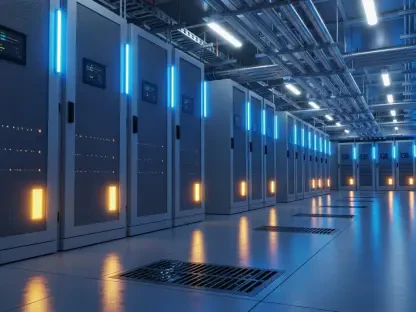

The quiet hum of a neighborhood transformer used to be the only sound of local power distribution, but today that hum is being drowned out by the massive roar of cooling fans from industrial-sized data centers. This shift marks a turning point in American infrastructure as the hunger for electricity reaches levels that were unthinkable only a few years ago. In 2026, the regulatory landscape has fundamentally shifted to accommodate this hunger without breaking the back of the national grid.
Across the country, the surge in energy consumption is no longer a gradual trend but a structural upheaval. During the current year alone, U.S. regulators have greenlit 29 new large load tariffs, a figure that dwarfs the combined total of the previous six years. With 77 such tariffs now either active or awaiting approval in 36 states, it is clear that the days of “one-size-fits-all” electricity pricing are over. This rapid evolution is the direct result of an explosion in artificial intelligence processing and high-tech manufacturing, both of which require constant, high-density power that traditional utility models were never built to provide.
The Unprecedented Acceleration of Industrial Energy Demands
The scale of modern industrial requests has forced a total reevaluation of how utilities forecast growth. In 2026, the arrival of a single data center can often require more power than an entire mid-sized city, creating a logistical nightmare for grid operators who must balance these massive spikes against existing capacity. This isn’t just about providing more juice; it is about the speed at which this demand arrives. While traditional factories might take years to reach full capacity, modern digital infrastructure can come online with staggering speed, demanding instant access to gigawatts of power.
This trend is reshaping the very map of American energy. States that were once energy exporters are now scrambling to secure enough generation to prevent brownouts, leading to a sense of urgency in state capital buildings. The sheer volume of applications for interconnection has turned the utility queue into a bottleneck, forcing a move toward more aggressive regulatory tools. These new tariffs are designed to act as a pressure valve, allowing the grid to expand while ensuring the system remains stable for everyone.
Protecting the Pocketbooks of Residential Ratepayers
One of the most pressing concerns for state policymakers is the risk of “cost shifting,” where the bill for a tech giant’s expansion is footed by the average homeowner. If a utility builds a billion-dollar substation to serve a single massive user, and that user later leaves or scales back, the remaining residential customers are often left to pay off the debt. To prevent this, the new tariffs are anchored in the principle of cost causation. This ensures that the companies driving the need for new high-voltage lines and substations are the ones writing the checks for their construction.
By insulating vulnerable consumers from the capital expenditures tied to industrial expansion, states are prioritizing long-term economic stability over short-term corporate growth. This approach recognizes that while a new data center brings jobs and tax revenue, those benefits are negated if the local population sees a sudden 20% increase in their monthly power bill. Regulators are now viewing grid reliability as a matter of consumer protection, placing the financial risk squarely on the shoulders of the entities with the deepest pockets.
Redefining the Scale of Modern Energy Users
The threshold for what qualifies as a “large load” has been completely rewritten to reflect the reality of the AI era. In previous regulatory cycles, a request for 10 MW or 20 MW was considered a major project, but in 2026, many states have pushed that boundary to 50 MW or even 100 MW. This higher bar allows utilities to apply stricter rules specifically to the users who have the greatest impact on the system, rather than penalizing smaller regional manufacturers who have more predictable energy needs.
Legislatures in Oregon, Indiana, Texas, Virginia, and Minnesota have taken the lead by passing laws that bypass traditional slow-moving utility commissions. Even in states like Pennsylvania, there is a push toward standardized “model tariffs” to ensure that a tech company cannot simply shop around for the most lenient utility within the same state. This move toward standardization helps create a predictable business environment while ensuring that every player follows the same set of rules regarding grid impact and financial liability.
Evidence of Filtering Speculative Demand and Managing Risk
These new financial requirements are proving to be an effective filter for separating serious projects from speculative ones. When developers are forced to put “skin in the game” through non-refundable deposits or upfront infrastructure payments, the number of unrealistic interconnection requests drops significantly. For instance, AEP Ohio saw its massive load forecast practically cut in half after it implemented more stringent tariff requirements. This suggests that many developers were previously claiming more capacity than they actually needed, essentially “land-grabbing” power in the hope of future expansion.
Organizations like the Smart Electric Power Alliance have noted that this filtering process is essential for accurate grid planning. Without these tariffs, utilities were flying blind, trying to build infrastructure for a 30 GW demand that might only materialize as 13 GW. By forcing transparency and financial accountability, regulators can now direct resources toward projects that are actually going to break ground, reducing the waste of capital and material in an era where transformer lead times are already at historic highs.
Practical Frameworks for Enforcing Industrial Accountability
The mechanics of these tariffs involve a suite of financial and operational safeguards that protect the public interest. Many utilities now require upfront capital payments for engineering studies and physical delivery hardware, moving away from the old model of “build now, bill later.” Furthermore, new contracts often feature minimum load guarantees, meaning a company must pay for a certain amount of power even if they don’t use it. This prevents the utility from being stuck with “stranded assets” if a project is downsized or abandoned mid-construction.
To further balance the grid, some frameworks incorporate flexibility incentives that reward companies for being “good neighbors.” These might include lower rates for users who agree to shut down during peak heatwaves or those who invest in their own on-site battery storage and generation. This collaborative approach turned what was once a purely extractive relationship into a more integrated part of the energy ecosystem. By the time these policies were fully integrated, the focus had shifted from simply surviving the demand surge to creating a more resilient, industrial-scale grid that served both global tech ambitions and local community needs.