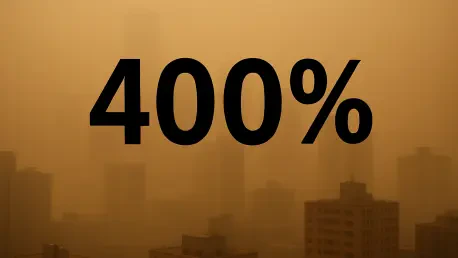

A recent investigation by the Environmental Technology Center has uncovered an alarming public health crisis in the vicinity of the Universidad Autónoma de Nuevo León, revealing that the air breathed daily by over 200,000 people contains hazardous pollutants at levels far exceeding established safety standards. The study’s most startling finding indicates that concentrations of fine particulate matter, or PM2.5, have soared to an astonishing 400% above the legal limit, exposing a massive population to significant health risks. These microscopic particles, which are small enough to penetrate deep into the lungs and enter the bloodstream, are now at the center of a growing environmental and political firestorm. The daily mobility on the university’s main campus alone, estimated at 218,000 individuals, underscores the vast scale of this exposure. The report serves as a stark warning that the routine activities of academic life are being conducted within a dangerously compromised environment, demanding immediate attention from both the public and government officials.
An Unseen Threat to Public Health
Delving deeper into the chemical composition of the air, the study identified not only particulate matter but also a dangerous mix of potentially toxic heavy metals, including lead, chromium, molybdenum, and strontium. The presence of these specific substances strongly suggests that industrial activity in the surrounding areas is the primary source of the contamination. The health implications of long-term exposure to this polluted air are severe, with the report explicitly warning of irreversible lung damage. This scientific concern is tragically mirrored by the real-world experiences of students and faculty, many of whom have reported suffering from persistent throat pain, respiratory discomfort, and allergy-like symptoms that align with exposure to airborne irritants. Each of the detected metals carries its own unique health threats, from the neurotoxic effects of lead to the carcinogenic properties of certain chromium compounds, compounding the overall risk for the thousands who frequent the university zone each day. The analysis paints a grim picture of a community unknowingly inhaling a cocktail of industrial byproducts.
Calls for Urgent Government Intervention
The release of these damning findings has triggered a swift and decisive response from the political sphere, with legislators across party lines calling for immediate and coordinated action. There is a growing consensus that federal, state, and municipal authorities must collaborate to launch a thorough investigation into the industries surrounding the university. Specific demands have been issued for the Federal Attorney for Environmental Protection (Profepa) to intervene and hold responsible parties accountable. The situation has also intensified criticism of the current administration’s environmental oversight, with at least one official publicly calling for the resignation of the state environment secretary due to perceived inaction. The study itself concluded by emphasizing the critical need for further analysis to pinpoint the exact sources of the pollution. This crucial next step would enable the implementation of targeted regulatory measures and effective strategies designed to reduce exposure and safeguard the health of the vast population that lives, works, and studies in the affected area.