
A New Frontier in American Energy Sustainability
The decision to transition toward a commercial nuclear recycling framework represents a fundamental shift in how the United States manages its vast inventory of spent fuel as the nation seeks to balance decarbonization goals with the realities of energy independence. This strategic pivot addresses a long-standing challenge that has hampered the domestic nuclear industry for decades, offering a path to transform mounting waste into a valuable energy resource. As the country prepares to deploy a new generation of advanced reactors, the move toward a “closed fuel cycle” promises to solve the logistical and political stagnation associated with permanent disposal while strengthening the domestic supply chain.
The Long Shadow of Yucca Mountain and the Storage Deadlock
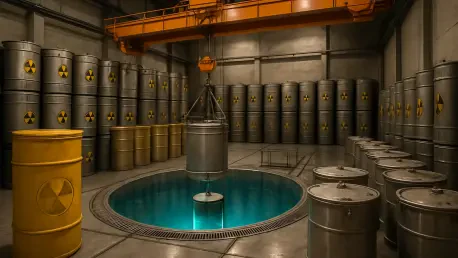
To grasp the current urgency, it is essential to recognize the historical failures that have dictated U.S. waste policy for more than half a century. The nation has primarily followed a “once-through” cycle, where uranium is used once and then designated as waste for deep-geologic storage. However, the 2011 defunding of the Yucca Mountain repository in Nevada created a permanent deadlock, leaving the United States without a centralized solution. Consequently, approximately 94,000 metric tons of used nuclear fuel now reside in cooling pools and concrete casks across the country, a stockpile that increases by 2,000 metric tons annually.
Strengthening Energy Security Through a Closed Fuel Cycle
Geopolitical Necessity: Managing the Russian Uranium Ban
The push for commercial recycling is increasingly viewed as a matter of national security, particularly as the domestic nuclear fleet faces tightening supply chains. A 2028 ban on Russian uranium imports has created a looming supply gap that threatens to destabilize energy production if alternative sources are not secured. By adopting reprocessing technologies, the United States can recover fissile material from existing spent fuel, creating a secondary market that reduces reliance on foreign imports. This shift positions the nation to compete with global leaders like France and Russia, who have already successfully integrated recycling into their energy strategies.
Resource Longevity: Enhancing Environmental and Supply Stability
Beyond geopolitics, the adoption of a closed cycle addresses the finite nature of global uranium reserves, which are currently projected to last fewer than 100 years at current consumption rates. Transitioning to a system where fuel is reprocessed and reused dramatically extends the lifecycle of these natural resources, ensuring long-term viability for carbon-free power. Furthermore, by extracting maximum energy from mined material, the industry can significantly decrease the environmental impact associated with traditional uranium mining and milling. This increased efficiency is a core requirement for meeting the rising electricity demands of a modernized economy.
Advanced Engineering: Fuel Innovation and the Growth of Fast Reactors
Technological breakthroughs are making the transition to recycling more economically and technically feasible than in previous decades. New “fast reactors” are being engineered specifically to run on recycled fuel, allowing for a more versatile and efficient use of the country’s existing nuclear inventory. These advancements are supported by the development of centralized “lifecycle innovation campuses” that combine enrichment, fabrication, and reprocessing in a single location. Such facilities also enable the recovery of valuable medical isotopes, such as cesium and strontium, which provide additional revenue streams and increase the overall commercial value of the waste stream.
The Evolution of Federal Oversight and Market Dynamics
The future of nuclear waste management will likely be defined by a shift from government-managed disposal to a profit-driven commercial sector. Federal agencies are expected to act as catalysts, facilitating public-private partnerships that de-risk massive capital investments in reprocessing infrastructure. We can anticipate new legislative frameworks designed to streamline the licensing process for advanced facilities, moving away from the taxpayer-funded liability model toward a market-based approach. As these technologies mature, the economic burden of spent fuel management will likely transform into a sustainable business opportunity for specialized energy firms.
Strategic Recommendations for a Modern Waste Framework
For the successful implementation of this new energy paradigm, stakeholders must prioritize several key areas. Policymakers should focus on enacting clear regulations that incentivize private investment in recycling technology and infrastructure. Businesses within the sector should look toward the integrated campus model to maximize operational efficiency and diversify income through the sale of both fuel and industrial isotopes. Finally, a concerted effort in public engagement is necessary to educate communities on the safety and environmental benefits of modern reprocessing, ensuring that the transition gains the necessary social license to proceed at scale.
Transforming a Liability into a Sustainable Asset
In summary, the transition toward a commercial recycling infrastructure functioned as the most viable path for the United States to resolve its nuclear waste crisis while securing a domestic fuel supply. The strategic integration of reprocessing technologies allowed the energy sector to move beyond the limitations of permanent geologic storage, transforming a historical liability into a functional asset. This shift reflected a broader commitment to resource efficiency and national security that reshaped the American energy landscape. Ultimately, the move toward a closed fuel cycle provided the necessary foundation for a resilient, carbon-free future.