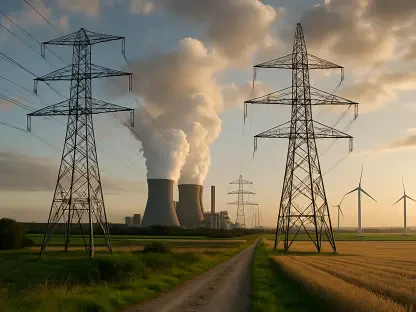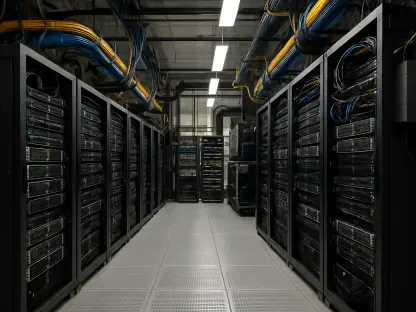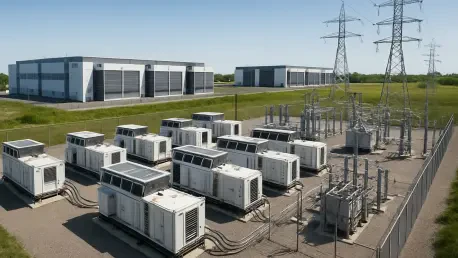

A colossal collision is unfolding across the American energy landscape as the insatiable electricity appetite of the digital economy, supercharged by artificial intelligence, runs directly into the decade-long traffic jam of the nation’s grid interconnection process. The scale of this impending crisis is difficult to overstate; projections indicate that the power demand from data centers could trigger growth not seen in generations, potentially doubling nationwide electricity consumption by the middle of the century. This unprecedented surge creates a critical timing mismatch, as data centers require massive amounts of reliable power now, while traditional energy projects, both renewable and conventional, languish for years in regulatory queues waiting for approval to connect to the grid. The problem is further exacerbated by logistical bottlenecks in the supply chain for essential components like gas turbines, and while next-generation clean energy sources like advanced geothermal hold promise, they are not yet ready to deploy at the scale needed to meet today’s urgent demand. This confluence of skyrocketing demand and gridlock necessitates an immediate, innovative, and scalable solution that can bypass the existing logjams.
The Gridlock Challenge
A Collision of Demand and Delays
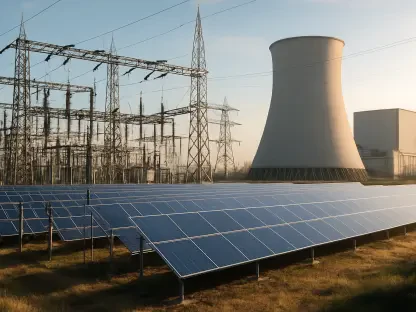
The exponential growth in cloud computing and artificial intelligence is fueling an unprecedented surge in electricity demand from data centers, creating a significant challenge for the existing power grid infrastructure. This surge is running headlong into the logistical gridlock of interconnection queues, where new energy projects, regardless of their fuel source, often wait for years to receive approval to connect to the grid. This prolonged waiting period creates a critical misalignment between the immediate power needs of the rapidly expanding data center industry and the grid’s ability to supply it. The situation is compounded by significant supply-side constraints. There are considerable backlogs in the delivery of conventional power sources like gas turbines, which have historically provided reliable baseload power. Simultaneously, emerging clean energy technologies that could offer firm, 24/7 power, such as advanced geothermal and next-generation nuclear, are not yet available at the scale required to meet the pressing, immediate demand from the tech sector. This creates an urgent need for alternatives that can be deployed quickly to bridge this gap.
The VPP Advantage
Virtual Power Plants (VPPs) emerge as a powerful and readily available solution to this impending energy crisis, offering a way to add flexible capacity to the grid in a fraction of the time required for traditional power infrastructure. A VPP is not a single, centralized power station but rather a grid-integrated, dispatchable aggregation of distributed energy resources (DERs). These resources comprise a network of smaller assets already embedded within communities, including residential and commercial batteries, electric vehicles and their chargers, smart thermostats, and other internet-connected devices capable of modulating their energy consumption or dispatching stored energy on command. The primary advantage of this approach is its remarkable speed and flexibility. Instead of undertaking the years-long process of building new, capital-intensive power plants, VPPs leverage existing or newly deployed assets. This allows them to be brought online in a matter of months, sidestepping the protracted delays of the interconnection queue. This is not a futuristic concept; according to the U.S. Department of Energy, approximately 30 gigawatts of VPP capacity are already deployed in the United States, with projections indicating a potential expansion to 160 GW by 2030.
A Mutually Beneficial Partnership
Fueling VPP Growth with Data Center Capital
A powerful symbiotic relationship is possible between the data center industry, which desperately needs power, and the VPP market, which needs capital to scale. Data center companies are projected to invest nearly $3 trillion in American infrastructure by 2030 and have a critical, vested interest in securing fast, reliable, and cost-effective energy to bring their facilities online. By directing a portion of this immense capital toward funding VPP development, they can directly address their most pressing operational challenge: slow grid interconnection. This strategic partnership creates a multi-faceted “win” scenario for all stakeholders involved. Data centers gain access to faster, lower-cost power, allowing them to become operational more quickly and begin generating revenue sooner. Utilities, in turn, acquire flexible, dispatchable resources that help manage grid constraints and support smarter, more efficient grid growth without having to build as much costly infrastructure themselves. For the VPP industry, this influx of capital provides the necessary fuel to scale its operations, technology, and market presence. Finally, communities benefit directly from the local deployment of DERs through bill savings for participants and enhanced energy resilience for the entire community.
Innovative Commercial Frameworks
To facilitate this crucial partnership, three innovative commercial models have been proposed to efficiently share risk and unlock capital between data centers, utilities, and VPP providers. The first model involves a data center funding a VPP that is then operated and managed by the local utility. In exchange for this capital investment, the utility grants the data center an expedited interconnection review, effectively creating a new, highly valuable attribute: “speed-to-power.” A second, more market-driven approach involves the creation of flexible “capacity credits.” Under this system, a utility or grid operator would determine how many megawatts of new, constant demand can be reliably supported by each megawatt of flexible VPP capacity. VPP owners could then sell these certified credits to data centers, which would present them to the utility as a form of collateral to justify a faster connection. The third model centers on a “flexible interconnection agreement,” where a utility allows a data center to connect more quickly on the condition that it agrees to reduce its electricity demand during hours of grid stress. This model introduces the use of offsite VPPs, allowing a data center to invest in or contract with a VPP to provide this flexibility on its behalf, often at a significantly lower cost and with fewer local environmental impacts than traditional onsite backup generators.
Paving the Way for Success
Essential Policy and Regulatory Support
The successful implementation of these innovative commercial models hinges on corresponding advancements in regulation and policy. The entire premise relies on the ability to genuinely fast-track grid connections, which means regulators must create new, streamlined pathways for joint applications from large loads like data centers and flexible resources like VPPs. Promising pilot programs in Oregon and by the Southwest Power Pool are already demonstrating that such integrated approaches are feasible. Beyond just speeding up approvals, the inherent value of VPPs must be recognized and incorporated into the core of utility and grid planning processes. Regulators and market operators should actively promote integrated planning that considers VPPs as a viable, and often more cost-effective, alternative to traditional infrastructure for a wide variety of grid needs, from deferring costly transmission upgrades to providing real-time balancing services. Achieving this level of integration will require better coordination and data sharing between utilities and VPP developers to help target investments where they can provide the most benefit to the grid.
A Framework for Responsible Growth
The development of a robust framework was essential to ensure that the integration of massive data center loads did not place an unfair financial burden on other customers. As these new commercial and regulatory models took shape, a critical focus was placed on customer protection. Policymakers in several states designed sophisticated “large-load tariffs” that included measures to mitigate risks for the broader public. These tariffs often required data centers to commit to long-term contracts, implemented exit fees to reduce the risk of stranded utility assets should a facility close, and set minimum usage payments to guarantee a stable revenue stream for the utility. The partnership forged between the data center and VPP industries, supported by these forward-thinking regulatory structures, demonstrated a pragmatic and powerful path forward. It illustrated how the energy future—one that is more distributed, democratized, and digitized—could be accelerated by addressing the immediate, practical challenges of the present, allowing the nation to advance its energy transition while simultaneously securing its leadership in the global digital economy.