
A fierce regulatory battle is brewing in New Jersey, where consumer advocates are questioning whether millions of residents are being forced to pay for a utility’s alleged mismanagement of a half-billion-dollar infrastructure project. At the heart of the dispute is a formal complaint filed by the watchdog group Public Citizen against Public Service Electric and Gas (PSE&G), challenging the utility’s right to recover the full $546 million cost of its Roseland-to-Pleasant Valley (RPV) transmission line from ratepayers. The case, now before federal regulators, probes the critical line between necessary investment and imprudent spending, raising a fundamental question for every household: Who should ultimately foot the bill when a major utility project comes under scrutiny for mismanagement?
Are You Paying for Your Utility’s Mistakes?
The conflict hinges on the allegation that customers are being unfairly billed for errors and missteps made by their utility provider. Public Citizen’s complaint, filed with the Federal Energy Regulatory Commission (FERC) on January 14, 2026, argues that a significant portion of the RPV project’s costs were “imprudently incurred” and should not be passed on to consumers. This legal challenge transforms a complex accounting issue into a matter of public interest, forcing a debate over accountability in the multibillion-dollar world of energy infrastructure.
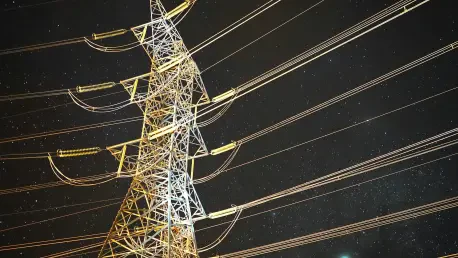
Massive transmission projects like the RPV line are the backbone of a reliable electric grid, designed to modernize aging infrastructure and ensure that power flows uninterrupted to homes and businesses. The immense cost of these undertakings is typically recovered through charges included in consumer utility bills. However, this model relies on the assumption that the utility has managed the project prudently. When that prudence is called into question, the entire system of cost recovery faces a stress test, with consumer advocates stepping in to protect ratepayers from covering expenses they argue are illegitimate.
This dispute is not an isolated incident but reflects a growing national concern over the escalating costs of local transmission projects. Across the country, similar infrastructure upgrades often escape the rigorous competitive review applied to larger, regional lines. This trend has alarmed consumer advocates, who point to a “serious absence of cost containment” that can leave ratepayers vulnerable to inflated charges with little recourse or oversight. The PSE&G case has thus become a potential bellwether for how regulators will handle similar disputes nationwide.
The Anatomy of a Dispute: Public Citizen vs. PSE&G
The legal battle officially began when Public Citizen submitted its formal complaint to FERC, asserting that PSE&G’s current transmission formula rate is “unjust and unreasonable” under federal law. The core of the argument is that because the utility allegedly mismanaged key aspects of the RPV project’s planning and execution, it forfeited its right to full cost recovery from the public. The watchdog group is demanding that federal regulators disallow the portion of the $546 million total that it deems was wasted due to these failures.
Central to Public Citizen’s case is a previous settlement between PSE&G and FERC’s enforcement office. In December 2024, the utility agreed to a $6.6 million settlement to resolve allegations that it had provided “inaccurate information” to the regional grid operator, PJM Interconnection, during the project’s critical planning phase. While PSE&G neither admitted nor denied the allegations as part of the agreement, Public Citizen argues that the settlement itself is powerful evidence of the utility’s imprudence. The group is leveraging this prior enforcement action as a cornerstone of its argument that associated project costs are inherently tainted and should be borne by the company’s shareholders, not its customers.
In response, PSE&G has mounted a vigorous defense, framing the RPV project as an essential and prudent investment in New Jersey’s energy future. The utility maintains that the project was critical for modernizing an aging transmission line and has delivered tangible benefits to its customers. According to the company, these upgrades have resulted in “significant reliability improvements, strengthened system performance, and greatly increased capacity,” ensuring the grid is more resilient and capable of meeting modern energy demands.
The Opposing Arguments in Their Own Words
The utility’s position is firm and unequivocal. In a public statement, PSE&G spokesperson William Smith affirmed the company’s stance, declaring, “We stand firmly behind the necessity and prudence of this project and will vigorously defend against any claims to the contrary.” This statement underscores the utility’s belief that its actions were justified and that the costs incurred were reasonable and necessary for maintaining the integrity of the state’s electrical infrastructure. PSE&G’s defense rests on the argument that the long-term benefits of a modernized grid far outweigh the project’s costs.
On the other side, Public Citizen has made its objective clear: to secure a formal hearing at FERC to investigate the matter thoroughly. The consumer advocate’s primary goal is to prevent ratepayers from being saddled with what it describes as “unlawfully inflated charges.” Furthermore, the group is pushing the commission not only to block future charges but also to force PSE&G to refund the money it has already collected from customers for the disputed costs. This demand represents a direct challenge to the utility’s financial interests and its operational autonomy.
The Regulatory Gauntlet: What Happens Next
The path forward for Public Citizen is a steep one, as the regulatory framework is structured to favor the utility. Under FERC’s formula rate process, spending on transmission projects is automatically presumed to be prudent. This legal standard places the burden of proof squarely on the challenger. Consequently, Public Citizen must present compelling evidence to overcome this presumption and convince the commission that PSE&G’s costs were, in fact, mismanaged and unreasonable.
This formal complaint is the latest in a series of efforts by the watchdog group to hold the utility accountable. An earlier attempt to challenge the costs was dismissed by FERC, which advised that the claim had been filed in an “improper proceeding.” Following that guidance, Public Citizen lodged a protest within PSE&G’s annual rate update process, but the group claims that FERC “neither acknowledged nor acted on that protest.” This history of procedural hurdles prompted the filing of the current, more direct complaint aimed at forcing a definitive ruling.
Ultimately, the decision rests with FERC. The commission is now tasked with weighing Public Citizen’s evidence of imprudence, particularly the prior settlement, against PSE&G’s defense of the project’s necessity and successful implementation. The outcome of this regulatory showdown will have significant financial implications, determining whether millions of New Jersey ratepayers will continue to pay for the full $546 million or if the utility’s shareholders will be required to absorb the costs of the alleged mismanagement.
The resolution of this case has the potential to set a significant precedent for how utility accountability and ratepayer protections are balanced in the context of large-scale infrastructure projects. As regulators deliberate, the dispute underscores a fundamental tension in the energy sector: the need for massive investment to maintain a modern, reliable grid versus the imperative to protect consumers from bearing the costs of corporate mistakes. The final decision by FERC will not just be about a single power line in New Jersey; it will be a verdict on the rules that govern who pays when things go wrong.