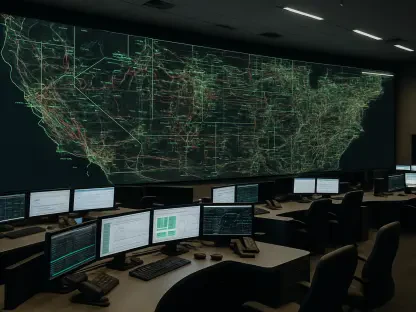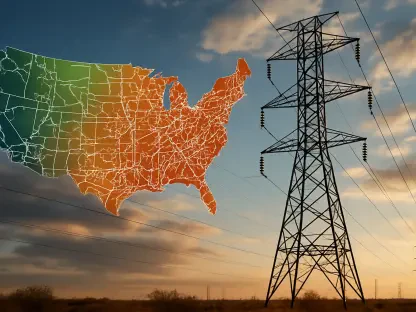

The vast, interconnected power grid of the American West is currently undergoing a structural transformation so profound that it rivals the original electrification of the frontier. When a blistering heatwave settles over the Arizona desert while the Pacific Northwest remains shrouded in a cool marine layer, the ability to shift surplus electricity across state lines in real-time is the only barrier between a stable society and a catastrophic, wide-scale blackout. This evolution is far more than a technical upgrade; it is a fundamental rewrite of how energy is governed, traded, and shared across nearly half the North American continent.
Beyond State Lines: The High-Stakes Race to Modernize the Western Grid
The American West is attempting a feat of diplomacy and engineering once considered a political impossibility: merging dozens of independent utilities into a single, synchronized market. For decades, the region operated as a patchwork of “islands,” where each utility was largely responsible for its own generation and reliability. However, as extreme weather events become the new operational baseline, the limitations of this fragmented approach have become dangerously apparent. Moving toward a unified system allows for a more fluid response to sudden surges in demand, ensuring that no single state is left to face a supply crisis in isolation.
This shift represents a departure from the traditional, California-centric model of energy management that has dominated the region for years. By breaking down the silos between state regulators and private providers, the West is creating a collaborative framework that prioritizes regional resilience over local protectionism. This integration is not merely a convenience; it is a necessity for a modern society that requires a seamless flow of electrons to power everything from data centers to hospitals, regardless of where the wind is blowing or the sun is shining.
Why the Move Toward Regional Governance is a Modern Necessity
As Western states pursue aggressive renewable energy targets, the inherent variability of wind and solar power demands a much larger geographical footprint to maintain balance. Regional integration allows utilities to pool their diverse resources, leveraging the fact that peak demand rarely occurs at the exact same moment in Seattle as it does in Phoenix. By connecting the Rocky Mountains to the Pacific Coast, the region can effectively “smooth out” the intermittent nature of green energy, creating a more reliable system for millions of consumers at a lower overall cost.
Operating as a unified bloc also provides a vital buffer against the increasing volatility of global energy prices. When utilities work in isolation, they are often forced to buy expensive emergency power during shortages; however, a regional market facilitates a more competitive environment where the most efficient resources are dispatched first. This cooperative model reduces the need for every individual utility to build its own redundant, gas-fired “peaker” plants, as they can instead rely on the collective capacity of the entire Western Interconnect to bridge gaps in supply.
The Structural Evolution: From Independent Operators to Unified Markets
The cornerstone of this transition is the establishment of the Regional Organization for Western Energy (ROWE), an independent body scheduled to take full control of market management by 2028. This move signals a definitive shift toward inclusive governance, ensuring that utilities from Nevada to Washington have an equal seat at the table. Central to this evolution is the Extended Day-Ahead Market (EDAM), a sophisticated platform designed to optimize energy trades twenty-four hours in advance. By identifying surpluses and deficits before they become emergencies, the EDAM provides a level of financial and operational certainty that was previously unattainable.
Furthermore, the region is currently evaluating a comprehensive resource adequacy program to ensure that the total pool of available power is sufficient to meet the highest possible demand. This initiative seeks to stretch every megawatt further by allowing utilities to share “planning reserves,” effectively reducing the amount of idle capacity that must be maintained across the system. By standardizing how utilities measure and report their available power, the ROWE framework creates a transparent ledger of regional energy health, making the grid more predictable for operators and more affordable for the public.
Expert Perspectives on the Conflict Between Speed and Stability
Industry leaders are currently locked in a vigorous debate over what many call the “velocity of innovation.” While large-scale utilities often advocate for a rapid rollout of advanced market features to keep pace with emerging competitors, others warn that “initiative fatigue” could threaten the grid’s foundation. Technical experts emphasize that the successful launch of the day-ahead market must be the absolute priority. They argue that any failure in basic execution or a loss of data integrity during the early stages could permanently undermine the trust required to keep diverse stakeholders committed to the regional project.
The consensus among grid operators is that while the vision of a fully integrated West is essential, the transition must be measured and driven by rigorous performance metrics. There is a palpable concern that layering too many complex regulatory changes at once could overwhelm the specialized staff responsible for keeping the lights on. Therefore, the prevailing strategy is to ensure that each new market mechanism is fully stabilized and delivering measurable economic benefits before the next phase of integration begins, treating the transition as a marathon of precision rather than a sprint for political points.
A Practical Framework for Navigating Regional Integration
To successfully manage this complex transition, the region must adopt a phased implementation strategy that prioritizes core market stability before introducing more experimental programs. Establishing “voluntary participation” as a foundational principle has proven essential, as it allows utilities to join or exit the market based on their specific needs, fostering a culture of trust rather than coercion. Additionally, the implementation of rigorous monthly performance tracking provides the transparency needed to prove to skeptics that regional cooperation delivers tangible results in both reliability and cost savings.
As the market matures toward its 2028 milestones, utilities must focus on resolving “seams” issues—the technical and economic friction that occurs at the boundaries between different market operators. Reducing this friction ensures that power flows as smoothly between different regional authorities as it does within a single municipal grid. By focusing on these granular technical details while maintaining a broad vision for regional unity, the West is building a power system that is not only cleaner and more efficient but also robust enough to withstand the unpredictable challenges of the coming decades.
The transition toward a unified Western energy market was characterized by a move from isolated state-level planning to a coordinated, multi-state governance model. Stakeholders successfully prioritized the stabilization of day-ahead trading platforms while establishing independent oversight to ensure equitable participation across the region. Moving forward, authorities should focus on harmonizing cross-border transmission policies to further reduce administrative bottlenecks. Future efforts must also integrate advanced battery storage analytics into the regional dispatch system to maximize the utility of the existing renewable portfolio. Finalizing these technical standards will be the next critical step in securing a resilient energy future for the American West.