
The Unseen Price Tag of Our Digital World
In an era defined by artificial intelligence, cloud computing, and a ceaseless flow of data, a critical question is emerging from behind the server racks: Who should pay for the colossal energy infrastructure required to power it all? This issue has come to a head in Illinois, where a regulatory battle between the state’s Attorney General and utility giant Commonwealth Edison (ComEd) exposes a national tension between fostering technological growth and protecting the public from spiraling electricity costs. This article delves into the heart of this conflict, exploring the arguments, the astronomical stakes, and the precedents being set that will determine how the cost of our digital future is allocated across society.
From Dial-Up to Data Demand: A Grid Under Pressure
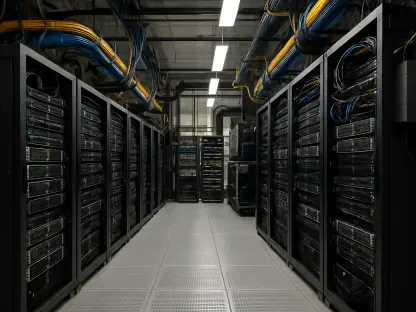
The modern electrical grid was designed for a world of predictable, incremental growth, but the recent explosion in data center development represents a seismic shift in energy consumption. These facilities, which can consume as much energy as a small city, are placing unprecedented strain on aging infrastructure and fundamentally altering regional demand profiles. This surge has forced utilities and regulators to grapple with a new reality where a single customer can reshape long-term energy planning. The Transmission Service Agreements (TSAs) at the center of the Illinois dispute are a direct response to this challenge, representing bespoke contracts designed to manage the financial and operational risks of connecting these massive loads. Understanding this context is crucial, as these agreements are becoming the primary battleground for defining financial responsibility in the age of AI.
The High-Stakes Debate Over Grid Upgrades
An Advocate’s Warning: Protecting Consumers from a Power Surge
The Illinois Attorney General’s office has positioned itself as the chief defender of the everyday consumer, lodging formal protests with the Federal Energy Regulatory Commission (FERC). The core of its argument is that the financial safeguards within ComEd’s proposed TSAs are insufficient to prevent the public from subsidizing corporate expansion. The state’s filings warn that provisions allowing ComEd to recover infrastructure costs through standard rates could lead to “substantial transmission price increases and subsidization by existing customers.” The Attorney General argues that without a definitive guarantee that data center developers will cover the full capital costs of necessary grid upgrades, existing ratepayers are left vulnerable. The office has urged FERC to halt approval pending a full investigation, highlighting the risk of “spiraling rate increases and possible service curtailments or black-outs” if these massive projects are not managed with greater financial scrutiny.
The Utility’s Assurance: A Framework Built for Protection
In response, Commonwealth Edison, an Exelon utility, contends that its agreements contain a “comprehensive package” of safeguards meticulously designed to insulate its current customer base. ComEd asserts that its TSAs hold data center developers accountable through a multi-layered approach that includes stringent credit requirements, committed revenue contributions, and shortfall payments if promised energy usage targets are not met. The utility also points to a clearly defined termination-fee schedule, arguing these measures create a binding commitment that “guards against shifting costs and risks to other customers.” From ComEd’s perspective, this framework ensures that the developers, not the public, are on the hook if their projects fail to materialize or underperform, thereby protecting the grid and existing ratepayers from financial exposure.
A Patchwork of Precedents in an Evolving Landscape
The regulatory environment for these mega-projects remains fluid and lacks a national standard, creating a complex and inconsistent landscape. ComEd cites FERC’s approval of a similar agreement between its sister utility PECO and Amazon in Pennsylvania as a key precedent. However, that approval was not a blanket endorsement; in a concurring statement, FERC Commissioner Judy Chang noted the agency’s lack of a standardized framework for evaluating such agreements, a point the Illinois Attorney General has seized upon. The office is now pushing for the application of established cost-causation principles, such as a Contribution in Aid of Construction (CIAC) model, where developers directly fund the infrastructure they require. This highlights a critical ambiguity: while utilities seek flexibility, regulators and consumer advocates are demanding clearer, more consistent rules to prevent a state-by-state patchwork of policies that could leave consumers in some regions paying more than others.
A National Reckoning on Energy and Economics
The dispute in Illinois is a preview of a broader national conversation, as the sheer scale of the demand is staggering; Exelon officials have revealed an advanced data center pipeline of 18 GW, with potential future additions totaling a mind-boggling 47 GW. This trend has captured political attention, with former President Donald Trump recently insisting that data center companies must “pay their own way.” Meanwhile, some corporations are getting ahead of the issue, with Microsoft announcing an initiative to proactively ask utilities to set its rates high enough to cover the full cost of service. As other states, like Michigan, see similar challenges arise where attorneys general question large-load contracts, it is clear that the ad-hoc, case-by-case approach to approving these projects is becoming unsustainable.
Charting a Path to Sustainable Digital Growth
The central takeaway from the ongoing disputes is that ambiguity benefits no one in the long term, making the development of a clearer and more equitable framework essential. To move forward, regulators like FERC and state commissions must prioritize the creation of standardized rules for large-load interconnections that transparently assign costs to the entity that creates them. Utilities and data center developers, in turn, should embrace transparent models like CIAC to build public trust and ensure financial certainty for all parties involved. For businesses and consumers, the lesson is that the cost of data is becoming inseparable from the cost of energy. Staying informed and engaged in these regulatory proceedings is crucial, as their outcomes will directly influence the affordability and reliability of electricity for years to come.
The True Cost of Connectivity
The conflict over who foots the bill for data center power is more than a regional regulatory dispute; it is a fundamental debate about the economics of our digital infrastructure. As society’s reliance on data-intensive technologies grows, the demand for energy will continue its exponential rise. Ensuring that the costs of this progress are allocated fairly—without burdening the public or stifling innovation—is one of the most critical challenges facing policymakers, utilities, and the tech industry today. The resolution of cases like the one in Illinois will set a powerful precedent, shaping a future where technological advancement and public interest can coexist.