
An unprecedented technological gold rush is putting Oklahoma at a critical crossroads, where the immense computing power of artificial intelligence is colliding with the physical limits of the state’s electrical grid. The rapid influx of massive data centers, hungry for electricity on a scale never seen before, has ignited a fierce debate over a billion-dollar question: who should finance the essential infrastructure upgrades required to power this boom? This high-stakes conflict pits the state’s largest utility companies against consumer advocacy groups, with state regulators caught in the middle, forced to decide whether the financial burden falls on the tech giants driving the demand or the everyday Oklahomans who will share the grid. The outcome of this struggle will not only determine the future of electricity bills in the state but also set a crucial precedent for how communities nationwide handle the energy demands of the digital age.
A Tsunami of Demand
The Unprecedented Scale
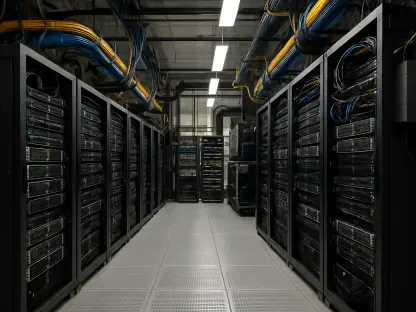
The sheer magnitude of the incoming data center development is difficult to comprehend, with a minimum of eighteen separate projects already in the pipeline, either under active construction or awaiting final approval from state authorities. These are not modest facilities; some of the individual data centers are designed on a colossal scale, each requiring an amount of electricity substantial enough to power an entire mid-sized city. This localized surge in Oklahoma is a clear reflection of a much broader national trend driven by the exponential growth of cloud computing and artificial intelligence. A recent comprehensive report from McKinsey & Company forecasts that the electricity consumption by data centers across the United States is set to triple by the year 2030. At that point, these digital factories will account for approximately 14% of all power usage in the country, placing an immense and sustained strain on electrical grids from coast to coast and forcing a nationwide reckoning with the energy cost of technological progress.
This boom is a direct consequence of the escalating need for computational power, a demand that has grown exponentially with the advent of sophisticated AI models and the increasing reliance on cloud-based services for everything from business operations to personal entertainment. Oklahoma has become a particularly attractive destination for these developments due to a combination of factors, including available land, favorable business policies, and a central geographic location that is optimal for data routing. However, this appeal comes with a significant challenge, as the existing utility infrastructure was designed and built for a different era of energy consumption. The sudden and massive increase in demand from a single industry sector is forcing a rapid and costly re-evaluation of the state’s entire energy generation and transmission strategy, a process that is proving to be both complex and highly contentious as stakeholders grapple with the long-term implications.
The Looming Deficit
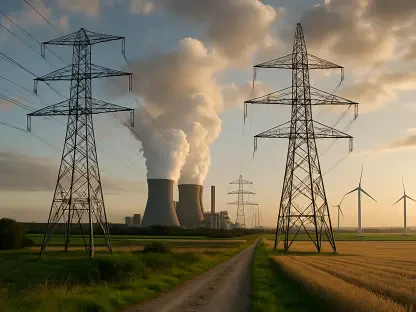
The state’s two primary utility providers, Oklahoma Gas and Electric (OG&E) and Public Service Company of Oklahoma (PSO), have formally declared in regulatory filings that the impending demand from this wave of data centers and other industrial growth far exceeds their current power generation capabilities. The projections outlined by these companies paint a stark picture of a looming energy crisis if significant action is not taken immediately. PSO anticipates that it will face a staggering 3,124-megawatt power deficit by the year 2031. This shortfall represents 31% of its total required capacity and is equivalent to the amount of energy needed to power approximately two million average American homes, underscoring the severity of the impending gap between supply and demand. The situation is just as critical for the state’s other major utility. OG&E projects its own deficit will reach 3,459 megawatts by 2035, a figure that is roughly 38% higher than its entire existing generating capacity today.
Such a significant power deficit carries profound implications not just for the new data centers but for every residential and commercial customer connected to the grid. A gap of this magnitude threatens the overall stability and reliability of the electrical system, increasing the risk of brownouts or blackouts, especially during periods of peak demand such as extreme summer heat or winter cold snaps. To prevent this scenario, the utilities argue that they have no choice but to embark on an aggressive and expensive build-out of new power generation facilities and transmission infrastructure. This urgent need to add thousands of megawatts of new capacity in a relatively short timeframe is the central driver behind the billion-dollar investment plans that have now become the focal point of a heated debate over cost allocation and financial responsibility, forcing regulators to weigh the benefits of economic development against the direct financial impact on consumers.
The Price of Power
In direct response to this forecasted energy shortage, both OG&E and PSO are undertaking massive capital investment projects designed to bridge the generation gap and fortify the state’s electrical grid. Collectively, the two utility giants are investing well over a billion dollars to construct new sources of power, primarily focusing on natural gas-fired generators, and to significantly expand the existing transmission infrastructure to handle the increased load. The core of the controversy surrounding these ambitious plans lies in the proposed method for financing them. The utilities have outlined a strategy to pass a substantial portion of these enormous construction costs directly on to their entire customer base, which includes not only the new industrial users but also every residential household and small business in their service territories. This cost-sharing proposal is set to be implemented through a series of rate hikes that would appear on customers’ monthly utility bills.
This approach to funding major infrastructure projects is common in the regulated utility industry, where companies are typically allowed to recover prudent investments and earn a reasonable rate of return. However, the sheer scale of this build-out and the fact that it is being driven by a specific class of new, large-scale industrial customers has made the cost allocation plan exceptionally contentious. Consumer advocates and watchdog groups are questioning the fairness of socializing the costs of infrastructure that will primarily benefit a handful of large tech corporations. They argue that this model effectively forces residential ratepayers to subsidize corporate expansion. This fundamental disagreement over who should bear the financial risk and burden of Oklahoma’s data center boom is now at the heart of complex regulatory proceedings that will have a lasting impact on the affordability of electricity in the state for decades to come.
The Burden on Ratepayers
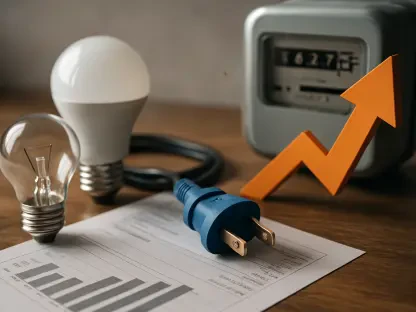
The proposal to increase electricity rates to fund new power plants comes at a particularly challenging time for Oklahoma’s residents, who are already grappling with some of the highest energy costs in the region. According to data from the U.S. Energy Information Administration, Oklahomans pay more for their electricity than consumers in any neighboring state except for Texas, making any additional increase in their utility bills a significant financial concern. This pre-existing strain on household budgets is compounded by recent trends; in the past year alone, the average per-kilowatt-hour price for residential customers had already climbed by a notable 7%. For many families and small business owners, this steady rise in energy costs has already tightened financial margins, making the prospect of being asked to shoulder a portion of a billion-dollar industrial expansion particularly alarming and raising fundamental questions about economic equity.
This financial pressure forms the backdrop for the intense opposition to the utilities’ cost-recovery plans. Consumer advocacy groups, representing the interests of residential ratepayers, argue that asking the general public to pre-fund infrastructure for the benefit of a few large corporations is fundamentally unfair. They contend that the data centers, as the direct cause of this new demand, should be responsible for a much larger share of the associated costs. The concern is that if residential customers are forced to subsidize this industrial growth, it could lead to a situation where the economic benefits of attracting these tech companies are offset by the increased cost of living for ordinary citizens. This tension between promoting economic development and protecting consumers from unaffordable utility bills is the central dilemma facing state regulators as they deliberate on the proposed rate hikes and the future of Oklahoma’s energy landscape.
The Legislative and Regulatory Fight
A Contentious New Law
At the very center of this escalating conflict is a newly enacted piece of state legislation, Senate Bill 998. This law, which was heavily lobbied for by OG&E, fundamentally alters the traditional rules of utility financing in Oklahoma. It grants utility companies the authority to begin recovering the costs of building new natural gas power plants from their customers as soon as construction commences. This marks a significant departure from the long-standing regulatory principle that utilities can only charge customers for assets that are “used and useful,” meaning operational and actively providing service. Under the previous framework, a utility had to complete construction and bring a new power plant online before it could include the costs of that plant in its rate base. This new law effectively shifts the financial risk of construction from the utility’s shareholders to its entire customer base.
The passage of Senate Bill 998 has become a major flashpoint in the debate over the data center boom. Proponents of the law, primarily the utility companies, argue that it is a necessary and prudent financial tool that will ultimately save customers money by allowing the company to avoid accumulating higher interest costs during the lengthy construction period. However, opponents, including a broad coalition of consumer advocacy groups and industrial energy users, view it as a corporate giveaway that unfairly burdens ratepayers. They argue that the law forces customers to pay for a project from which they are not yet receiving any benefit and insulates the utility from the financial risks associated with large-scale construction projects, such as delays or cost overruns. This legislative change has dramatically raised the stakes in the regulatory arena, providing utilities with a powerful new mechanism to fund their expansion plans.
Dueling Analogies
The starkly different interpretations of Senate Bill 998 are best captured in the dueling analogies offered by the opposing sides, each attempting to frame the issue in a way that resonates with the public and regulators. Ken Miller, a vice president for OG&E, defends the law by comparing it to a common household financial strategy. He likens the practice of charging customers during construction to a homeowner choosing to pay off the interest on a mortgage early. In this view, the upfront payments, while an immediate cost, ultimately lead to significant long-term savings for customers by reducing the total financing costs associated with the billion-dollar projects. This analogy portrays the utility’s actions as a form of responsible fiscal management designed to secure the lowest possible cost for everyone over the 30-year lifespan of the new power plants, presenting it as a prudent measure for long-term affordability.
In sharp and direct contrast, consumer advocates offer a far more critical perspective. A.J. Singer, an attorney representing the Oklahoma chapter of AARP, presents a completely different scenario to illustrate the law’s impact on residential ratepayers. He likens the situation to an apartment building where the landlord forces all current tenants to pay a substantial rent increase to fund the construction of a new luxury wing. The existing tenants, he argues, will derive no direct benefit from these new units but are nonetheless compelled to finance their creation. This analogy frames Senate Bill 998 not as a cost-saving measure but as a mechanism for forcing the public to subsidize the expansion of a for-profit corporation’s assets. It suggests that the primary beneficiaries are the utility’s shareholders and the new industrial customers, while the financial burden is unfairly placed upon a captive residential customer base with no alternative for their electricity needs.
The Commission Steps In
The Oklahoma Corporation Commission, the state body tasked with regulating public utilities, has now become the primary arbiter in this complex and high-stakes dispute. The commission was recently thrust into the spotlight when OG&E made its first attempt to leverage the new law, submitting a proposal to begin charging customers for its $506.4 million plan to construct two new natural gas plants. The utility’s proposed fee schedule would have started with a modest monthly charge of 55 cents in 2026, escalating significantly to an average of $4.41 per month by 2031. However, the commission rejected this specific cost-recovery plan, not based on the merits of the proposal itself, but on a critical technicality: OG&E had filed its application before Senate Bill 998 had officially gone into effect, rendering the request premature.
While this initial rejection provided temporary relief for ratepayers, the commission’s ruling made it clear that the issue is far from settled. The regulators indicated that OG&E will eventually be permitted to recover its construction costs, but stipulated that this can only happen after the new generators are fully operational and providing service to the grid. In a significant move aimed at protecting residential customers, the commission also issued a directive ordering OG&E to develop and submit a new, separate tariff specifically designed for large energy consumers like data centers. This new rate structure, due by July 2026, is intended to ensure these industrial giants pay their fair share. This decision, however, is still being contested by both AARP and the Oklahoma Industrial Energy Consumers group, and with PSO pursuing a similar cost-recovery case for its own $1.25 billion expansion, the regulatory battle is set to continue.
The Billion-Dollar Gamble
The Risk of Overbuilding
A critical concern, articulated in a cautionary report from the Corporation Commission’s own Public Utility Division, is the significant financial risk associated with this rapid, industry-driven build-out. The report issued a stark warning that the data center boom could lead utility companies to dramatically overestimate future electricity demand based on a collection of speculative proposals and unverified growth projections from tech companies. This highlights a crucial danger for the state’s residents: if some of the announced data center projects are ultimately scaled back, delayed indefinitely, or never built at all, the remaining residential and commercial ratepayers in Oklahoma could be left to pay for billions of dollars in unnecessary power generation and transmission infrastructure. This scenario would create what are known in the utility industry as “stranded assets”—expensive power plants built to serve a demand that failed to materialize.
This risk of overbuilding is a central argument for consumer advocates like A.J. Singer, who emphasizes the need for stronger financial commitments from the data center companies themselves. He argues that before Oklahomans are asked to fund the construction of new power plants, there must be long-term, ironclad guarantees from these tech companies ensuring they will remain in operation and continue to pay for the power for the full 15, 20, or 30-year lifespan of the infrastructure being built to serve them. Without such guarantees, the state is effectively taking a massive gamble, betting its public resources on the long-term success and stability of a notoriously volatile tech industry. The fear is that a future downturn in the tech sector could lead to data center closures, leaving Oklahomans with higher electricity bills for decades to pay off the cost of now-redundant power plants.
A Question of Fairness
The utility companies maintain that their extensive and costly expansion plans are both prudent and ultimately beneficial for all customers. Matt Rahn, a spokesperson for PSO, stated that adding large industrial customers like data centers to the grid can help spread the utility’s fixed costs—such as maintenance and administration—across a much broader base of energy sales. In theory, this can help support long-term affordability for everyone by lowering the average cost per kilowatt-hour. Both PSO and OG&E have affirmed their commitment to developing the new large-load tariffs mandated by the Corporation Commission, asserting that these new rate structures will ensure that incoming industrial customers pay their “fair share” for the energy they consume and the infrastructure they require. This position frames the expansion not as a subsidy, but as a strategic move to grow the customer base for the collective good.
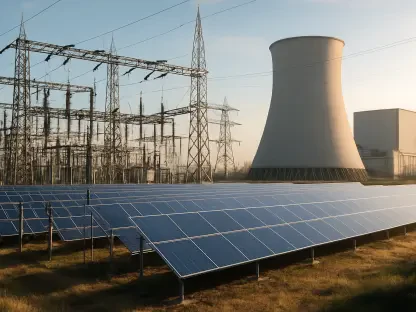
However, significant questions about fairness and responsibility remain unanswered. While some of the proposed data centers have included plans for on-site renewable energy generation, such as large-scale solar arrays, a new state law provides more options for companies to generate their own power but crucially does not require them to do so. This leaves the publicly funded and regulated grid as the primary and default source of supply for these energy-intensive facilities. The central conflict, therefore, persists: should existing ratepayers be required to finance the infrastructure for new, for-profit enterprises, or should those enterprises be responsible for covering the full cost of the new demand they alone are creating? The resolution of this debate, currently unfolding in regulatory hearings and legislative sessions, will fundamentally shape Oklahoma’s energy policy and determine who ultimately profits from—and who pays for—the state’s technological transformation.
A Precedent Set in a Shifting Landscape
The Oklahoma Corporation Commission’s decisions in this matter have set a critical course for the state’s energy future. By rejecting the utility’s initial attempt at pre-construction cost recovery while simultaneously ordering the creation of a new tariff for large-scale energy users, the regulators charted a middle path. This course acknowledged the urgent need for new power generation to support economic growth but also reinforced a layer of protection for residential ratepayers against bearing the upfront financial risks of industrial expansion. The commission’s actions signaled that while Oklahoma welcomed the economic development promised by the data center boom, it would not come at any price. This outcome represented a measured response to a complex challenge, establishing a framework that attempted to balance the interests of powerful corporations with the financial well-being of the public. The legal and regulatory battles that unfolded served as a crucial test case, with the resulting decisions likely to influence how other states across the nation approached similar conflicts between technological advancement and public utility obligations.