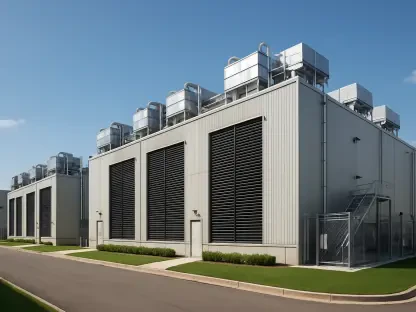

The quiet hum of a modern data center belies a thirst for electricity so massive that a single facility can now outpace the total power consumption of an entire medium-sized American city. As digital infrastructure expands to support advanced artificial intelligence and cloud computing, the sheer scale of this load growth has shifted from a manageable trend to a systemic challenge. Nowhere is this more evident than in Virginia’s “Data Center Alley,” where the interconnection queue has reached a breathtaking 70 gigawatts. This volume is nearly triple the local utility’s all-time peak load, with approximately ten new requests arriving every month.
This unprecedented influx of large-load customers is forcing a critical debate regarding the governance of the electrical grid. The central question is no longer just about how much energy we need, but who should hold the reins of authority to ensure that the lights stay on for every citizen. As these tech giants integrate into the local landscape, the pressure on existing infrastructure threatens to outpace the speed of traditional grid upgrades.
The Brewing Conflict: Federal Mandates and State Sovereignty
As the digital economy grows, a regulatory tug-of-war has emerged between the Federal Energy Regulatory Commission (FERC) and state authorities. Historically, individual states have maintained the primary responsibility for managing retail customer interconnections and ensuring local reliability. However, recent movements by the Department of Energy suggest a pivot toward federal preemption, where centralized agencies would take a more active role in dictated how these massive loads are integrated into the regional power mix.
This transition carries significant weight because it threatens to strip local regulators of their ability to manage grid reliability based on specific regional needs. State commissions argue that they are better positioned to protect the financial interests of residential households against the massive infrastructure costs required by tech conglomerates. When federal oversight overrides state discretion, the nuanced understanding of local geography and consumer demographics often gets lost in favor of national uniformity.
The Operational Risks: Federal Overreach in Local Energy Markets
Centralized federal mandates often favor rigid, “one-size-fits-all” rules that do not account for the unique technical challenges of localized transmission systems. Imposing standardized, “absurdly short” interconnection deadlines at the federal level could inadvertently trigger a catastrophic failure of grid stability. If infrastructure projects are rushed to meet arbitrary bureaucratic timelines, the risk of technical mismanagement increases, potentially leading to widespread outages or equipment degradation.
Furthermore, state entities like the Virginia State Corporation Commission have spent decades cultivating specialized knowledge regarding their specific power corridors. Federal agencies lack this deep, localized expertise, making them less equipped to handle the complexities involved in integrating “large-load” users. Maintaining a decentralized approach allows for a more careful, engineering-led expansion rather than one driven by administrative pressure from a distant central authority.
Protecting Ratepayers: Proven State-Led Frameworks
Expert analysis and recent initiatives, such as the White House Ratepayer Protection Pledge, emphasize the necessity of shielding average consumers from the financial burdens of commercial industrial expansion. States have long acted as “laboratories for solutions,” experimenting with various regulatory mechanisms to ensure fairness. Many have already implemented “take or pay” provisions, which require large developers to commit to the costs of the energy they demand, regardless of fluctuations in their actual usage.
These localized frameworks also utilize specialized tariffs to ensure that data center developers, rather than middle-class families, pay for the necessary high-voltage transmission upgrades. This oversight ensures that the cost of progress is borne by those driving the demand, rather than being socialized across the entire utility bill of a community. Without these state-level protections, residential ratepayers could face skyrocketing costs to subsidize the expansion of private digital infrastructure.
Transitioning to a Collaborative Model: The Future of Grid Management
The most effective path forward involved positioning federal agencies not as primary controllers, but as “conveners” to facilitate the exchange of information and best practices. States maintained the autonomy to choose regulatory solutions that fit their unique regional energy profiles while collaborating on broader reliability standards. This collaborative spirit allowed the industry to integrate historic levels of new demand without compromising the operational integrity of the grid.
Moving forward, policymakers should prioritize state-led decision-making to safeguard the financial security of residential ratepayers. Future strategies focused on enhancing transparency between developers and utilities while ensuring that local commissions retained the final word on interconnection timelines. By respecting the jurisdictional boundaries that have historically governed the energy sector, the nation successfully navigated the complexities of the digital age while keeping the power grid stable and affordable for everyone.