
The Digital Age’s Power DilemmA Legislative Answer?
The insatiable energy appetite of the digital economy is creating an unprecedented strain on America’s power grid. As data centers, the backbone of AI and cloud computing, demand ever-increasing amounts of electricity, a fundamental conflict has emerged between technological progress and public infrastructure stability. In response to this growing crisis, a new Senate bill, the “DATA Act of 2026,” proposes a radical solution: allowing massive energy consumers to completely disconnect from the public grid and generate their own power, free from federal oversight. This article will explore the mechanics of this groundbreaking legislation, analyze the powerful arguments for and against it, and examine the profound implications it holds for the future of energy, technology, and the everyday consumer.
From Server Racks to Power Sinks: The Unprecedented Energy Appetite of Big Tech
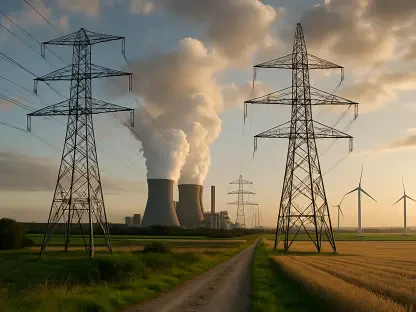
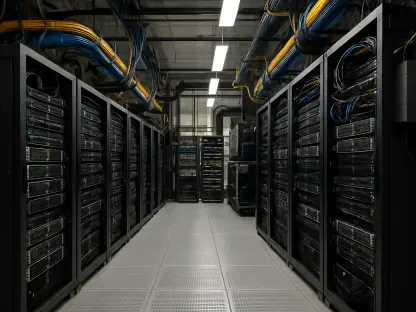
The current legislative debate did not arise in a vacuum. For decades, the growth of the internet was powered by a grid designed for a different era. However, the recent explosion of artificial intelligence and large-scale data processing has transformed data centers from significant energy users into colossal “power sinks” capable of consuming as much electricity as a small city. This surge in demand is forcing utility companies to undertake massive, costly upgrades to transmission lines and generation capacity. These costs are inevitably passed on to the public, raising concerns that residential customers and small businesses are subsidizing the energy-intensive operations of some of the world’s most profitable companies, creating the political and economic pressure for a new approach.
A Deep Dive into the Proposed Grid Overhaul
Decoding the DATA Act: The Promise of Regulatory Freedom
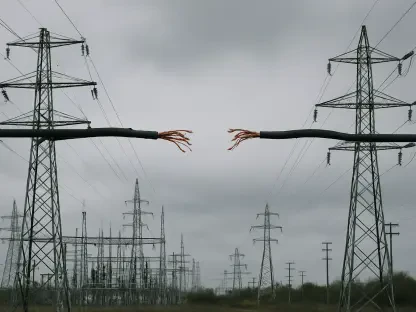
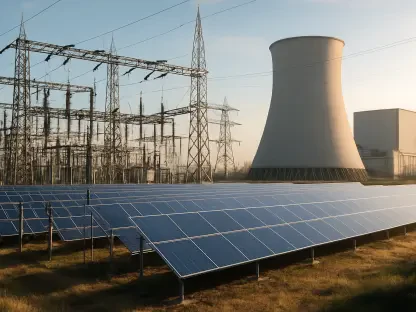
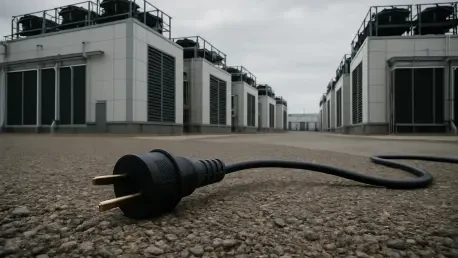
At the heart of the DATA Act, introduced by Senator Tom Cotton on January 8, 2026, is a proposal to create a new class of utility: the “consumer-regulated electric utility,” or CREU. This entity would be authorized to generate and sell electricity to a single, large customer, such as a data center campus. The core condition is absolute physical isolation from the public power grid. This “islanding” requirement is strict, prohibiting the use of the grid for backup power and forcing complete self-reliance. In exchange for this autonomy, the CREU and its customer would receive sweeping exemptions from federal regulations, including oversight from the Federal Energy Regulatory Commission (FERC) and the rules established by the Public Utility Regulatory Policies Act (PURPA), effectively creating a private, deregulated energy ecosystem.
Forcing Accountability: The Argument for Off-Grid Independence
Supporters of the DATA Act frame it as a market-based solution that places the burden of growth squarely on the shoulders of the industries driving it. The bill’s stated goal is to empower these sectors to build customized, efficient power systems without impacting public grid stability or consumer electricity rates. Mike Jacobs of the Union of Concerned Scientists views the legislation as a mechanism for accountability, suggesting it allows data center developers to make good on their claims of wanting to manage their own energy costs and reliability. By operating in a self-contained system, the immense financial and operational risks associated with powering these facilities would be internalized by the developers, insulating the public from the potential negative consequences of their expansion.
Unintended Consequences: The Hidden Risks of Grid Defection
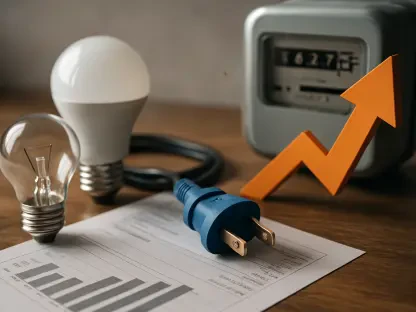
Despite its appeal, the proposal faces fierce opposition, particularly from incumbent utilities that see it as a direct threat to their business model. Beyond corporate interests, however, lie significant public concerns. Energy consultant Rao Konidena warns of a dangerous “cost-shifting” scenario. If large industrial customers abandon the grid, the fixed costs of maintaining the infrastructure—the poles, wires, and substations that serve everyone—remain. These costs would then be spread across a smaller base of remaining customers, primarily households and small businesses, potentially leading to substantial rate hikes. This dynamic is not merely theoretical; a similar state-level law passed in New Hampshire in 2025 has been met with skepticism, highlighting the real-world risk that such policies could undermine state efforts to manage utility costs and ensure equitable energy access for all.
The Future of Energy: A Two-Tiered System on the Horizon?
Should the DATA Act become law, it could fundamentally reshape the nation’s energy landscape. The legislation could spur a wave of innovation in on-site power generation, potentially accelerating the adoption of technologies like small modular reactors, advanced geothermal systems, and large-scale battery storage. However, it also risks creating a two-tiered energy system: one for large, sophisticated corporations with the capital to build their own power islands, and another for the general public, left to bear the costs of a legacy grid with a shrinking base of high-volume customers. This divergence could exacerbate energy inequality and challenge the long-held principle of a universal, reliable, and affordable public power system.
Navigating the Crossroads: Key Takeaways and Strategic Considerations
The analysis of the DATA Act reveals a complex trade-off between fostering industrial innovation and protecting the public interest. The bill offers a novel path for data centers to manage their immense energy needs, but it does so at the potential cost of grid stability and consumer affordability. For businesses in the tech sector, the key consideration will be weighing the benefits of regulatory freedom against the significant technical and financial hurdles of achieving complete energy independence. For policymakers and regulators, the primary challenge is to evaluate whether the public benefits of isolating these massive loads outweigh the risk of shifting infrastructure costs onto residential customers who can least afford them.
A Power Play with Lasting Consequences
The DATA Act of 2026 has ignited a critical and long-overdue conversation about who should power the digital future and, more importantly, who should pay for it. The core tension between the private sector’s demand for boundless, cheap energy and the public’s need for a stable, equitable grid is now at the forefront of the national agenda. Whether this specific bill passes or not, it has irrevocably altered the debate. The ultimate challenge will be to forge a new energy paradigm that can support technological advancement without leaving the average citizen behind, ensuring that the infrastructure powering the 21st century serves everyone.