
The recent decision by the Environmental Protection Agency to systematically dismantle the 2009 endangerment finding has created an unprecedented legal rift that threatens to redefine the boundaries of federal authority for a generation. This foundational regulatory pillar, born from a Supreme Court mandate, established that greenhouse gases are a direct threat to public health and welfare, making their regulation an obligation rather than an option. The current move to dismantle this framework represents one of the most significant shifts in American environmental policy in decades. By examining the roots of this conflict, the significance of this legal showdown becomes clear; it is not just about administrative rules, but about the very definition of federal duty in an era of climate crisis.
Navigating the High-Stakes Legal Battle Over Greenhouse Gas Regulation
The federal government’s decision to rescind the landmark 2009 endangerment finding has ignited a firestorm of litigation, positioning the U.S. Environmental Protection Agency (EPA) against a massive coalition of scientists, health professionals, and state leaders. This foundational regulatory pillar, born from a Supreme Court mandate, established that greenhouse gases are a direct threat to public health and welfare, making their regulation an obligation rather than an option. The current move to dismantle this framework represents one of the most significant shifts in American environmental policy in decades.
By examining the roots of this conflict, the significance of this legal showdown becomes clear; it is not just about administrative rules, but about the very definition of federal duty in an era of climate crisis. The outcome of this dispute will likely dictate the extent to which the federal government must prioritize environmental safety over industrial deregulation. As the legal arguments unfold, the central question remains whether a single agency can unilaterally ignore scientific consensus that has been reinforced by years of rigorous data and judicial validation.
The Collision of Deregulatory Ambition and Judicial Precedent
Challenging the Rescission of the 2007 Supreme Court Mandate
The lawsuit filed in February by groups like the Environmental Defense Fund and the American Public Health Association argues that the EPA is ignoring settled law established in Massachusetts v. EPA. Plaintiffs contend that the agency cannot simply “undo” a scientific determination that was originally compelled by the Supreme Court without presenting new, overwhelming evidence that greenhouse gases are no longer harmful. This section explores how the D.C. Circuit Court of Appeals must now decide if the EPA is acting within its authority or if it is engaging in a “dereliction of duty” by bypassing established statutory requirements.
Furthermore, advocacy groups suggest that the agency is attempting to re-litigate issues that have already been settled by the highest court in the land. By framing the repeal as a procedural correction, the EPA is accused of circumventing the scientific rigor required by the Clean Air Act. This legal maneuver creates a tension between administrative discretion and the mandatory obligations of the executive branch to protect citizens from environmental degradation.
A Nation Divided: The Partisan Schism Among State Attorneys General
The legal battlefield is split between two powerful state-level coalitions, creating a “litigation-driven policy” landscape where environmental rules are determined by court orders rather than legislative consensus. On one side, 24 governors and the U.S. Climate Alliance are suing to block the repeal, citing the immediate health risks to their residents. Conversely, a coalition of 26 Republican attorneys general supports the EPA, arguing that the original 2009 finding was an overreach that unfairly burdened the fossil fuel industry and stifled economic growth.
This clash illustrates how state-level leadership is stepping in to fill—or defend—the regulatory vacuum left by the federal government. While some states emphasize the economic necessity of supporting the energy sector, others view the federal rollback as a direct threat to the safety and prosperity of their local populations. Consequently, the judiciary is forced to mediate a dispute that is as much about political philosophy as it is about environmental science.
Front-Line Resistance from Urban Centers and Local Governments
While the battle rages at the federal level, organizations such as the U.S. Conference of Mayors and Climate Mayors are bringing a “lived reality” perspective to the courtroom. Local leaders argue that cities are the primary victims of climate-induced health risks and that the EPA’s deregulation ignores the specific vulnerabilities of urban populations. By partnering with state lawmakers to implement independent climate policies, these local entities are challenging the assumption that federal rollback equates to a total cessation of climate action.
This resistance signals a broader shift toward decentralized environmental governance, where cities take on the responsibility of setting emission targets and health standards. Urban leaders emphasize that they cannot wait for federal consensus when the effects of rising temperatures and extreme weather are already impacting municipal infrastructure and public health. This localized approach serves as a critical buffer against shifting national policies.
Economic Protectionism vs. Public Health Obligations
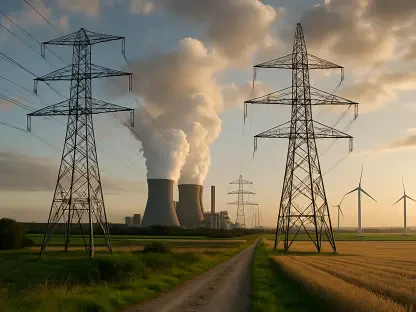
The EPA justifies its repeal as a necessary correction to protect the oil, gas, and coal sectors from “shaky” regulatory ground, symbolized by coal-fired landmarks like the Mill Creek Generating Station. However, this argument faces fierce opposition from medical professionals who view the move as pandering to corporate interests at the expense of community wellbeing. There is a deep-seated tension between the immediate economic interests of the energy industry and the long-term societal costs of ignoring carbon emissions.
Industry advocates maintain that the previous regulatory environment created unnecessary hurdles for energy production, leading to higher costs for consumers. In contrast, health organizations point to the rising costs of respiratory illnesses and other climate-related health issues. The court must now weigh these competing interests, determining whether industrial stability should take precedence over the statutory mandate to prevent endangerment.
Strategic Implications for the Future of Environmental Law
The outcome of this litigation will set a critical precedent for how much “administrative whiplash” the legal system will allow between differing presidential terms. If the courts uphold the repeal, it could signal a permanent weakening of the Clean Air Act’s reach; if they block it, the EPA may be forced to maintain strict emission standards regardless of the sitting administration’s political agenda. Organizations should prepare for a fragmented regulatory environment where state laws and judicial stays determine compliance requirements.
Moreover, the case will influence how future administrations approach scientific findings that conflict with their policy goals. A ruling in favor of the EPA might provide a roadmap for dismantling other long-standing environmental protections. Conversely, a judicial check would reinforce the idea that executive actions must remain tethered to scientific reality and legal history. Stakeholders must monitor the D.C. Circuit’s rulings closely, as these decisions will dictate the trajectory of American climate obligations for the next generation.
The Judiciary as the Final Arbiter of Climate Science and Policy
As the April effective date for the repeal approached, the federal court system stood as the final barrier between deregulatory policy and established environmental protections. The sheer scale of the opposition—ranging from national health associations to local mayors—underscored the belief that the impacts of this decision were felt at every level of society. Ultimately, the resolution of this case defined whether the federal government’s responsibility to protect the public from “endangerment” was a fixed legal mandate or a flexible political choice.
The world watched to see if the U.S. court system would uphold the scientific consensus or allow a fundamental shift in the government’s role in managing the global climate crisis. This conflict highlighted a fractured nation where environmental protection was increasingly dictated by state-level initiatives and judicial rulings rather than a unified federal strategy. Moving forward, the focus shifted toward developing more resilient legislative frameworks that could withstand the volatility of changing administrations while ensuring that public health remained a non-negotiable priority for all governing bodies.