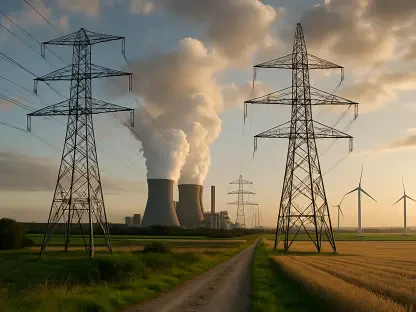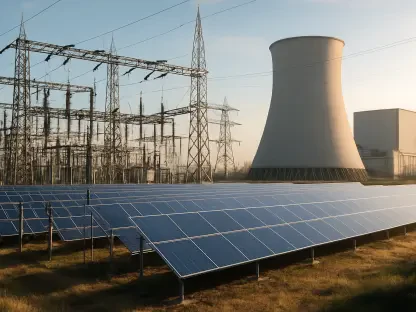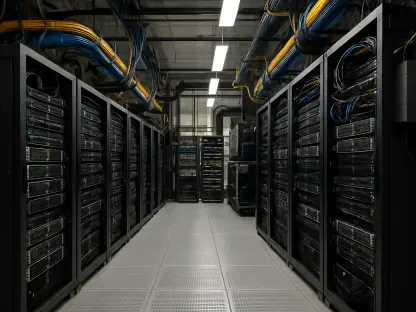

As the world’s most powerful artificial intelligence models continue to reshape industries, a fundamental paradox has emerged as the defining challenge of the year, a topic that dominated conversations at the World Economic Forum in Davos this January. The digital engine of modern progress is proving to be an insatiable consumer of the world’s most constrained physical resource: energy. This burgeoning demand for electricity and the infrastructure to support it, a trend that solidified throughout 2025, is now creating a global chokepoint. The very technology promising limitless innovation is running headfirst into the hard limits of power generation and supply chain capacity, forcing a worldwide scramble to build the physical foundation necessary to fuel the next stage of the AI revolution before its momentum is stalled by a critical energy deficit.
The Unprecedented Surge in Energy Demand
The scale of the energy required to power the rapidly expanding AI sector is staggering, placing an immense strain on global power grids that were not designed for such an abrupt and exponential increase in consumption. According to recent research from Goldman Sachs, the power usage by data centers worldwide is projected to surge dramatically from 55 gigawatts to 84 gigawatts over the next two years alone. In response to this looming crisis, the United States has initiated a significant policy shift, with the Trump administration championing a massive expansion of domestic electricity and industrial infrastructure. The strategic goal is to bolster the nation’s AI ambitions by fast-tracking the development of new energy plants while simultaneously ramping up domestic steel and natural gas production, recognizing that a secure and abundant power supply is now a cornerstone of national competitiveness in the AI era.
This high-stakes race for energy supremacy has sent powerful ripples through financial markets, signaling a monumental transfer of capital toward the companies tasked with building the new world. Nvidia CEO Jensen Huang recently framed the challenge in stark terms, stating that realizing the full potential of AI will necessitate what he calls the “largest infrastructure build-out in history,” a project that will require “trillions of dollars” in investment. This forecast is already being reflected in market performance. The Industrials sector, tracked by the XLI, has significantly outperformed the broader market, posting a 17.5% gain over the past year. The performance of key players is even more telling, with heavy machinery giant Caterpillar (CAT) seeing its valuation soar by an astonishing 58% during the same period as investors bet on the immense physical construction required to support the digital boom.
Confronting the Physical Limits of Growth
While the commitment to expansion is clear and the financial incentives are in place, the path forward is obstructed by severe and persistent supply-side bottlenecks that are slowing progress to a crawl. The physical reality of manufacturing and construction cannot keep pace with the exponential growth of digital demand. Heavy machinery companies, for instance, are reporting years-long backlogs for essential components such as the natural gas turbines needed to power new energy facilities. These delays create a compounding problem, where the very equipment required to build the new infrastructure is itself caught in a production queue. This highlights a critical friction point between the speed of software development and the much slower, more deliberate pace of industrial manufacturing and large-scale engineering projects.
Further complicating the infrastructure build-out are the extensive regulatory and logistical hurdles that govern the integration of new power sources into national grids. In the United States, the process for connecting new-generation equipment can take more than a decade from application to operation, a timeline that is fundamentally misaligned with the urgent needs of the AI industry. This bureaucratic inertia presents a formidable obstacle, creating a situation where even if new power plants could be built quickly, they would remain idle, unable to deliver their electricity to the data centers that desperately need it. The combination of manufacturing delays and prolonged regulatory approvals has created a challenging environment where ambition and investment are clashing with the unyielding constraints of the physical world.
A Reckoning with Industrial Reality
The events of the past year underscored a pivotal realization: the future of artificial intelligence was inextricably linked to the capabilities of the industrial and energy sectors. The narrative of a purely digital revolution gave way to the complex reality that progress required a massive, coordinated effort in physical construction, manufacturing, and energy production. The significant market rallies in industrial stocks and the policy shifts toward domestic manufacturing were not isolated trends but direct responses to this new paradigm. It became clear that the abstract world of algorithms and data depended entirely on a concrete foundation of turbines, transformers, and transmission lines, a foundation that had been found critically unprepared for the demands being placed upon it.